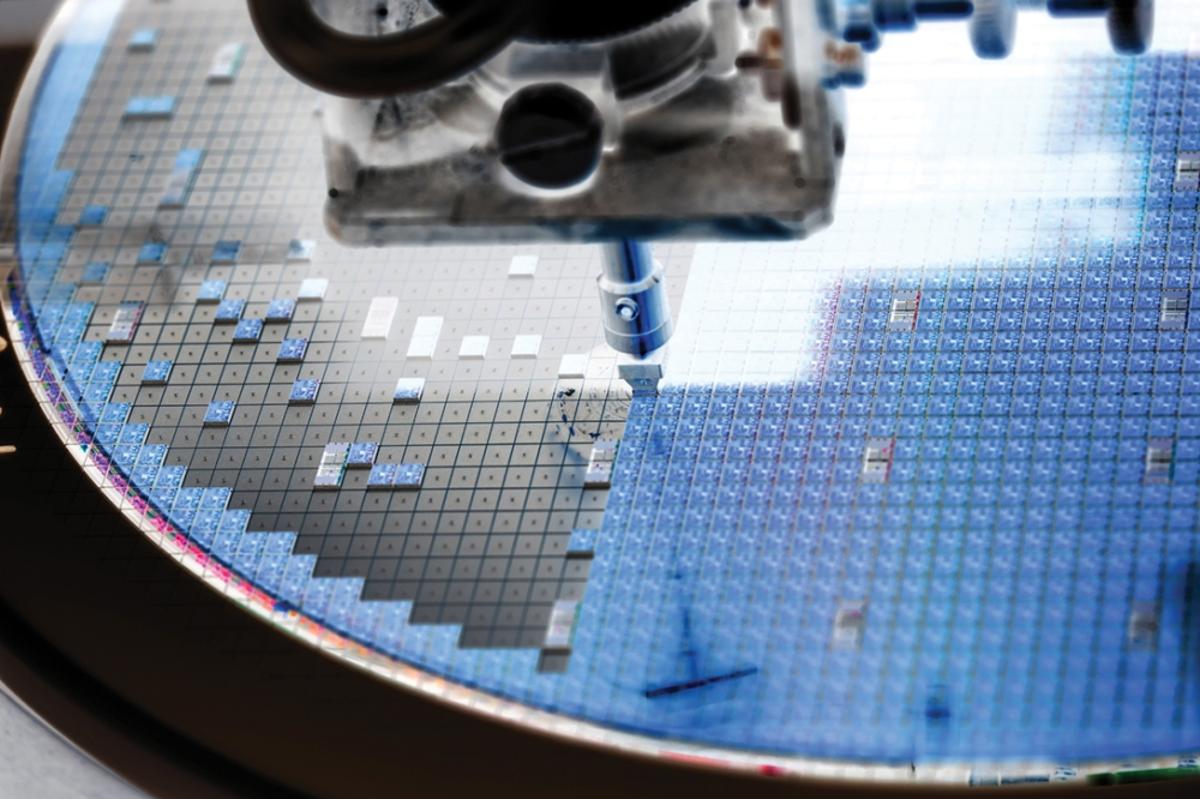
Strengthening the World's First CS Cluster
Why It Matters
The initiative proves that strategic public‑private investment can accelerate advanced‑materials manufacturing, securing critical supply chains for AI, 5G/6G and electric‑vehicle markets. It also showcases the UK’s ability to compete globally in high‑value semiconductor production.
Key Takeaways
- •£43 million (≈$55 M) SIPF investment fuels South Wales CS cluster.
- •IQE scaled InP epitaxy to 6‑inch wafers, enabling hyperscale datacenters.
- •World’s first 8‑inch VCSEL epiwafer launched, expanding optical market.
- •Cluster jobs rose 50% to 3,140, outpacing Welsh manufacturing decline.
- •Exports hit £480 million (≈$610 M), over 90% of output.
Pulse Analysis
South Wales has emerged as a blueprint for how regional clusters can be transformed into world‑class semiconductor hubs. By channeling £43 million (≈$55 M) of UKRI funding into shared cleanrooms, open‑access equipment and the Compound Semiconductor Applications Catapult, the Strength in Places Fund created a dense network where material suppliers, equipment makers and device designers co‑locate. This proximity reduces time‑to‑market for new processes, a critical advantage in a sector where wafer‑size upgrades and tool innovations can dictate competitive positioning.
Technical breakthroughs have been the most visible proof points of the cluster’s maturation. IQE’s successful transition from 4‑inch to 6‑inch InP epitaxy, and the launch of the first commercial 8‑inch VCSEL epiwafer, directly address the scaling pressures of hyperscale data‑centres, lidar and silicon‑photonics applications. KLA’s advances in GaAs VCSEL etching and GaN processing, enabled by abundant epitaxial material, have pushed several technologies to commercial‑ready technology‑readiness levels. These achievements not only broaden the product portfolio but also attract downstream OEMs seeking reliable, high‑volume sources for next‑generation optics and power electronics.
Beyond hardware, the SIPF programme has built a sustainable talent pipeline and delivered measurable economic impact. Employment rose from 2,085 to 3,140 jobs—a 50% increase—while the cluster’s direct contribution grew from £172 million (≈$219 M) to £267 million (≈$340 M), with total economic output reaching £436 million (≈$554 M). Export revenues now exceed £480 million (≈$610 M), accounting for more than 90% of output. With ambitious targets of $1.27 billion in revenue and a 6,000‑person community by 2032, the South Wales ecosystem is poised to supply the semiconductor components that will power 6G networks, autonomous vehicles and renewable‑energy systems, cementing the UK’s role in the global high‑tech supply chain.
Strengthening the world's first CS cluster
Comments
Want to join the conversation?
Loading comments...