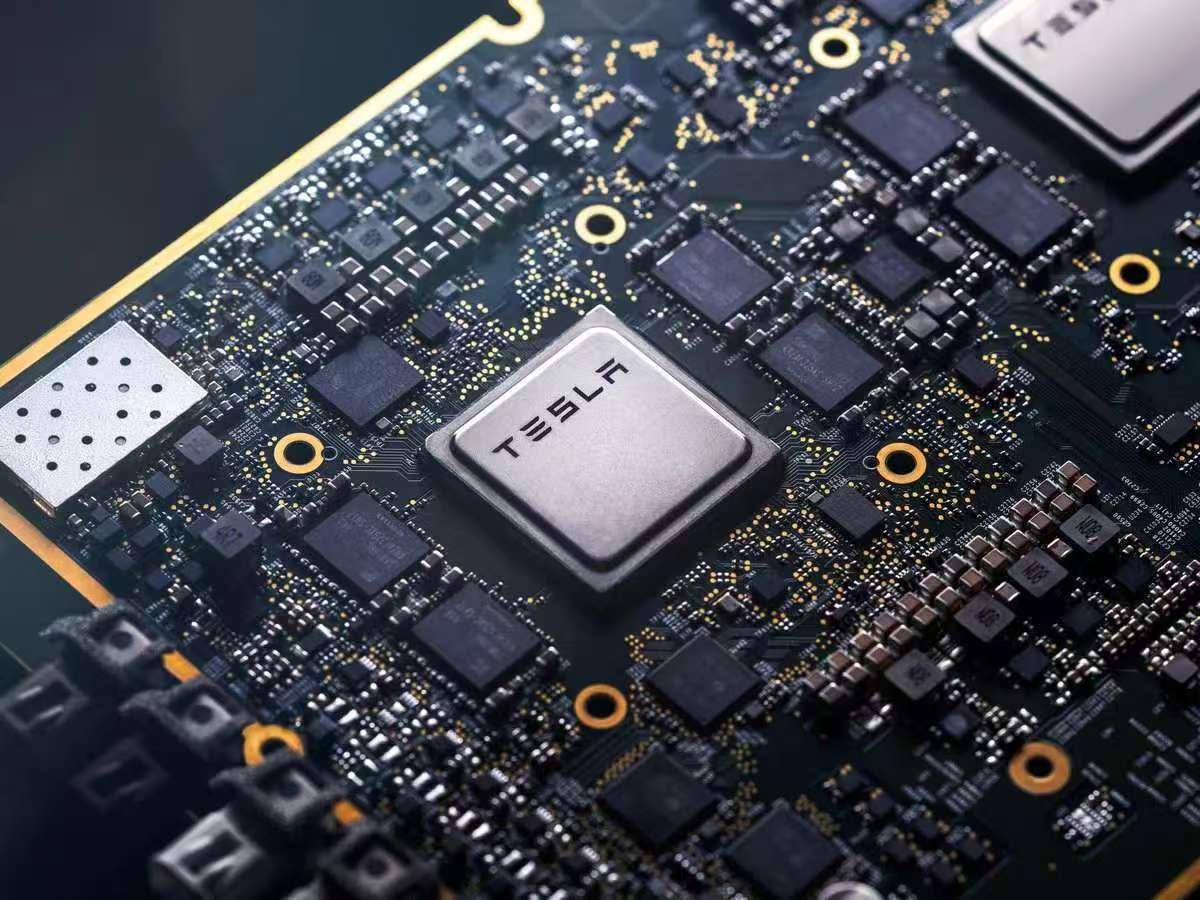
Tesla Plans $3 Billion Chip R&D Fab in Texas, Eyes Terafab Project
Why It Matters
The project reduces Tesla’s reliance on external chip suppliers and could speed AI hardware integration across Musk’s enterprises, while signaling a new competitive front in U.S. semiconductor manufacturing.
Key Takeaways
- •Tesla allocates $3 billion for Texas semiconductor pilot line
- •Facility will produce only a few thousand wafers monthly
- •Intel to support design with its upcoming 14A process
- •“Terafab” aims to secure chips for Tesla, SpaceX, xAI
- •Board approvals required for joint Tesla‑SpaceX chip work
Pulse Analysis
The global semiconductor shortage that began in 2020 forced automakers to scramble for capacity, prompting many to rethink vertical integration. Tesla’s decision to pour $3 billion into a dedicated research fab at its Giga Texas campus reflects a strategic shift from pure vehicle manufacturing to in‑house chip development. By controlling early‑stage wafer production, the company can tailor silicon to the high‑performance computing demands of its autonomous driving stack and energy‑management systems, reducing exposure to external supply‑chain volatility.
The Texas pilot line will operate at a modest scale—only a few thousand wafers per month—allowing engineers to validate new architectures and process tweaks before committing to mass production. Intel’s involvement, centered on its forthcoming 14A node, brings a cutting‑edge design‑for‑manufacturing toolkit that could accelerate power‑efficient AI accelerators. While the 14A process is still in development, Intel’s expertise in packaging and interconnects may enable Tesla to bundle custom logic with advanced memory, a combination critical for real‑time neural‑network inference.
Looking beyond the pilot, Musk’s “Terafab” vision envisions a full‑scale fab capable of meeting the combined chip appetite of Tesla, SpaceX and xAI. If realized, the project would position Musk’s ecosystem as a rare example of a vertically integrated hardware stack spanning automotive, aerospace and artificial intelligence. However, scaling to a multi‑billion‑dollar facility will require navigating U.S. export controls, securing a stable supply of high‑purity silicon, and competing with entrenched players like TSMC and Samsung. Success could reshape the competitive landscape, prompting other tech‑heavy manufacturers to explore similar in‑house semiconductor strategies.
Tesla plans $3 billion chip R&D fab in Texas, eyes Terafab project
Comments
Want to join the conversation?
Loading comments...