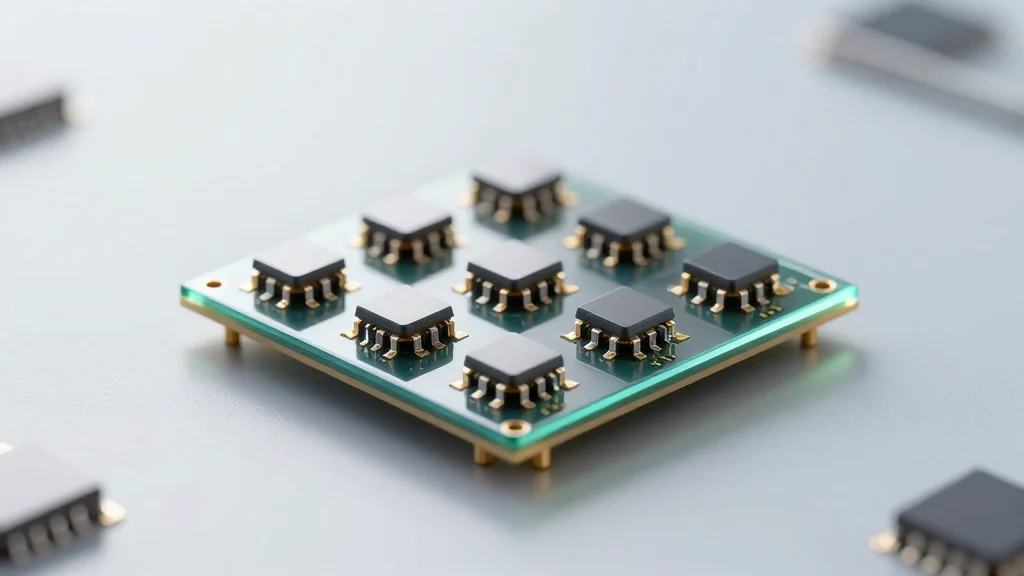
The Changing ASICs Landscape: The Shift Toward Chip Disaggregation
Companies Mentioned
Why It Matters
Disaggregation reduces design cycles and cost, enabling faster AI‑driven product launches while shifting risk to packaging and integration stages that demand new partnerships. Companies that master this approach will gain a competitive edge in high‑performance markets.
Key Takeaways
- •AI workloads drive shift from monolithic to disaggregated ASICs
- •Multi-die packaging improves power, performance, and time‑to‑market
- •Advanced packaging availability and EDA tools are critical bottlenecks
- •Reusable IP libraries reduce risk in modular chip designs
- •Collaboration across architecture, packaging, and manufacturing accelerates innovation
Pulse Analysis
The surge in artificial‑intelligence workloads is exposing the limits of traditional, single‑die ASICs. Designers are now breaking chips into purpose‑built dies—one handling compute‑heavy stages like LLM pre‑fill, another optimized for memory‑bandwidth‑limited decoding. This disaggregation, paired with 2.5D interposers and wafer‑to‑die bonding, delivers superior power‑performance‑area (PPA) metrics and shortens time‑to‑market, while containing yield risk by isolating defects to smaller substrates.
Advanced packaging, however, has become the new gatekeeper of chip economics. Access to heterogeneous integration technologies varies across foundries, and the cost of high‑volume interposer production can eclipse silicon re‑spins. Meanwhile, EDA ecosystems are still catching up; multi‑die verification, thermal co‑simulation, and test‑for‑test strategies require new toolchains and design methodologies. Companies that invest early in these capabilities can offset the higher upfront packaging spend with lower overall cost of ownership and faster product cycles.
From a business perspective, the shift to disaggregated ASICs is reshaping the semiconductor value chain. Firms are moving from end‑to‑end ownership toward a partnership model, leveraging specialist packaging houses, IP providers, and system integrators. This collaborative approach accelerates innovation not only in AI accelerators but also in automotive imaging, edge communications, and consumer devices. As the ecosystem matures, the ability to reuse proven IP blocks and reference designs will become a decisive competitive advantage for firms seeking to dominate emerging high‑performance markets.
The Changing ASICs Landscape: the Shift Toward Chip Disaggregation
Comments
Want to join the conversation?
Loading comments...