The System Architect’s Sketchbook: The Buildout Frenzy
Why It Matters
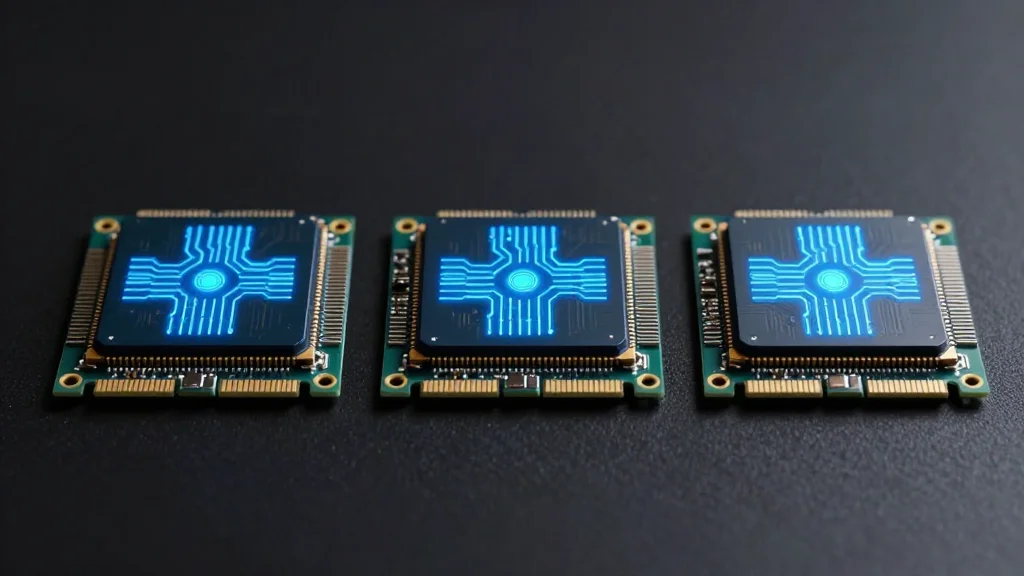
The cartoon highlights the growing design‑complexity challenge, emphasizing why visual simulation platforms are becoming essential for time‑to‑market competitiveness in the semiconductor sector.
Key Takeaways
- •Buildout frenzy drives tighter design schedules for chip architects
- •VisualSim Architect enables system‑level simulation and trade‑off analysis
- •Increasing component density amplifies integration and verification complexity
- •Cartoon underscores need for better communication among design teams
Pulse Analysis
The semiconductor industry is in the midst of a "buildout frenzy," where product cycles shrink and system complexity soars. Engineers must juggle more IP blocks, heterogeneous compute units, and software stacks than ever before, often under intense market pressure. This environment forces system architects to adopt higher‑level abstraction tools that can model interactions across hardware and software domains. VisualSim Architect, developed by Mirabilis Design, offers a visual, modular environment that lets designers prototype, simulate, and validate system performance early, reducing costly redesigns later in the flow.
Visual simulation platforms like VisualSim are gaining traction because they bridge the gap between circuit‑level detail and system‑level insight. By providing drag‑and‑drop libraries for processors, memory, interconnects, and power management, these tools enable rapid exploration of architectural trade‑offs. The cartoon created by Shankar captures this shift: it humorously depicts engineers scrambling to fit more functionality into tighter footprints, while the underlying message is clear—without robust system‑level modeling, time‑to‑market suffers and product reliability can be compromised.
For executives and product managers, the implication is straightforward: investing in advanced system‑level design tools translates directly into competitive advantage. Faster validation cycles mean earlier market entry, while accurate performance predictions reduce silicon risk and warranty costs. As the industry moves toward heterogeneous integration and AI‑centric workloads, the demand for platforms that can simulate power, thermal, and latency across diverse components will only intensify. Companies that embed visual simulation into their design methodology are better positioned to navigate the buildout frenzy and deliver innovative products on schedule.
The system architect’s sketchbook: The buildout frenzy
Comments
Want to join the conversation?
Loading comments...