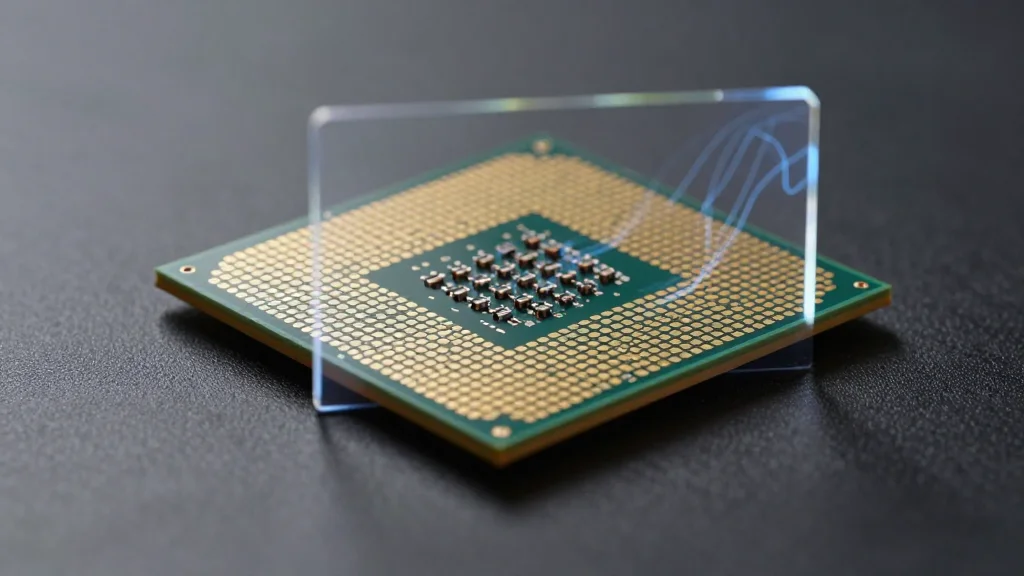
The System Architect’s Sketchbook: The Coherency Wall
Why It Matters
Understanding the coherency wall is critical for avoiding costly redesigns as processors scale, directly impacting time‑to‑market and profitability in the semiconductor industry.
Key Takeaways
- •Coherency wall highlights scaling limits of shared memory across cores
- •VisualSim Architect simulates coherence protocols before silicon tape‑out
- •Designers must balance performance gains with interconnect complexity
- •Early architectural sketches reduce costly redesigns in multi‑core systems
- •Cartoon underscores need for tools that visualize data‑flow bottlenecks
Pulse Analysis
The "coherency wall" concept has become a focal point for architects as chipmakers push beyond eight‑core designs toward heterogeneous many‑core systems. Memory‑coherency protocols, once a peripheral concern, now dominate interconnect bandwidth and latency budgets, forcing engineers to rethink traditional cache‑coherency models. By visualizing the wall as a tangible barrier, Shankar’s cartoon makes clear that without proactive design strategies, performance gains can quickly plateau, leading to silicon that fails to meet market expectations.
Tools like Mirabilis Design’s VisualSim Architect are gaining traction because they allow teams to prototype and validate coherence strategies in a virtual environment. Simulating protocols such as MESI, MOESI, or newer directory‑based schemes helps identify bottlenecks before costly tape‑out cycles. This early‑stage insight reduces iteration loops, shortens development timelines, and protects the bottom line—especially important as semiconductor fabs face rising mask costs and longer lead times.
For the broader industry, the coherency wall signals a shift toward more sophisticated system‑level thinking. Architects must integrate software‑aware memory models, leverage high‑speed interconnects like CXL, and consider domain‑specific accelerators that may bypass traditional cache hierarchies. Companies that adopt visualization‑driven design practices and invest in coherence‑aware simulation are better positioned to deliver competitive products in an era where performance per watt and time‑to‑market are paramount.
The system architect’s sketchbook: The coherency wall
Comments
Want to join the conversation?
Loading comments...