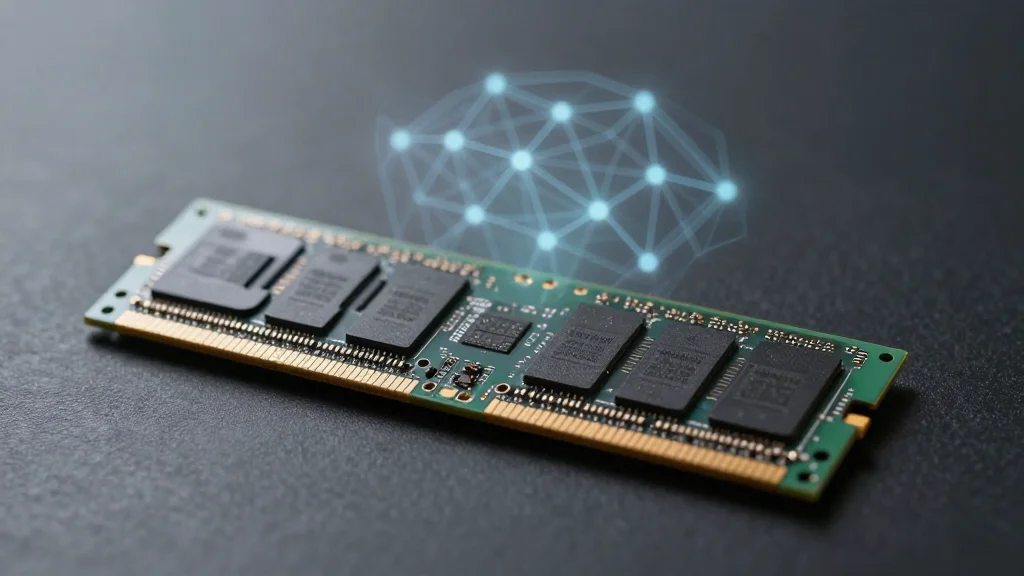
What the DRAM Crunch Teaches Us About System Design
Why It Matters
The DRAM crunch forces AI developers to prioritize cost, supply reliability, and power efficiency, making edge‑centric designs a competitive necessity. This shift alters investment priorities across hardware and software teams.
Key Takeaways
- •DRAM prices have risen 3‑4× in the past year
- •Edge AI accelerators cut BOM costs up to $100 per device
- •Small domain‑specific models run within 1‑2 GB, easing supply risk
- •Lower‑capacity DRAM stays stable, enabling predictable procurement
- •Hybrid designs split tasks between local inference and cloud resources
Pulse Analysis
The current DRAM shortage is more than a pricing anomaly; it reflects a structural bottleneck as manufacturers focus on DDR5 and high‑bandwidth memory for massive data‑center deployments. Prices for high‑capacity modules have surged, and lead times have stretched, creating a volatile procurement environment even for hyperscalers. Meanwhile, low‑capacity DRAM—crucial for edge devices—remains comparatively affordable and available, offering a foothold for designers seeking predictable component sourcing.
In response, hardware architects are embracing purpose‑built edge AI accelerators that embed inference pipelines directly on silicon. By eliminating external memory, these chips shave up to $100 off the bill‑of‑materials per unit, while delivering lower latency, reduced power draw, and greater reliability. The move also insulates products from supply‑chain shocks, a critical advantage as global memory inventories tighten. For many vision‑based and classical AI workloads, on‑chip models now match cloud‑grade performance without the memory tax.
Strategically, firms are adopting a hybrid deployment model: lightweight, domain‑specific models run locally within 1‑2 GB of DRAM, handling high‑frequency tasks such as transcription or translation, while larger, general‑purpose models stay in the cloud for occasional, compute‑intensive queries. This approach balances cost, latency, and privacy, and aligns AI performance with real‑world constraints rather than theoretical abundance. Companies that redesign their stacks around memory efficiency will gain a competitive edge, reducing exposure to price volatility and ensuring scalable, reliable AI services.
What the DRAM Crunch Teaches Us About System Design
Comments
Want to join the conversation?
Loading comments...