Why It Matters
AI could reshape analog design workflows, enabling faster component selection and ultra‑compact sensor systems, which may lower development costs and unlock new product categories.
Key Takeaways
- •AI assists analog designers in optimal component selection and trade‑offs
- •Reconstructive spectrometer‑on‑chip uses 16 silicon detectors and neural nets
- •Neural network achieves RMSE 0.046 and Pearson R 0.87 in spectral reconstruction
- •AI’s role in analog design remains exploratory, with potential workflow shifts
Pulse Analysis
Predicting how emerging technologies will reshape engineering has a mixed track record, and artificial intelligence is no exception. In the analog domain, designers have long relied on painstaking calculations and extensive component libraries. Early AI tools now promise to automate the selection of parts—like op‑amps—by parsing thousands of specifications and suggesting optimal trade‑offs in seconds. This shift could compress design cycles, reduce human error, and free engineers to focus on higher‑level architecture, but it also raises questions about skill displacement and the need for new validation methods.
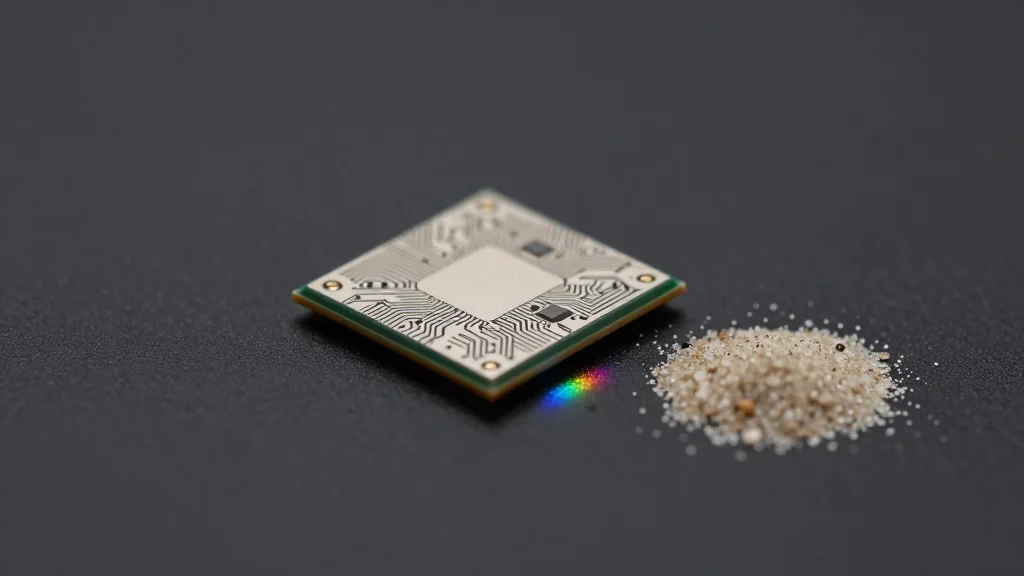
A tangible illustration of AI’s potential comes from a research team at UC Davis that built a spectrometer‑on‑a‑chip. By arranging 16 silicon photodetectors with slightly different spectral responses and training a fully connected neural network to solve the inverse problem, the device reconstructs light spectra without bulky diffraction gratings. The AI‑driven model delivers a root‑mean‑square error of 0.046 and a Pearson correlation of 0.87, outperforming conventional matrix inversion and Gaussian‑based approaches while tolerating low photon flux. This breakthrough demonstrates how machine‑learning inference can compensate for hardware limitations, enabling miniature, low‑cost sensors for portable medical, environmental, and IoT applications.
Looking ahead, the analog industry faces a crossroads. If AI tools mature to handle more complex tasks—such as automated layout, noise budgeting, or adaptive calibration—they could become integral to the design flow, driving down time‑to‑market and expanding the feasible form factor of analog‑centric products. However, the technology is still nascent; robust datasets, model interpretability, and regulatory acceptance remain hurdles. Companies that invest in AI‑augmented design platforms now may gain a competitive edge, while those that wait could find themselves scrambling to catch up as the next generation of smart sensors and edge devices emerges.
What’s the impact of AI on analog design
Comments
Want to join the conversation?
Loading comments...