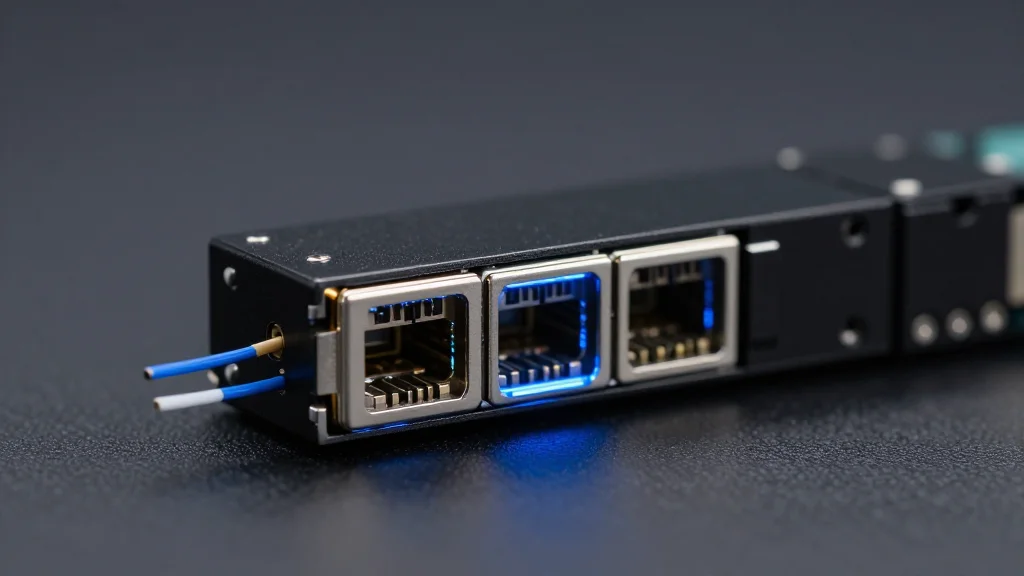
Why XPO Resonated at OFC 2026
Why It Matters
XPO’s density and efficiency breakthroughs lower the total cost of AI data‑center infrastructure while accelerating time‑to‑volume, a critical advantage as AI training scales exponentially.
Key Takeaways
- •Over 100 firms signed the XPO multi‑source agreement
- •XPO delivers up to 200 Tbps per rack unit
- •Four‑fold front‑panel density reduces rack footprint 75%
- •Integrated cold‑plate cooling cuts power consumption dramatically
- •Maintains pluggable serviceability despite higher integration
Pulse Analysis
The rise of XPO optics reflects a broader shift toward open, high‑density interconnects that can keep pace with exploding AI model sizes. Traditional pluggable modules hit a physical ceiling around 100 Tbps per rack, forcing designers to adopt co‑packaged or on‑board solutions that sacrifice serviceability and increase supply‑chain complexity. XPO sidesteps these trade‑offs by stacking two 32‑channel paddle cards around a shared liquid‑cooled cold plate, enabling a compact form factor that still plugs into existing chassis. This architecture not only pushes bandwidth per rack beyond 200 Tbps but also standardizes power delivery at 48 V, simplifying board‑level design and improving yield.
From a data‑center operations perspective, the four‑fold increase in front‑panel density translates into a roughly 75 % reduction in rack space, directly cutting real‑estate and cooling costs. Liquid‑cooling integration keeps component temperatures low, which improves laser reliability and reduces energy per bit—a crucial metric as optical interconnects become a larger share of total system power. The modular, open‑spec nature of XPO also encourages a disaggregated ecosystem, allowing hyperscale operators to source modules from multiple vendors, mitigate supply‑chain risks, and accelerate volume production without building dedicated fabs.
Looking ahead, XPO’s flexible platform positions it to support emerging signaling schemes such as coherent‑lite and slow‑and‑wide, as well as future 400 G/lane modules that could double current capacities. By marrying the scalability of integrated optics with the maintainability of pluggable designs, XPO offers a pragmatic path for AI data centers to meet the next wave of compute demand while preserving cost efficiency and operational agility.
Why XPO Resonated at OFC 2026
Comments
Want to join the conversation?
Loading comments...