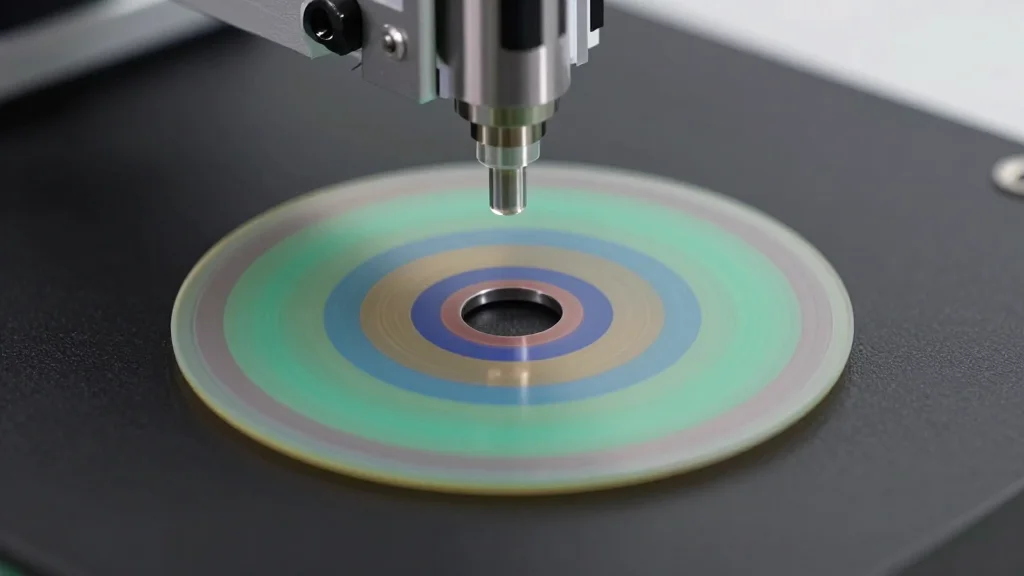
Xanadu and EVG Partner on Heterogeneous Integration and Wafer Bonding Processes for Photonic Quantum Systems
Why It Matters
The alliance bridges cutting‑edge quantum research with mature semiconductor manufacturing, shortening the path to large‑scale photonic quantum computers. It signals a move toward industrial‑scale production that could unlock new high‑performance computing capabilities.
Key Takeaways
- •EVG provides wafer bonding tools for Xanadu's photonic quantum chips.
- •Heterogeneous integration combines silicon, lithium niobate, III‑V on one chip.
- •Partnership aims to move quantum hardware from labs to mass production.
- •Scalable photonic chips could enable fault‑tolerant quantum data centers.
- •Collaboration showcases semiconductor tech accelerating quantum computing commercialization.
Pulse Analysis
Photonic quantum computing promises exponential speed‑ups for problems ranging from materials discovery to cryptography, but its progress has been hampered by the difficulty of assembling complex optical circuits at scale. Traditional silicon photonics excels in integration density, yet quantum‑grade components often require disparate materials such as lithium niobate for electro‑optic modulation or III‑V compounds for efficient photon generation. Heterogeneous integration—stacking and bonding these diverse layers onto a single substrate—offers a pathway to combine the best of each technology while preserving low‑loss optical pathways essential for quantum coherence.
EV Group, a leader in wafer bonding and advanced lithography, brings decades of experience from the semiconductor and MEMS sectors to the quantum arena. Its precision bonding equipment can align and fuse wafers with nanometer‑scale accuracy, creating ultra‑clean interfaces that minimize scattering and decoherence. By adapting these mature tools for Xanadu’s photonic chips, the partnership reduces the need for bespoke, low‑throughput processes that have kept quantum hardware in research labs. This convergence of proven manufacturing techniques with emerging quantum architectures is accelerating the transition from bespoke prototypes to repeatable, fab‑ready production lines.
The broader market implications are significant. As photonic quantum processors become manufacturable at scale, cloud‑based quantum services could expand beyond niche academic users to enterprise customers seeking quantum‑enhanced analytics. Competitors in both the quantum and semiconductor spaces will likely pursue similar integration strategies, intensifying a race to deliver fault‑tolerant, high‑qubit‑count systems. For investors and technology adopters, the Xanadu‑EVG collaboration serves as a bellwether that quantum computing is moving from speculative research toward a commercially viable, hardware‑driven industry.
Xanadu and EVG partner on heterogeneous integration and wafer bonding processes for photonic quantum systems
Comments
Want to join the conversation?
Loading comments...