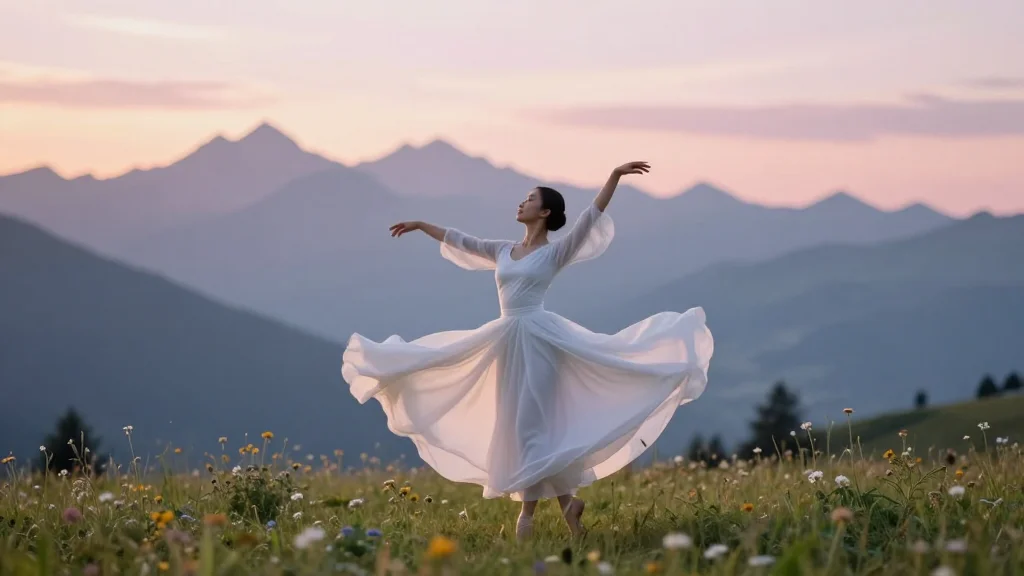
Anthropologist Manéli Farahmand Dances Her Way Into Switzerland’s Emerging Spiritualities

Why It Matters
Farahmand’s work highlights a pivotal shift in how contemporary societies experience spirituality: moving from doctrine‑based affiliation to embodied, experiential practice. By documenting the diversity of ecstatic‑dance forms, the study provides a roadmap for policymakers, mental‑health professionals, and cultural institutions seeking to engage with communities that prioritize bodily expression as a pathway to meaning. Moreover, the research challenges traditional anthropological methods, suggesting that participation—not just observation—can yield richer insights into fluid, hybrid spiritualities. The findings also signal market opportunities for wellness entrepreneurs and cultural programmers. As more people seek non‑religious avenues for transcendence, demand for curated dance experiences, immersive rituals, and hybrid therapeutic‑spiritual services is likely to rise, prompting both private investors and public funders to reconsider where to allocate resources.
Key Takeaways
- •Manéli Farahmand participated in 45 ecstatic‑dance sessions and interviewed 30 practitioners over four years.
- •She identified roughly 30 distinct dance labels, ranging from intuitive free‑form to Sufi‑tantric styles.
- •Swiss 2024 data shows 16 % of the population identify as spiritual, surpassing the 14 % who claim a religious identity.
- •Sessions typically follow a “wave” structure: opening circle, gradual musical build‑up, peak, and concluding meditation.
- •Upcoming monograph will map the embodied turn in Swiss spirituality and propose methodological guidelines for participatory research.
Pulse Analysis
Farahmand’s immersive approach underscores a broader methodological evolution in anthropology: the researcher‑as‑participant model is gaining traction as scholars grapple with fluid, experience‑based phenomena that resist detached observation. By placing herself on the dance floor, Farahmand captures the affective dimensions of spirituality—embodied cognition, collective effervescence, and somatic memory—that traditional surveys miss. This shift mirrors trends in neuroscience, where embodied cognition is reshaping understandings of consciousness, and suggests a convergence of humanities and sciences around the body as a site of knowledge.
Economically, the rise of ecstatic‑dance practices dovetails with the wellness industry’s $4.5 trillion global valuation. As consumers prioritize holistic health, studios that blend therapeutic movement with spiritual framing are poised to capture a niche yet growing market segment. However, the commodification of sacred rituals raises ethical concerns about authenticity and cultural appropriation, especially when practices rooted in specific traditions—such as Sufi‑tantric or Celtic rituals—are repackaged for mainstream consumption. Farahmand’s mapping of hybrid forms offers a cautionary lens: while creativity fuels growth, it also blurs lineage and may dilute original meanings.
Looking ahead, the data points to a potential re‑balancing of religious affiliation metrics. If embodied practices continue to attract participants seeking meaning outside institutional frameworks, future censuses may need to incorporate new categories that capture movement‑based spirituality. Researchers, policymakers, and industry leaders should monitor these trends, ensuring that the surge in embodied rituals supports inclusive, culturally respectful, and evidence‑based approaches to public well‑being.
Anthropologist Manéli Farahmand Dances Her Way Into Switzerland’s Emerging Spiritualities
Comments
Want to join the conversation?
Loading comments...