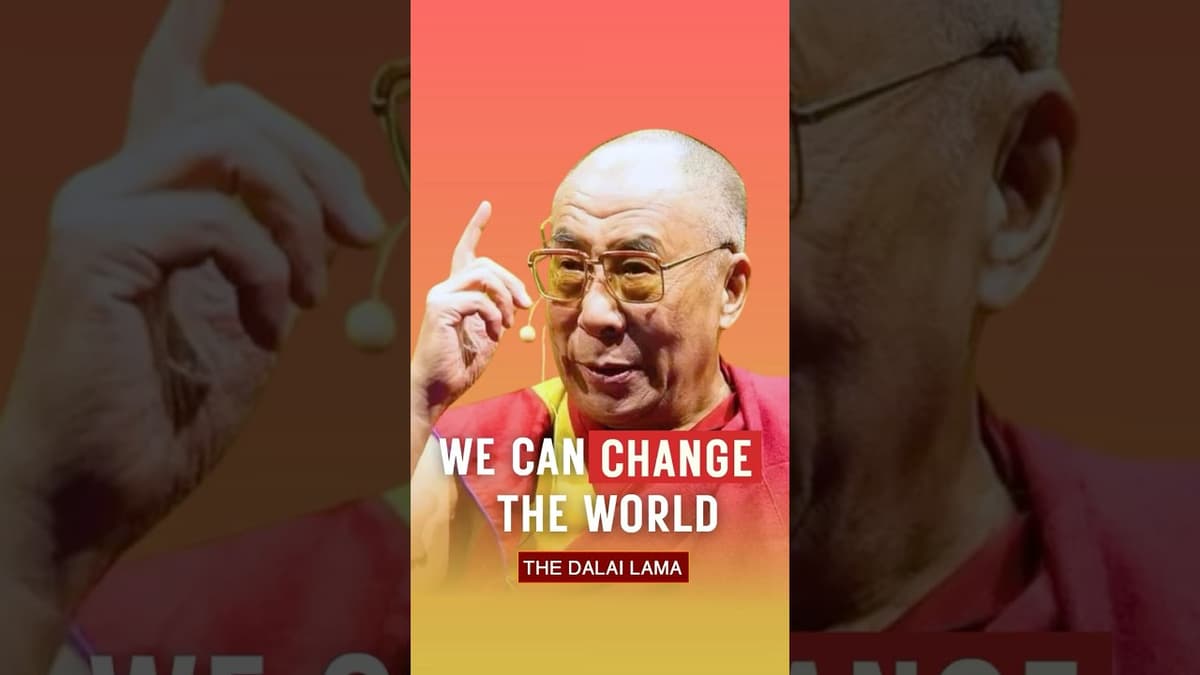
We Can Change the World
The speaker argues that building a peaceful, happy 21st century depends on cultivating inner peace and compassion across societies, not necessarily through religion but via education and awareness. They emphasize that fostering mental and physical wellbeing, forgiveness and tolerance will drive social transformation. The approach includes encouraging personal responsibility for health and empathy as foundations for peaceful families and communities. The goal is a worldwide compassionate society achieved through sustained efforts at individual and systemic levels.
You Can’t Help But Leave a Piece
The video is a reflective short urging viewers to treat time as their most precious resource and to be mindful about the commitments they accept. Using Seneca-style stoic reasoning, it argues that every distracted moment, reluctant yes, or lazy obligation...
Awakening to Peace in Challenging Times
The video argues that true, lasting peace cannot be achieved through external fixes alone; it must begin with inner tranquility. The speaker challenges the common excuse of "too busy" by pointing out that endless external problems make postponing spiritual work...

You Don't Need a Partner and Kids to Have a Meaningful Life
The video argues that cultural narratives linking fulfillment to a romantic partner and children are not universal truths, and that individuals can craft meaningful lives independently. The speaker recounts a personal awakening—abandoning meditation, experiencing fractal visions, and hearing a voice urging...
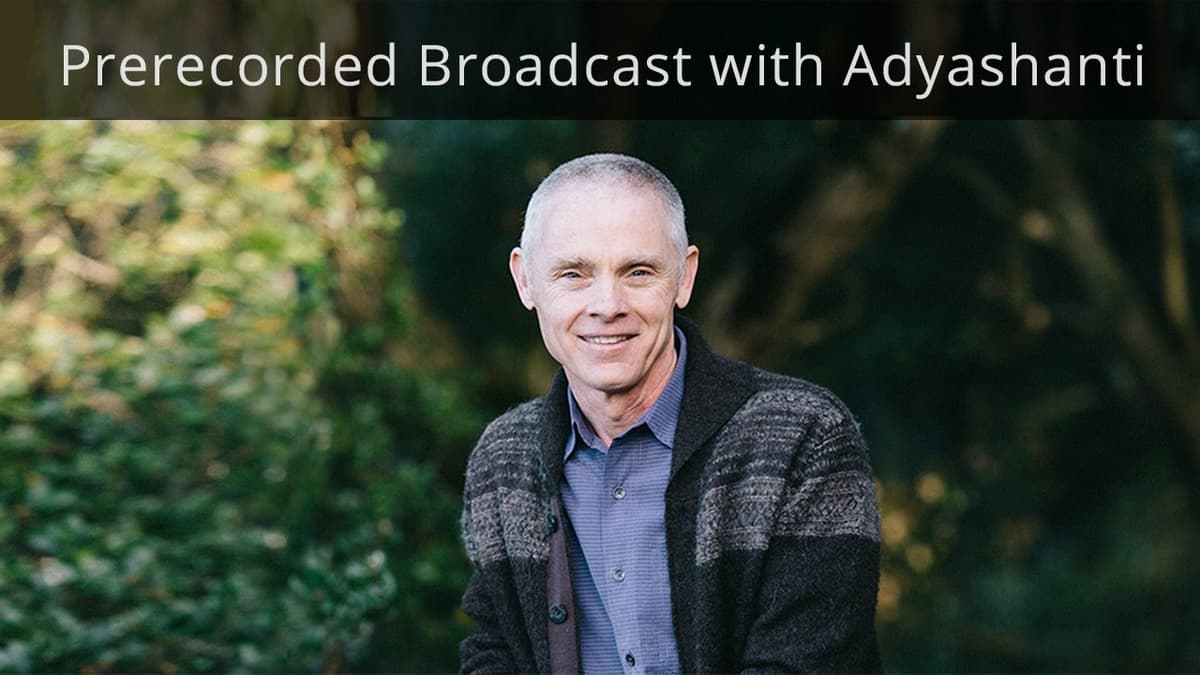
The Wide Expanse of Enlightenment – Prerecorded Broadcast with Adyashanti (From 2021)
In this prerecorded broadcast, spiritual teacher Adyashanti reflects on the nature of connection in the digital age, framing the camera as a portal that allows intimate, worldwide interaction with seekers. He emphasizes silence as the core of contemplative practice, describing it...
Who Are You Beyond Your Thoughts
The short video invites viewers to turn the age‑old question "Who am I?" into a meditation, urging them to pause and listen to the silence that follows the query. Rather than analyzing thoughts, the practice asks participants to experience the...
Stop Taking Yourself Seriously. Take Life Seriously.
The video argues that genuine seriousness is about honoring life itself, not inflating one’s ego. The speaker contrasts “taking yourself too seriously” with “taking life seriously,” insisting the former blinds us to the larger flow of existence. Using a scene from...
You and I Are Dissociated Aspects of One Mind
Research on dissociative identity disorder (DID) shows that alternate personalities can experience the same dream from different perspectives and even perceive other alters as distinct avatars within a shared dream. The speaker uses these findings as a metaphor to argue...
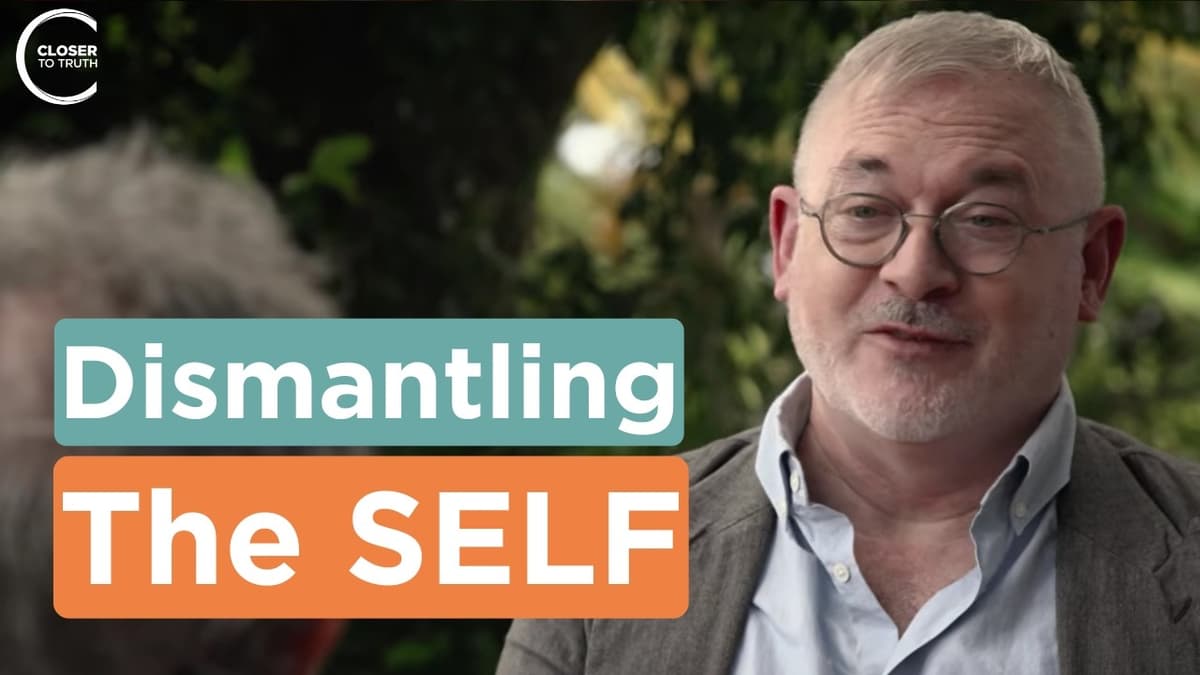
Can Art Open the Door to God? | Alfonse Borysewicz
Artist Alfonse Borysewicz argues that authentic art—paintings, music, sculpture, poetry—gradually dismantles the ego and opens viewers to spiritual or religious insight by revealing the deeper self beyond personal narrative. He says these moments are often ordinary and intimate rather than...
Guided Meditation: Relaxing Back Into the Mystery | Tara Brach
Tara Brach’s guided meditation, titled “Relaxing Back into the Mystery,” invites listeners to settle into stillness, focus on the breath felt in the heart, and articulate a personal intention for the practice. The session proceeds with a systematic body scan—softening shoulders,...
What Happens After Death in Universalism? | Arnold Zuboff
Philosopher Arnold Zuboff argues that if universalism is true—there being a single subject of experience underlying all conscious beings—death does not mean annihilation of the subject. Rather than a linear transfer of consciousness into another body, your last bodily experience...
If You Feel Like a Bad Person, Watch This
The video tackles the pervasive feeling of being a ‘bad person’ when repeated self‑defeating cycles breed shame and emotional exhaustion. It argues that the modern obsession with relentless productivity often masks deeper mental fatigue. The narrator explains how chronic failure rewires...
The Hard Problem Is Just One of Six Gaps
The speaker argues that the philosophical “hard problem” of consciousness is just one of several fundamental explanatory gaps, listing others including Hume’s is-ought gap, the gap from experimental data to formalism, the problem of interpreting mathematical or physical formalisms (e.g.,...
Consciousness Can't Be an Illusion. Here's Why.
The speaker argues that labeling consciousness as an illusion is logically incoherent because any illusion presupposes an experiencing subject—so denying consciousness while invoking experience is self-contradictory. They concede that scientific accounts of consciousness might be wrong about its nature, but...
OMMM: Our Museum Mindfulness Meditation Podcast Full Trailer -- Season 1 Coming Soon!
Getty Museum introduces "Ohm," a first‑of‑its‑kind video‑podcast that fuses art history with guided mindfulness meditation. Hosted by veteran meditation practitioner and museum educator Leilet Sedoyan, the series will debut on YouTube and major podcast platforms. Each weekly episode selects a single...