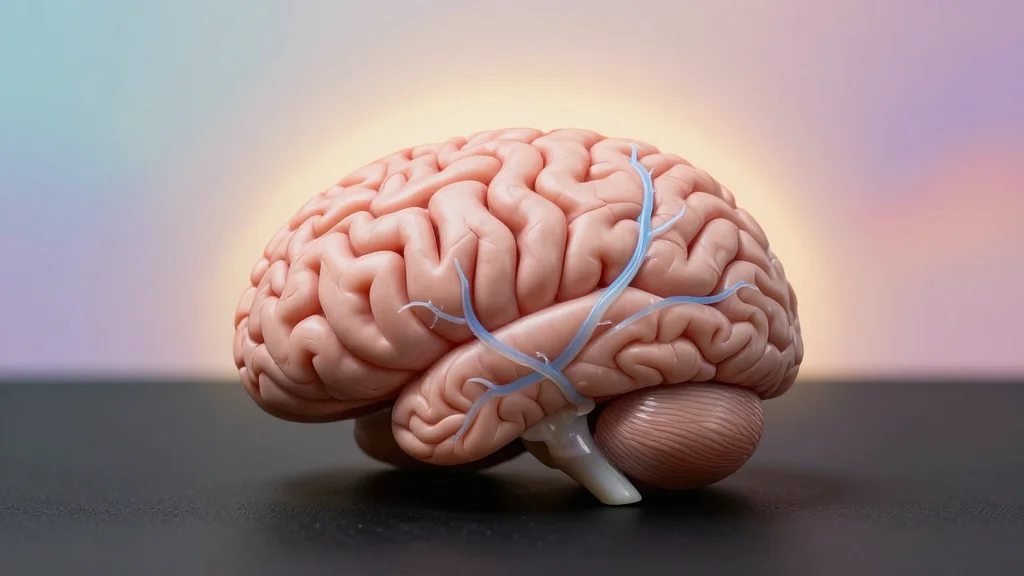
Cambridge Researchers Reveal How the Brain’s Default Mode Network Shapes Personal Consciousness

Why It Matters
The study provides a rare empirical window into the neural basis of individuality, a topic that sits at the crossroads of science, philosophy, and spirituality. By showing that the DMN generates personalized conscious signatures, the research challenges reductionist views that treat consciousness as a uniform brain state. For spiritual traditions that emphasize the uniqueness of the inner self, the findings offer a biological correlate that could enrich contemplative practices and therapeutic approaches. Moreover, the work highlights the importance of interdisciplinary collaboration. Neuroscientists, theologians, and mindfulness practitioners can now reference a shared data set when debating the origins of self‑awareness, potentially fostering more nuanced conversations about the nature of consciousness and its role in human meaning‑making.
Key Takeaways
- •Cambridge team published in Scientific Reports a study linking the default mode network to individualized conscious experience
- •fMRI scans of 16 volunteers showed DMN patterns become more complex and distinct when conscious
- •Under anaesthesia, DMN signatures converged, indicating loss of personal conscious content
- •Attention and sensory networks displayed opposite trends, becoming more uniform across participants when awake
- •Findings open avenues for research on meditation, psychedelics, and other practices that modulate the DMN
Pulse Analysis
The Cambridge study arrives at a moment when the public is increasingly curious about the neural underpinnings of spiritual experience. Historically, attempts to map consciousness have oscillated between purely philosophical speculation and hard‑wired neuroscience. This research nudges the field toward a middle ground: it respects the subjective richness of personal meaning while grounding it in measurable brain activity.
From a market perspective, the results could accelerate interest in neuro‑tech tools designed for self‑exploration. Companies developing portable EEG headsets or AI‑driven meditation apps may cite the DMN’s role as a selling point, promising users a way to track and perhaps enhance their unique inner narratives. At the same time, the study cautions against over‑interpretation; the authors deliberately avoid equating DMN activity with mystical states, reminding stakeholders that neural correlates are descriptors, not definitions, of spiritual experience.
Looking ahead, the dialogue sparked by this work may influence funding priorities. Grants that bridge cognitive neuroscience with contemplative science could see a surge, as funders recognize the commercial and societal value of understanding how the brain constructs the self. Ultimately, the research underscores a broader cultural shift: a willingness to let empirical data inform, rather than replace, the age‑old quest for meaning.
Cambridge Researchers Reveal How the Brain’s Default Mode Network Shapes Personal Consciousness
Comments
Want to join the conversation?
Loading comments...