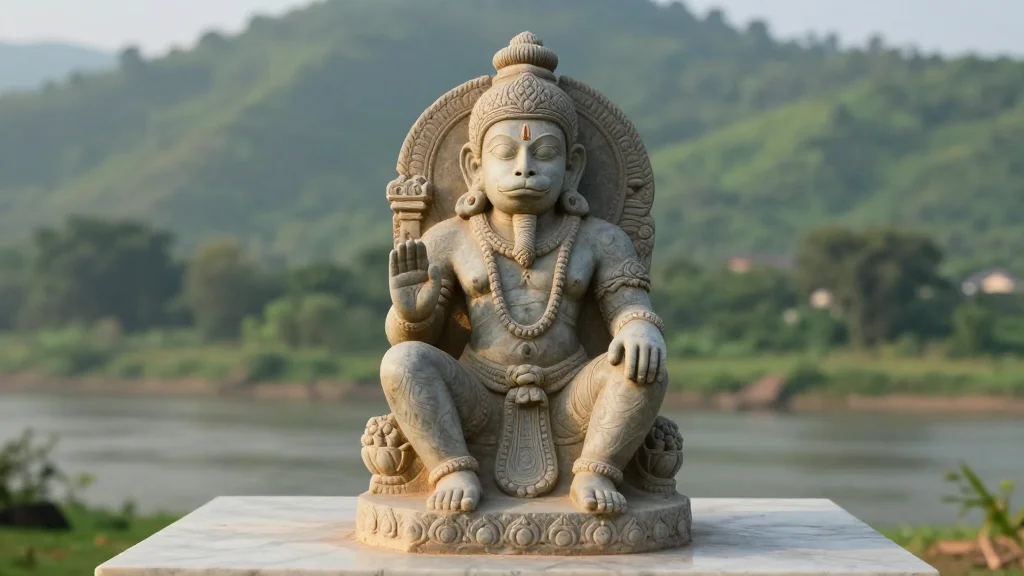
Dang Prayag Hanuman Temple Initiative Expands to 1,111 Temples for Tribal Upliftment

Why It Matters
The expansion of the Dang Prayag Hanuman Temple initiative illustrates a growing convergence of spirituality and development policy in India. By anchoring social services within places of worship, the project leverages deep cultural trust to address chronic gaps in health, education, and livelihood among tribal populations. If the model proves effective, it could redefine how NGOs, governments, and private donors collaborate with faith‑based actors, potentially unlocking new pathways for inclusive growth in marginalized regions. Moreover, the initiative highlights the political resonance of grassroots religious movements. Endorsements from high‑profile figures such as former President Ram Nath Kovind and Gujarat Governor Acharya Devvrat signal broader acceptance of faith‑driven development, which may encourage additional public‑private partnerships and policy support for similar endeavors across the country.
Key Takeaways
- •Govindkaka’s project expands from 311 to 1,111 Hanuman temples nationwide.
- •Over 175 temples have been consecrated to date, serving 200‑300 villagers each.
- •Nearly 250,000 people in Dang have benefited from the temples’ social programs.
- •India’s tribal population stands at 12.8 crore (128 million), 8.8 % of the nation.
- •Former President Ram Nath Kovind and Gujarat Governor Acharya Devvrat publicly endorsed the expansion.
Pulse Analysis
The Dang Prayag Hanuman Temple initiative represents a novel hybrid of devotional practice and community development, a formula that could disrupt traditional development paradigms in India’s tribal belt. Historically, faith‑based NGOs have operated in parallel to secular agencies, often competing for limited resources. This project, however, integrates worship with tangible services—health camps, tobacco‑free village campaigns, and educational outreach—creating a single point of contact that commands both spiritual legitimacy and logistical efficiency.
From a market perspective, the initiative opens a niche for donors seeking high‑impact, culturally resonant interventions. Corporate social responsibility (CSR) budgets, especially from firms operating in the FMCG and agribusiness sectors, may find alignment with the temples’ focus on rural health and livelihood. The endorsement by senior political figures also reduces perceived risk, potentially unlocking larger public‑private funding streams.
Looking forward, the scalability of the model will hinge on its adaptability to diverse tribal customs and the robustness of its monitoring framework. If the upcoming rollout demonstrates measurable improvements in education and health metrics, it could catalyze a wave of similar faith‑anchored projects across other religious traditions, reshaping the development ecosystem in India and perhaps in other multicultural societies.
Dang Prayag Hanuman Temple Initiative Expands to 1,111 Temples for Tribal Upliftment
Comments
Want to join the conversation?
Loading comments...