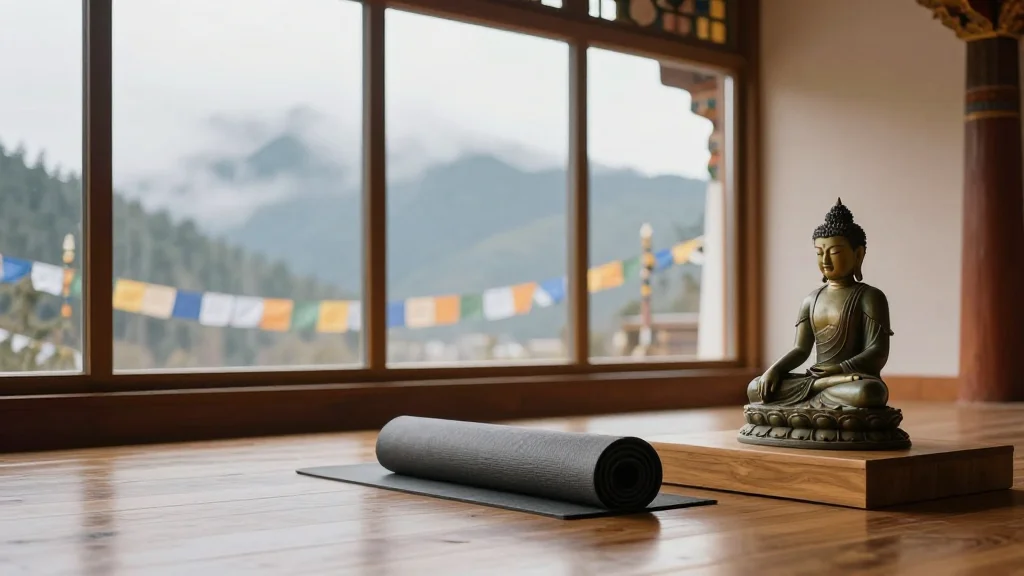
Drukpa Mindfulness and Yoga Centre Approved as New Sanctuary in Bhutan’s Gelephu Mindfulness City

Why It Matters
The approval of the Drukpa Mindfulness and Yoga Centre signals Bhutan’s commitment to expanding its spiritual infrastructure in line with the Gross National Happiness framework. By marrying Vajrayana Buddhist teachings with contemporary wellness trends, the centre could set a precedent for how small nations leverage cultural heritage to attract global tourism while preserving authenticity. Moreover, the project underscores a growing international appetite for integrated mind‑body experiences, suggesting that spiritual tourism may become a more significant economic driver for Bhutan and neighboring Himalayan regions. If successful, the centre could also influence policy discussions on sustainable tourism, offering a case study in balancing visitor influx with ecological and cultural preservation. Its emphasis on plant‑based, mindful nutrition and traditional healing may inspire similar initiatives worldwide, reinforcing the idea that spiritual well‑being is inseparable from physical health and environmental stewardship.
Key Takeaways
- •Royal Kasho granted on May 1, 2026 authorizes the Drukpa Mindfulness and Yoga Centre.
- •Project is one of eight new spiritual initiatives in Gelephu Mindfulness City.
- •Gyalwa Dokhampa and Druk Ralung Shedrup Choling Monastery will lead construction.
- •Centre will combine Vajrayana Buddhist practice with yoga, plant‑based meals, and herbal gardens.
- •Anticipated to boost spiritual tourism and connect Bhutan to the Trans‑Himalayan Drukpa lineage.
Pulse Analysis
Bhutan’s decision to invest in a hybrid Buddhist‑wellness centre reflects a strategic pivot toward experiential tourism that aligns with its Gross National Happiness ethos. Historically, the kingdom has leveraged its cultural capital—monasteries, festivals, and pristine landscapes—to differentiate itself from conventional tourism models. The Drukpa Mindfulness and Yoga Centre deepens this approach by offering a curated environment where spiritual practice meets modern health trends, a formula that resonates with affluent Western travelers seeking authenticity without sacrificing comfort.
From a competitive standpoint, the centre enters a crowded market of wellness retreats across Southeast Asia, many of which lack a strong religious foundation. By anchoring the experience in the Drukpa lineage, Bhutan can claim a unique selling proposition: a living embodiment of a centuries‑old Buddhist tradition integrated with evidence‑based wellness practices. This could attract not only tourists but also scholars, yoga teachers, and health practitioners interested in cross‑cultural research.
However, the project’s success hinges on careful execution. Infrastructure must accommodate increased foot traffic without degrading the fragile Himalayan ecosystem. Moreover, governance structures need to ensure that commercial pressures do not dilute the spiritual integrity that makes the centre appealing. If Bhutan navigates these challenges, the Drukpa Mindfulness and Yoga Centre could become a benchmark for how small nations harness spiritual heritage to drive sustainable, high‑value tourism in the 21st century.
Drukpa Mindfulness and Yoga Centre Approved as New Sanctuary in Bhutan’s Gelephu Mindfulness City
Comments
Want to join the conversation?
Loading comments...