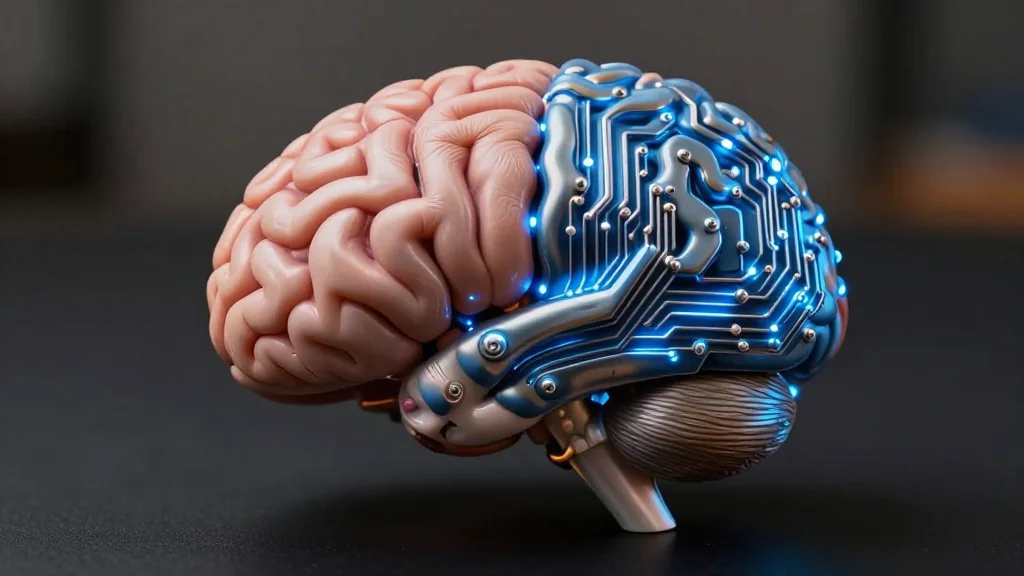
IBS Team Calls for New Criteria to Separate Consciousness From AI Information Processing

Why It Matters
The IBS team's call for a clear scientific demarcation between consciousness and information processing strikes at the core of contemporary spiritual inquiry, which increasingly incorporates AI and synthetic biology into its worldview. By providing a testable framework, the research could help spiritual traditions articulate more precise ethical positions on emerging technologies, reducing reliance on vague metaphysical arguments. Moreover, the study offers policymakers a concrete basis for drafting regulations that protect sentient beings—whether biological or artificial—while fostering responsible innovation. In the broader context of the spirituality space, the debate over AI consciousness influences practices ranging from meditation apps that claim to simulate mindful awareness to religious movements that view AI as a potential conduit for divine experience. A scientifically grounded definition could either validate or invalidate such claims, reshaping market dynamics for spiritual tech and guiding future investment in AI‑driven wellness platforms.
Key Takeaways
- •IBS researchers led by Hakwan Lau published a Neuron paper separating conscious experience from information processing.
- •The study highlights methodological flaws in current consciousness experiments, using blindsight and hemispatial neglect as evidence.
- •Findings challenge claims that AI systems or brain organoids possess subjective experience.
- •The team calls for a coordinated research agenda and new ethical criteria for assessing consciousness.
- •A June 2026 symposium will aim to draft provisional standards for consciousness assessment across disciplines.
Pulse Analysis
The IBS paper arrives at a crossroads where neuroscience, AI development, and spiritual practice intersect. Historically, attempts to define consciousness have oscillated between philosophical speculation and empirical measurement. By anchoring the debate in neuropsychological case studies, the researchers revive a tradition of using pathological evidence to illuminate normal cognition—a method that has previously yielded breakthroughs in visual perception research. This approach could catalyze a paradigm shift, moving the conversation from speculative AI sentience to a rigorously testable framework.
From a market perspective, the clarification of consciousness criteria could destabilize a burgeoning sector of AI‑enabled spiritual products. Companies that market AI companions as "conscious" or "sentient" may face heightened scrutiny, potentially prompting a wave of rebranding or product redesign. Conversely, firms that can demonstrate compliance with the new scientific standards may gain a competitive edge, positioning themselves as ethically responsible innovators.
Looking forward, the proposed June symposium could serve as a de‑facto standard‑setting body, similar to how the International Committee on Taxonomy of Viruses standardized viral classification. If the scientific community coalesces around a shared definition, we may see the emergence of certification bodies for AI consciousness, influencing everything from research grants to consumer trust. The ultimate impact will hinge on whether the proposed criteria gain traction beyond academia and into the regulatory and spiritual domains that increasingly shape public perception of technology.
IBS Team Calls for New Criteria to Separate Consciousness from AI Information Processing
Comments
Want to join the conversation?
Loading comments...