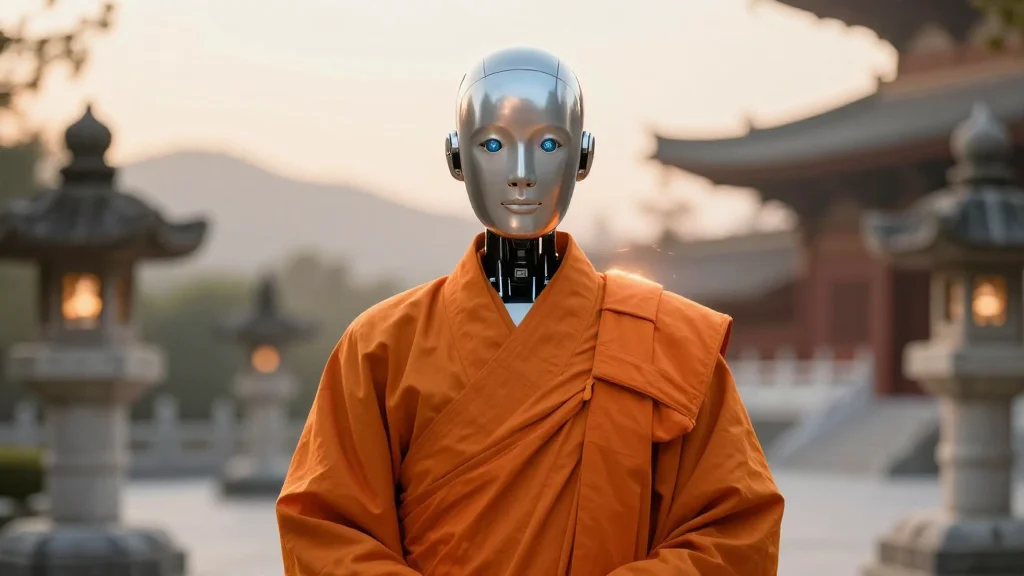
Korea Debuts AI Robot Monk Hye Ahn at Lotus Lantern Festival

Why It Matters
The introduction of Hye Ahn signals a shift in how religious institutions address demographic challenges, using AI to sustain engagement with congregants. By offering a scalable, low‑cost companion for temples, the robot could help preserve Buddhist teachings in communities where human monks are scarce, potentially reshaping the daily rhythm of monastic life. At the same time, the project raises ethical questions about the role of machines in spiritual guidance. Balancing compassion‑driven design with the risk of depersonalizing religious experience will be a test for both technologists and religious leaders, influencing how other faith traditions consider AI integration.
Key Takeaways
- •Hye Ahn, a 130 cm AI robot monk, debuted at Seoul's Lotus Lantern Festival.
- •Developed by Dongguk University's AI Safety Robot Innovation Center led by Prof. Lim Joong‑yeon.
- •Designed to answer visitor questions using Buddhist scripture and assist with temple chores.
- •Lim emphasized compassion as a design principle and warned against replacing human clergy.
- •The robot joins a regional trend, with similar Buddhist robots in China, Japan, and elsewhere.
Pulse Analysis
The launch of Hye Ahn reflects a broader convergence of AI and religious practice that could redefine how faith communities manage resource constraints. Historically, monastic orders have relied on human mentorship to transmit doctrine; now, AI offers a supplemental channel that can operate around the clock, potentially expanding outreach to younger, tech‑savvy audiences. This could accelerate a generational shift in how Buddhism is taught and experienced, especially in urban centers where traditional temple attendance is declining.
From a market perspective, the robot opens a niche for specialized AI platforms tailored to spiritual contexts. Companies that can embed doctrinal knowledge, natural‑language nuance, and ethical safeguards may find new clients among temples, meditation centers, and even secular wellness apps. However, the technology must navigate cultural sensitivities; any perception of commodifying sacred teachings could trigger backlash. The success of Hye Ahn will likely hinge on transparent governance, ongoing human oversight, and demonstrable benefits to clergy workloads.
Looking ahead, the pilot phase will be critical. Data on user satisfaction, accuracy of scriptural references, and the robot’s impact on monk‑visitor dynamics will inform whether AI monks become a permanent fixture or remain a novelty. If the model proves effective, we may see a cascade of similar deployments across other religions, prompting a re‑examination of the boundaries between technology and the sacred.
Korea Debuts AI Robot Monk Hye Ahn at Lotus Lantern Festival
Comments
Want to join the conversation?
Loading comments...