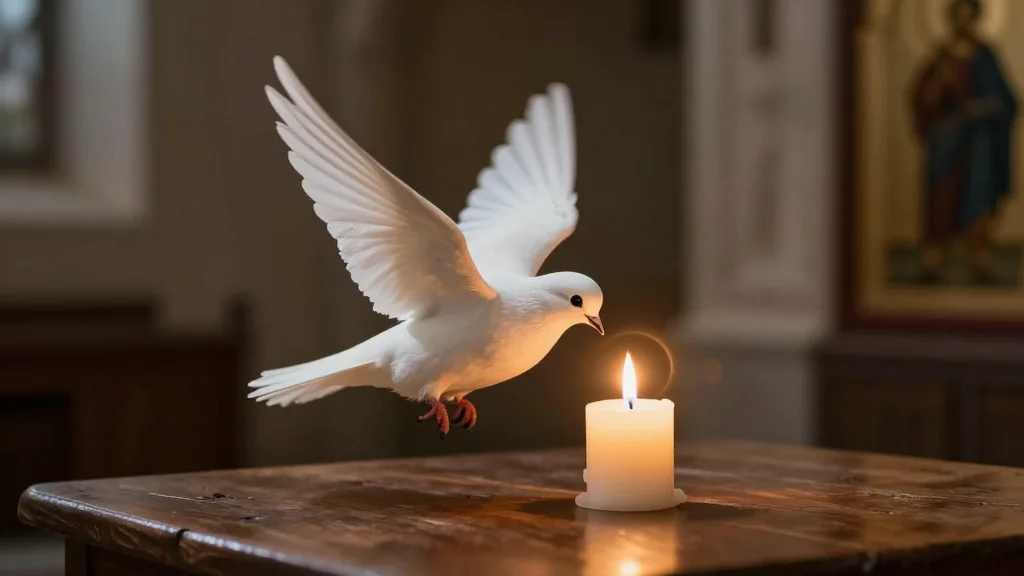
Metropolitan Epifaniy Declares Holy Spirit Dwells Within Every Believer on Pentecost

Why It Matters
Metropolitan Epifaniy’s pronouncement repositions the Holy Spirit from a doctrinal abstraction to a personal companion, offering Ukrainian believers a source of inner resilience amid ongoing geopolitical stress. By tying the Spirit’s presence to observable virtues, the Church seeks to bridge liturgical tradition with contemporary spiritual needs, potentially reshaping worship practices and community engagement across the Orthodox world. Globally, the message contributes to a broader Orthodox conversation about mysticism, personal piety, and the role of the Holy Trinity in everyday life. If embraced, it could inspire similar pastoral initiatives in other autocephalous churches, influencing how Orthodoxy presents itself to younger, spiritually‑seeking audiences.
Key Takeaways
- •Metropolitan Epifaniy posted a Pentecost reflection on June 2, 2026.
- •He affirmed the Holy Trinity: Father, Son, and Holy Spirit are one God.
- •Quote: “The Father is God, the Son is God, and the Holy Spirit is God, yet there are not three gods, but one God.”
- •Quote: “Do you not know that you are God’s temple and that God’s Spirit dwells in you?”
- •The message aims to foster personal spiritual experience amid Ukraine’s ongoing challenges.
Pulse Analysis
The Metropolitan’s focus on the Holy Spirit as an indwelling presence reflects a strategic pastoral shift within Ukrainian Orthodoxy. Historically, the Orthodox tradition has emphasized the communal and sacramental dimensions of faith, often portraying the Spirit as a liturgical catalyst rather than a personal guide. By foregrounding the Spirit’s role in everyday virtues—peace, joy, gratitude—the Church is adapting its theological language to address modern existential anxieties, especially those amplified by war and displacement.
This approach mirrors a subtle but growing trend among Eastern churches to personalize doctrine without compromising orthodoxy. In the past decade, patriarchates in Constantinople and Moscow have launched digital ministries that stress inner transformation, suggesting a competitive drive to retain younger adherents who might otherwise turn to secular spirituality or other faith traditions. Metropolitan Epifaniy’s statement, therefore, is both a doctrinal reaffirmation and a market‑responsive maneuver, positioning the Ukrainian Church as a source of tangible spiritual support.
Looking forward, the real test will be whether this theological framing translates into measurable engagement—higher attendance, increased participation in prayer groups, or expanded charitable activity. If successful, it could set a precedent for other national churches to adopt a more relational narrative of the Holy Spirit, potentially reshaping the global Orthodox identity toward a more experiential, yet still doctrinally sound, expression of faith.
Metropolitan Epifaniy Declares Holy Spirit Dwells Within Every Believer on Pentecost
Comments
Want to join the conversation?
Loading comments...