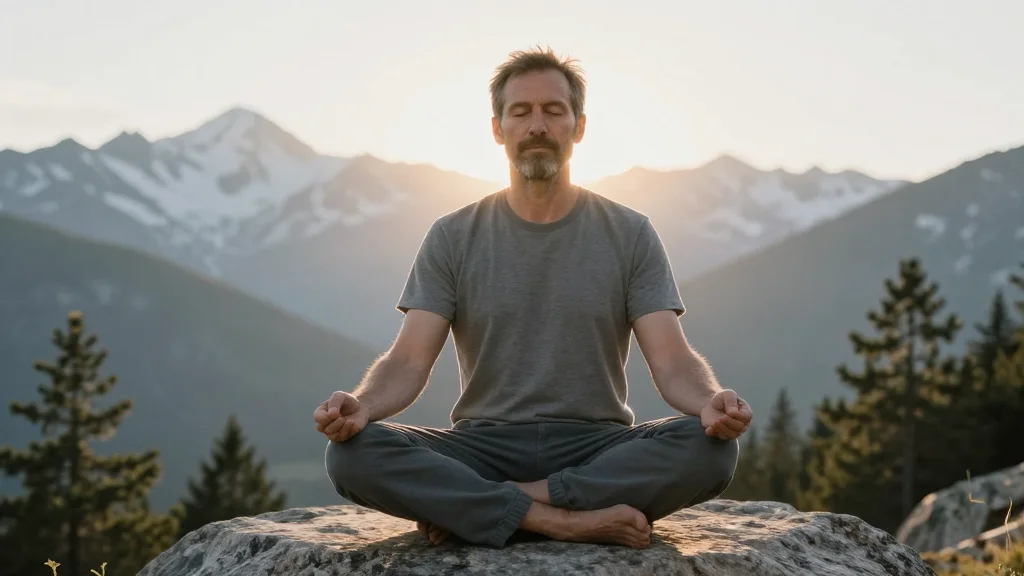
Mindfulness Teacher David Kosak Makes Hope a Daily Discipline at Oregon Retreat

Why It Matters
In an era where constant connectivity fuels anxiety and burnout, Kosak’s discipline‑based approach offers a scalable template for spiritual communities seeking to foster lasting resilience. By framing hope as a practice rather than a feeling, he provides a concrete tool that can be taught, measured, and integrated into everyday routines, potentially reducing reliance on passive consumption of wellness content. Moreover, his blend of mindfulness, physical activity, and poetry challenges the conventional separation between contemplative practice and creative expression, suggesting a more integrated path for modern seekers. If the model proves effective, it could influence how churches, yoga studios, and digital wellness platforms design programs, shifting the focus from one‑off workshops to ongoing habit formation. This could also spur new research on the neuro‑psychological impacts of hope‑oriented disciplines, bridging the gap between spiritual practice and evidence‑based mental‑health interventions.
Key Takeaways
- •David Kosak opened a land‑based retreat in southern Oregon to teach hope as a daily discipline.
- •He frames hope as a moment‑to‑moment practice, linking attention, choice and physical activity.
- •The retreat addresses digital overload, which Kosak says makes emotional responses feel reactive.
- •Poetry and creative expression are core components, with Kosak stating "Poetry allows us to encounter meaning without closing it down."
- •Kosak’s upcoming book *If God Showed Up* will extend the retreat’s methodology to a wider audience.
Pulse Analysis
David Kosak’s retreat arrives at a pivotal moment for the spirituality market, which has seen a surge in digital‑first offerings but a shortage of depth. Traditional meditation centers are increasingly competing with app‑driven experiences that promise quick fixes. Kosak’s model flips that script by insisting on a physical, place‑based anchor and a disciplined habit loop. This could signal a new niche: hybrid retreats that combine the immediacy of digital tools with the embodied rigor of in‑person practice.
Historically, spiritual teachers have used ascetic environments—monasteries, hermitages—to cultivate inner qualities. Kosak updates that archetype for the 21st century, substituting remote mountain settings for urban silence rooms and adding archery as a metaphor for focused intention. If participants report measurable improvements in stress markers, the model may attract funding from wellness investors looking for evidence‑backed programs, potentially scaling beyond Oregon.
The broader implication is a re‑definition of spiritual resilience as a teachable skill set rather than an abstract virtue. As younger generations grapple with information overload, the demand for structured, habit‑forming practices is likely to rise. Kosak’s emphasis on hope, poetry, and embodied work could inspire a wave of curricula that blend mindfulness with creative arts, positioning hope‑discipline as a cornerstone of future spiritual education.
Mindfulness Teacher David Kosak Makes Hope a Daily Discipline at Oregon Retreat
Comments
Want to join the conversation?
Loading comments...