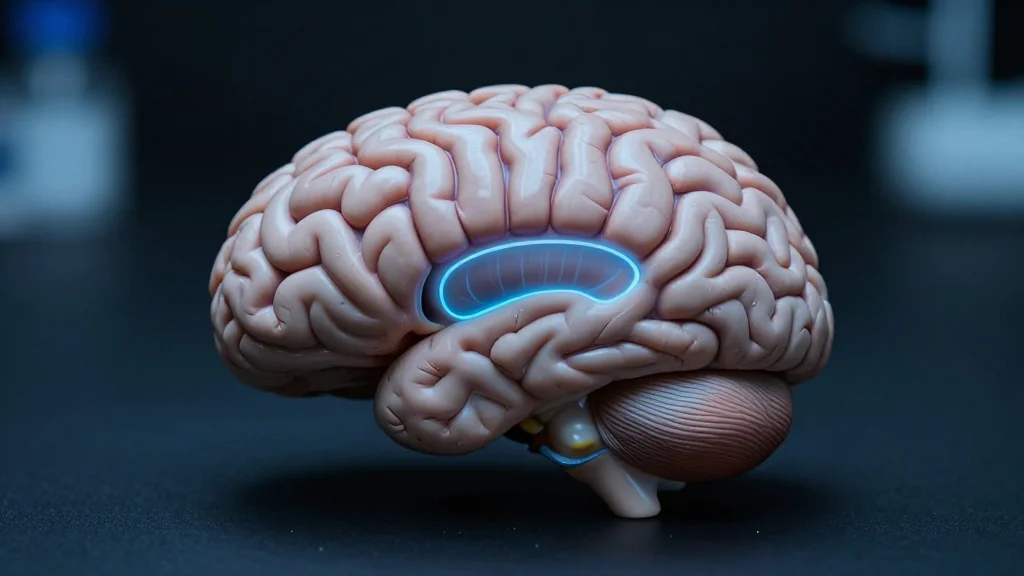
Munich Researchers Pinpoint Thalamic Rhythm That Marks Wakefulness and REM Sleep

Why It Matters
The identification of a thalamic oscillation tied to wakefulness and REM sleep offers a concrete neural marker for states traditionally described only in subjective terms. For the spirituality community, this provides a scientific foothold for discussions about consciousness, mindfulness, and the physiological basis of mystical experiences. Clinically, the rhythm could improve diagnosis and treatment of disorders where consciousness is impaired, aligning medical practice with deeper philosophical inquiries about what it means to be aware. Moreover, the discovery may catalyze interdisciplinary collaborations between neuroscientists, clinicians, and scholars of religion and meditation. By grounding spiritual concepts of heightened awareness in measurable brain activity, the work invites a re‑examination of ancient practices through the lens of modern technology, potentially leading to new therapeutic modalities that integrate meditation, neurofeedback, and targeted brain stimulation.
Key Takeaways
- •LMU Munich researchers recorded a 19‑45 Hz thalamic rhythm present only during wakefulness and REM sleep.
- •The rhythm peaked around 28 Hz and was absent in non‑REM sleep.
- •14 of 17 epilepsy patients showed the oscillation in at least one thalamic recording site.
- •The finding offers a potential biomarker for conscious brain states and could aid diagnosis of consciousness disorders.
- •Future studies will test the rhythm in healthy volunteers and explore modulation via non‑invasive brain stimulation.
Pulse Analysis
The thalamus has long been hypothesized as a central hub for consciousness, but empirical evidence has been scarce because most neuroimaging tools cannot reach its deep structures. This study sidesteps that limitation by exploiting clinical electrode implants, turning a therapeutic necessity into a research advantage. The consistency of the high‑frequency rhythm across participants suggests that the thalamus may generate a distinct electrophysiological signature when the brain is globally integrated, as in wakefulness and dreaming.
From a market perspective, the discovery could invigorate the neurotechnology sector. Companies developing implantable or wearable brain‑monitoring devices may see a new target metric for their algorithms, while pharmaceutical firms might explore drugs that specifically enhance or suppress this rhythm to treat sleep or consciousness disorders. In the spiritual domain, the rhythm provides a tangible bridge between meditation practices that aim to alter consciousness and measurable brain activity, potentially legitimizing mindfulness‑based interventions in mainstream healthcare.
Looking ahead, the key challenge will be replication and generalization. The current cohort consists of epilepsy patients, whose thalamic circuitry may be altered by disease or medication. Expanding the research to diverse populations, including those engaged in intensive meditation or psychedelic therapy, will test the universality of the rhythm. If the signal proves robust, it could become a cornerstone for a new interdisciplinary field that unites neuroscience, clinical practice, and spiritual inquiry under a shared language of brain dynamics.
Munich Researchers Pinpoint Thalamic Rhythm That Marks Wakefulness and REM Sleep
Comments
Want to join the conversation?
Loading comments...