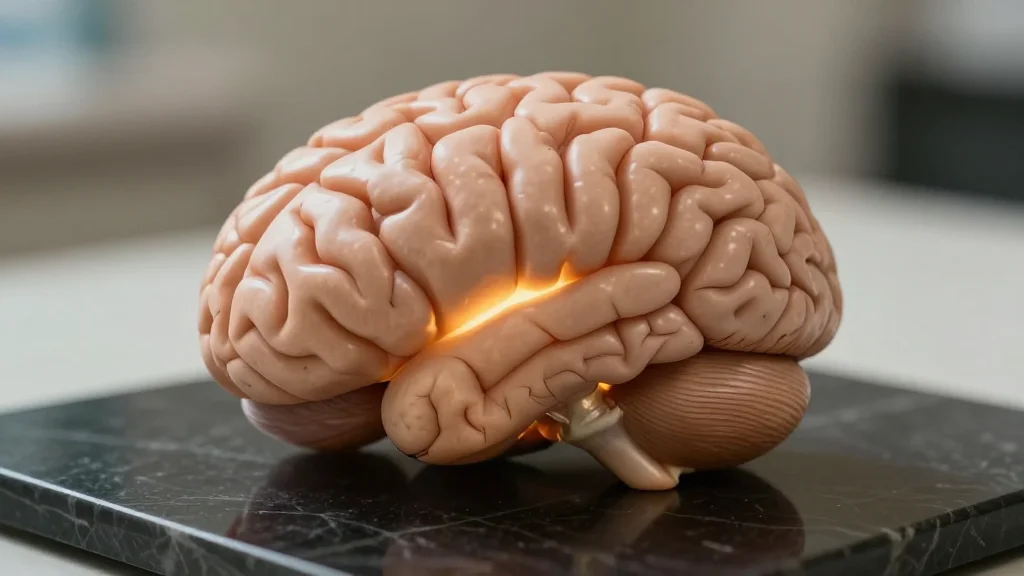
Neuroscientists Target Deep Brain Structures as New Seat of Consciousness

Why It Matters
The debate over where consciousness resides touches the core of many spiritual traditions that posit an inner, immutable awareness separate from the intellect. A subcortical origin would lend scientific credence to practices that focus on deep, non‑cortical states of mind, potentially fostering new dialogues between scientists and religious scholars. Moreover, redefining consciousness could reshape legal and ethical standards for animal rights, AI personhood, and emerging biotechnologies that manipulate or replicate human bodies. Beyond philosophy, the shift could influence public policy on emerging medical interventions, such as brain‑computer interfaces and organ‑replacement technologies. If consciousness is proven to be rooted in structures that are present across a wide range of species, regulators may need to reconsider what constitutes a sentient subject, affecting everything from laboratory animal protocols to the moral status of engineered organisms.
Key Takeaways
- •Researchers led by Mark Solms argue consciousness may arise in the subcortex, not the cortex.
- •The cortex comprises about 75 % of brain mass, traditionally seen as the seat of consciousness.
- •Silicon Valley biotech firms are exploring body‑transplant scenarios that hinge on consciousness location.
- •Subcortical hypothesis aligns with meditative traditions emphasizing deep, non‑cortical awareness.
- •Upcoming conferences and new imaging techniques aim to test the subcortical theory empirically.
Pulse Analysis
The subcortical hypothesis arrives at a moment when the neuroscience community is increasingly comfortable questioning long‑standing dogmas. Historically, the cortical model gained dominance because it offered a clear anatomical correlate for language and self‑reflection—functions that seemed uniquely human. Yet the rise of functional neuroimaging has revealed that many core aspects of experience—arousal, emotion, basic perception—are orchestrated by deep‑brain nuclei that predate the cortex by hundreds of millions of years. This evolutionary perspective dovetails with spiritual narratives that locate the self in a primordial, unchanging core, suggesting a convergence of scientific and contemplative insights.
From a market standpoint, the debate could catalyze a new wave of investment in technologies that target subcortical circuits. Companies developing deep‑brain stimulation for depression, PTSD, and consciousness disorders may find renewed justification for expanding their pipelines. Simultaneously, ethical watchdogs and advocacy groups are likely to intensify scrutiny of any biotech venture that claims to sidestep consciousness by removing cortical tissue, echoing past controversies over animal testing and organoid research.
Looking forward, the subcortical model may serve as a catalyst for interdisciplinary collaboration. Philosophers, theologians, and neuroscientists will need to negotiate a shared vocabulary for concepts like "awareness" and "self," potentially leading to a more nuanced public understanding of consciousness that respects both empirical data and existential inquiry. If the hypothesis gains empirical traction, it could usher in a paradigm shift comparable to the Copernican revolution in astronomy—reorienting not just scientific textbooks, but also the spiritual frameworks that have long sought to explain the mystery of mind.
Neuroscientists Target Deep Brain Structures as New Seat of Consciousness
Comments
Want to join the conversation?
Loading comments...