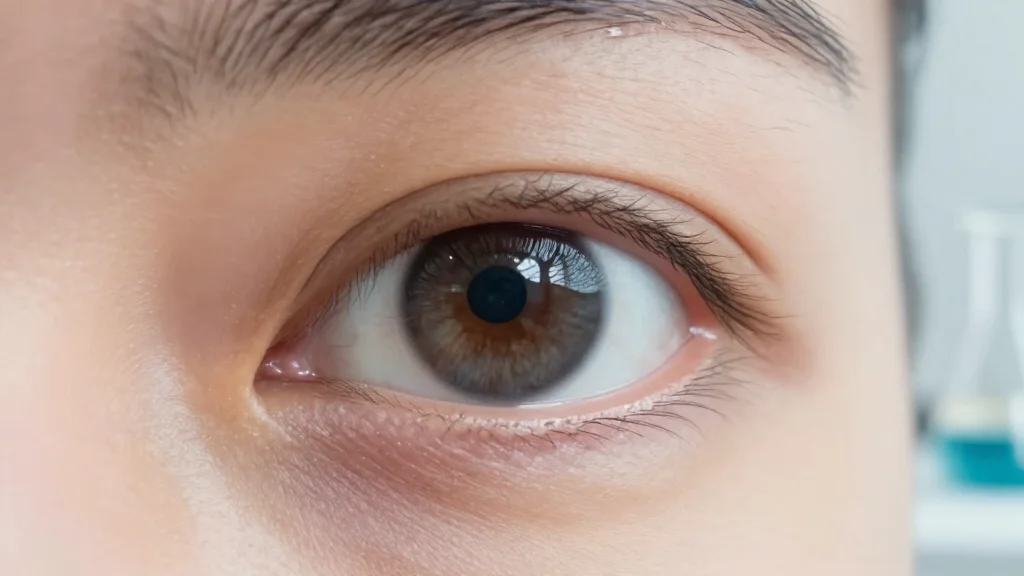
Neuroscientists Use Visual Blind Spot to Test Competing Theories of Consciousness

Why It Matters
The blind‑spot study matters because it provides a concrete experimental arena for testing whether consciousness is primarily a product of brain architecture or of predictive modeling. A clear empirical outcome could settle a debate that has lingered for decades, influencing research funding, clinical approaches to perceptual disorders, and philosophical discourse on the nature of reality. For the spirituality community, the results may validate or challenge long‑standing claims that perception is a mental construction, affecting practices that aim to alter consciousness. Moreover, the INTREPID collaboration’s adversarial methodology sets a precedent for how contentious scientific theories can be rigorously compared. If successful, this model could be replicated in other domains—such as the study of free will or the neural basis of mystical experiences—accelerating progress at the intersection of science and spirituality.
Key Takeaways
- •University of Glasgow and York University release Jan 2026 protocol using the visual blind spot as a testbed.
- •Study pits integrated information theory against predictive processing models of consciousness.
- •Blind spot offers a natural ‘black‑hole’ where visual input is absent, allowing direct measurement of brain’s filling‑in mechanisms.
- •INTREPID collaboration forces rival theories to make testable predictions, a first in consciousness research.
- •Results expected in late 2027 could influence neuroscience, AI design, and spiritual understandings of perception.
Pulse Analysis
The INTREPID blind‑spot experiment marks a strategic shift from abstract debate to data‑driven confrontation in consciousness science. Historically, integrated information theory has appealed to philosophers for its elegant mathematical framing, while predictive processing has gained traction among cognitive neuroscientists for its alignment with Bayesian brain models. By anchoring both theories to a measurable perceptual phenomenon, the Glasgow‑York team forces each to generate quantitative forecasts—a move that could finally expose which framework better captures the brain’s handling of missing data.
If the data reveal cortical compression around the blind spot, it would lend credence to IIT’s claim that consciousness is tightly bound to the brain’s physical substrate. Such a finding could reinforce materialist narratives and steer funding toward high‑resolution mapping of neural connectivity. Conversely, evidence of seamless stitching would bolster predictive processing, suggesting that consciousness is a dynamic inferential engine. This outcome could accelerate research into computational models of perception, with downstream effects on AI systems that aim to emulate human‑like awareness.
Beyond the scientific arena, the study’s metaphor of a “black‑hole” in consciousness resonates with spiritual traditions that speak of inner voids and the mind’s capacity to project reality. A demonstration that the brain actively constructs experience may empower meditation practices that seek to observe or dissolve these constructed layers. Regardless of which theory prevails, the experiment underscores the value of interdisciplinary collaboration—melding rigorous neuroscience with the age‑old human quest to understand the nature of reality.
Neuroscientists Use Visual Blind Spot to Test Competing Theories of Consciousness
Comments
Want to join the conversation?
Loading comments...