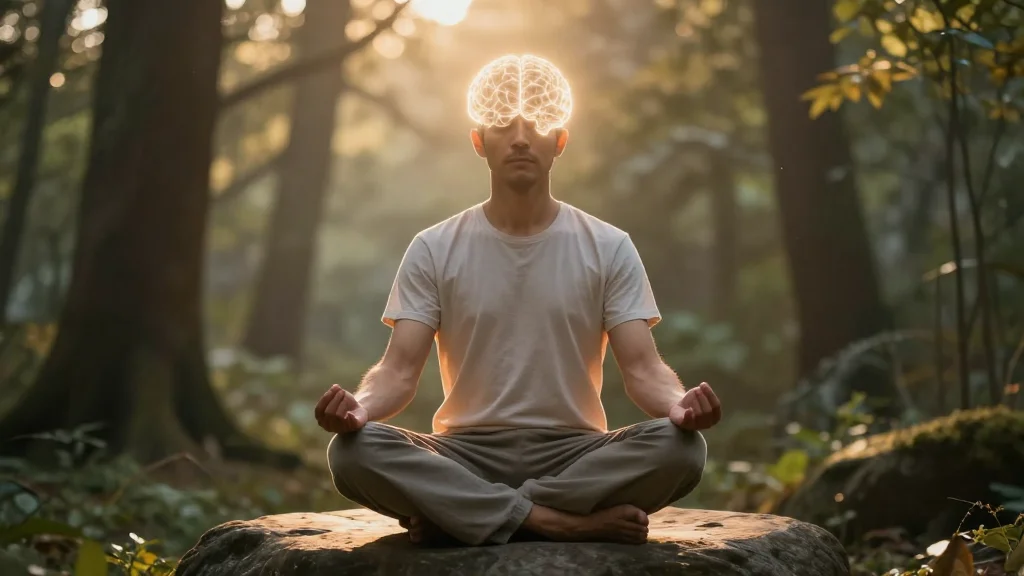
New Study Links Default Mode Network to Personal Consciousness, Illuminating Spiritual Self

Why It Matters
The study bridges a gap between empirical neuroscience and the spiritual quest for self‑understanding, suggesting that the brain's default mode network may be the physiological basis for the inner narrative cherished by many religious and contemplative traditions. By pinpointing a neural correlate of personal identity, the research could reshape therapeutic approaches, inform meditation techniques, and influence how spiritual communities articulate the relationship between mind and soul. Beyond individual well‑being, the findings may impact broader cultural conversations about free will, moral responsibility, and the nature of consciousness. If personal identity is rooted in dynamic brain patterns, societies might reconsider how they address mental health, education, and even legal notions of personhood, integrating scientific insights with longstanding spiritual perspectives.
Key Takeaways
- •fMRI scans of 16 volunteers showed DMN activity becomes more complex when awake, simpler under anesthesia
- •DMN links prefrontal cortex and parietal lobe, regions that expanded rapidly 800,000‑200,000 years ago
- •Study published in Nature Communications Biology provides a neural basis for personal inner worlds
- •Findings fuel debate between reductionist neuroscience and spiritual interpretations of self
- •Potential applications include meditation, psychedelics, and therapeutic practices targeting DMN
Pulse Analysis
The convergence of neuroscience and spirituality in this study marks a pivotal moment for both fields. Historically, the default mode network has been associated with mind‑wandering and self‑referential thought, but its role as a "personal narrative engine" reframes it as the seat of the subjective experience that spiritual traditions have long described as the soul or inner self. This reframing invites a re‑examination of ancient contemplative practices through a modern, data‑driven lens.
From a market perspective, the research could accelerate investment in neuro‑tech platforms that aim to modulate DMN activity. Companies developing brain‑computer interfaces, neurofeedback devices, and psychedelic‑assisted therapies may leverage these findings to claim more precise mechanisms of action, attracting both venture capital and clinical interest. At the same time, spiritual organizations may adopt a more scientific vocabulary, positioning themselves as evidence‑based communities that respect both inner experience and external validation.
Looking ahead, the key challenge will be integrating these insights without reducing the richness of spiritual experience to mere circuitry. Future interdisciplinary collaborations—bringing together neuroscientists, philosophers, theologians, and practitioners—will be essential to navigate ethical considerations, preserve the mystery that fuels spiritual inquiry, and ensure that scientific progress enhances rather than eclipses the human search for meaning.
New Study Links Default Mode Network to Personal Consciousness, Illuminating Spiritual Self
Comments
Want to join the conversation?
Loading comments...