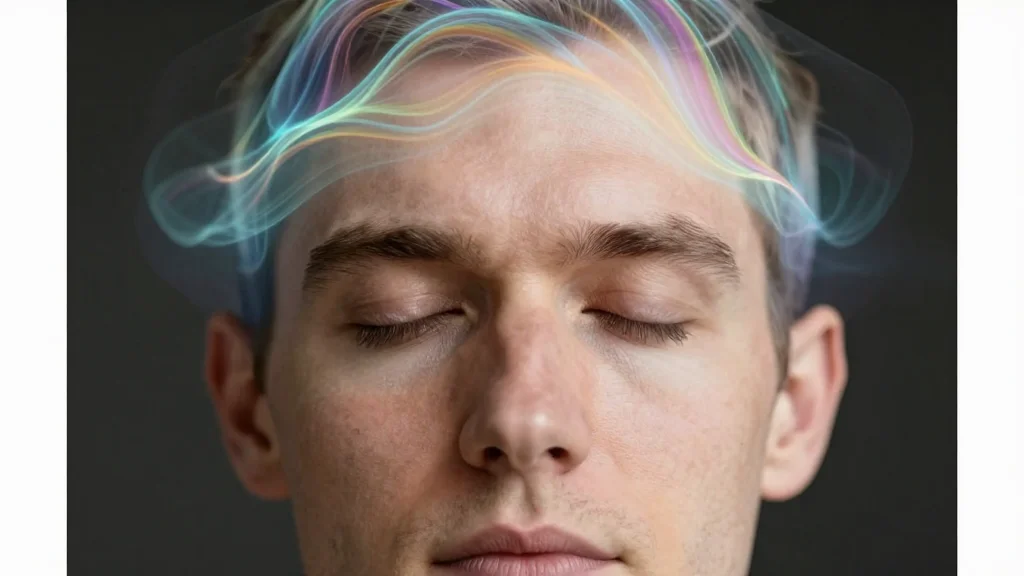
Oxford Physicist Proposes Quantum Method to Expand Human Consciousness

Companies Mentioned
Why It Matters
The theory could reshape how the spiritual community frames experiences of expanded awareness, offering a scientific veneer that may attract new adherents and funding. For the scientific community, it opens a novel research frontier that could unify quantum physics with cognitive neuroscience, potentially leading to breakthroughs in brain‑computer interfaces and mental health treatments. However, the lack of empirical validation also risks blurring the line between rigorous science and speculative spirituality, underscoring the need for disciplined experimentation. Moreover, the proposal arrives at a moment when commercial interest in consciousness‑enhancing technologies is surging. A credible quantum model could steer investment toward more fundamental research rather than purely market‑driven gadgetry, influencing the direction of a multi‑billion‑dollar industry.
Key Takeaways
- •Oxford physicist links quantum superposition to human decision‑making.
- •Proposes method to sustain superposed mental states for expanded consciousness.
- •Theory draws on Niels Bohr’s complementarity and David Bohm’s quantum mind ideas.
- •Critics highlight lack of direct experimental evidence and brain’s decoherence challenges.
- •Potential to bridge scientific study of consciousness with spiritual practices.
Pulse Analysis
The Oxford proposal taps into a recurring pattern: scientific breakthroughs are often co‑opted by spiritual movements seeking legitimacy. Historically, quantum mechanics has been a fertile metaphor for mysticism, from the New Age boom of the 1970s to today’s mindfulness tech wave. This new hypothesis could reignite that synergy, but the stakes are higher because investors are now pouring capital into neuro‑enhancement startups. If the quantum model gains experimental traction, it could shift funding from purely algorithmic or pharmacological approaches toward hardware that manipulates quantum coherence in the brain, reshaping the competitive landscape.
From a scholarly perspective, the claim challenges the dominant neurobiological paradigm that attributes consciousness to emergent network dynamics. While the brain’s temperature and noise levels make sustained quantum coherence unlikely, recent work on quantum effects in photosynthesis and avian navigation suggests that biology can harness quantum phenomena under specific conditions. Should neuroscientists uncover analogous mechanisms in neural tissue, it would demand a revision of existing models and potentially unlock new therapeutic avenues for disorders of perception and cognition.
Looking ahead, the most critical test will be empirical: can researchers design a repeatable experiment that isolates quantum signatures in neuronal firing? Success would not only vindicate the Oxford physicist’s bold conjecture but also provide a scientific foundation for centuries‑old spiritual claims of hidden reality layers. Failure, however, could reinforce the skepticism that currently separates mainstream science from consciousness‑expansion practices, preserving the status quo of cautious, incremental research.
Oxford Physicist Proposes Quantum Method to Expand Human Consciousness
Comments
Want to join the conversation?
Loading comments...