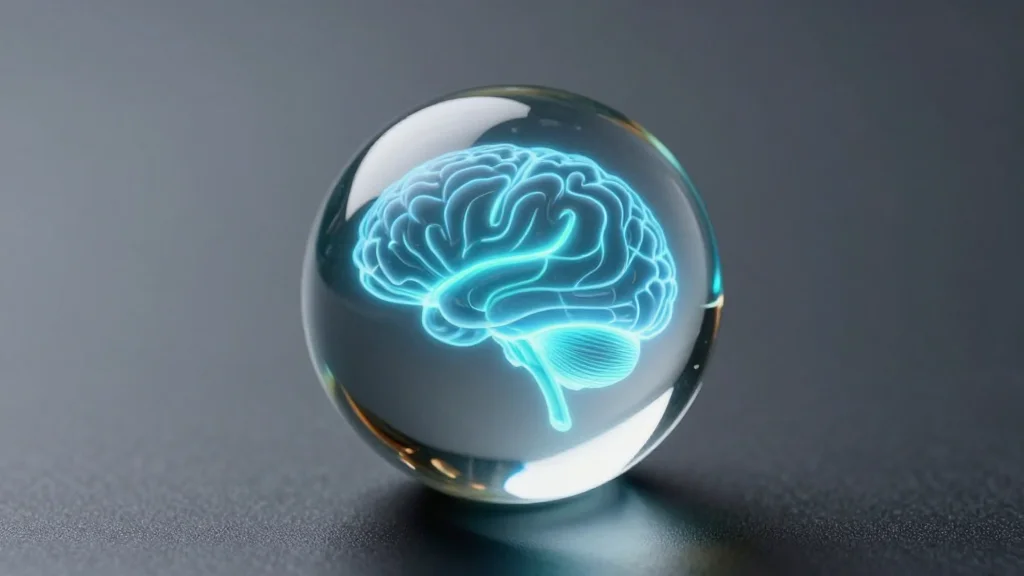
Oxford Physicist Proposes Quantum Model to Expand Human Consciousness

Why It Matters
The proposal directly challenges the long‑standing divide between empirical science and spiritual inquiry, suggesting a common language rooted in quantum physics. If validated, it could provide a scientific basis for practices traditionally labeled mystical, potentially legitimizing them in mainstream discourse. Moreover, the idea of augmenting consciousness raises profound ethical and societal questions about who controls such technologies and how they might reshape concepts of self, agency, and reality. Beyond philosophy, the model could catalyze new research programs at the intersection of quantum mechanics and neuroscience, attracting funding and talent to a nascent field. Success would not only advance our understanding of consciousness but also spur innovations in mental‑health treatment, education and human‑enhancement technologies.
Key Takeaways
- •Oxford physicist proposes a quantum‑based model linking superposition to mental processes
- •Theory suggests future “enhanced humans” could perceive hidden layers of reality
- •Analogy draws on Bohr’s complementarity and the double‑slit experiment
- •Critics warn that scaling quantum effects to brain activity remains speculative
- •Next phase calls for interdisciplinary experiments to test quantum coherence in neural tissue
Pulse Analysis
The emergence of a quantum‑consciousness model reflects a broader trend of scientists reaching into metaphysical territory to explain subjective experience. Historically, attempts to ground consciousness in physics have ranged from Penrose’s orchestrated objective reduction to more recent integrated information theory. This new proposal differentiates itself by explicitly mapping quantum phenomena onto everyday decision‑making, thereby offering a concrete experimental pathway rather than a purely philosophical argument.
From a market perspective, the hypothesis could ignite a wave of venture capital interest in quantum‑neuro startups, similar to the surge seen in brain‑computer interface firms over the past five years. Companies that can demonstrate measurable quantum signatures in neural activity may attract partnerships with pharmaceutical and wellness sectors eager to capitalize on “enhanced cognition” products. However, the field also faces regulatory scrutiny; any claims of consciousness expansion will likely be examined under existing medical device frameworks, demanding rigorous safety and efficacy data.
Looking ahead, the real test will be whether the model can survive peer review and produce reproducible results. If it does, we may witness a paradigm shift where spiritual practices are reframed as quantum‑aligned techniques, blurring the line between inner development and technological augmentation. If not, the episode will serve as a cautionary tale about the limits of metaphorical science in addressing the mysteries of the mind.
Oxford Physicist Proposes Quantum Model to Expand Human Consciousness
Comments
Want to join the conversation?
Loading comments...