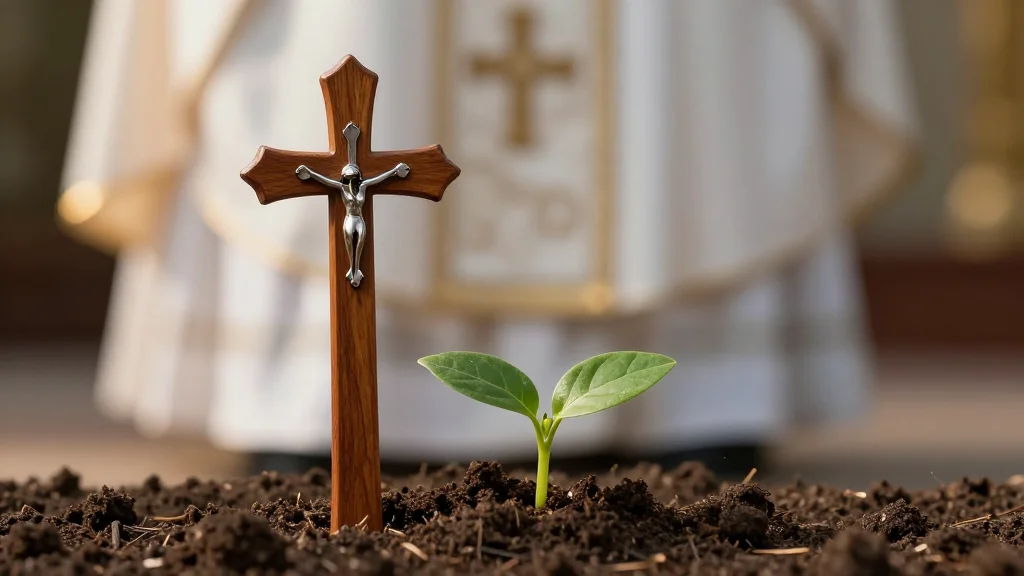
Pope Leo Urges Responsibility and Service to Life in Acerra Address

Why It Matters
Pope Leo’s Acerra address underscores a pivotal shift in how major religious institutions engage with environmental crises, positioning ecological stewardship as a core component of spiritual practice. By invoking the language of dignity, responsibility and the common good, the Pope bridges doctrinal teachings with lived realities, encouraging believers to view care for the planet as an expression of faith. This framing could catalyze increased participation in climate‑action initiatives among Catholic communities, amplifying the moral weight behind global sustainability efforts. Moreover, the speech highlights the Vatican’s strategic use of pastoral visits to spotlight localized suffering, thereby humanizing abstract environmental data. As the Church’s 1.3 billion adherents grapple with the tangible impacts of pollution, the Pope’s call for "service to life" may inspire a wave of faith‑driven advocacy that pressures governments and corporations to adopt greener policies, reinforcing the growing alliance between spirituality and environmental activism.
Key Takeaways
- •Pope Leo XIV visited Acerra, Italy, labeling it the “Land of Fires” and urging responsibility for life.
- •He quoted: “Fatalism, complaining, and shifting blame onto others are the breeding ground of illegality and the beginning of the desertification of consciences.”
- •The address referenced Pope Francis’s _Laudato si’_ encyclical, linking ecological care to spiritual duty.
- •Local officials pledged to collaborate with the Vatican on cleanup and education initiatives.
- •The Vatican plans a follow‑up document on parish‑level environmental action later this year.
Pulse Analysis
The Pope’s intervention in Acerra reflects a broader pattern where religious authority is leveraged to legitimize environmental policy. Historically, the Catholic Church has oscillated between spiritual guidance and socio‑political influence; this moment marks a decisive alignment with climate justice, echoing the Vatican’s 2023 climate summit that called for a "green conversion" of economies. By situating ecological responsibility within the language of dignity and justice, the Pope reframes environmental stewardship from a peripheral concern to a central tenet of Catholic identity.
This approach also carries strategic implications for the Church’s global outreach. In regions where environmental degradation fuels social unrest—such as parts of Latin America and sub‑Saharan Africa—linking faith to tangible ecological outcomes can strengthen community cohesion and enhance the Church’s relevance. However, the message may encounter resistance from entrenched economic interests that view regulatory measures as threats to profit. The Pope’s explicit warning against “business interests of a few” signals a willingness to confront such opposition, potentially reshaping the dialogue between religious institutions and policymakers.
Looking ahead, the Vatican’s forthcoming document on parish‑level action could serve as a blueprint for faith‑based climate initiatives worldwide. If effectively disseminated, it may inspire a cascade of local projects, from reforestation drives to renewable‑energy cooperatives, anchored in spiritual motivation. The success of this model will depend on the Church’s capacity to translate moral exhortation into concrete resources and partnerships, a challenge that will test the Vatican’s organizational agility in the coming years.
Pope Leo Urges Responsibility and Service to Life in Acerra Address
Comments
Want to join the conversation?
Loading comments...