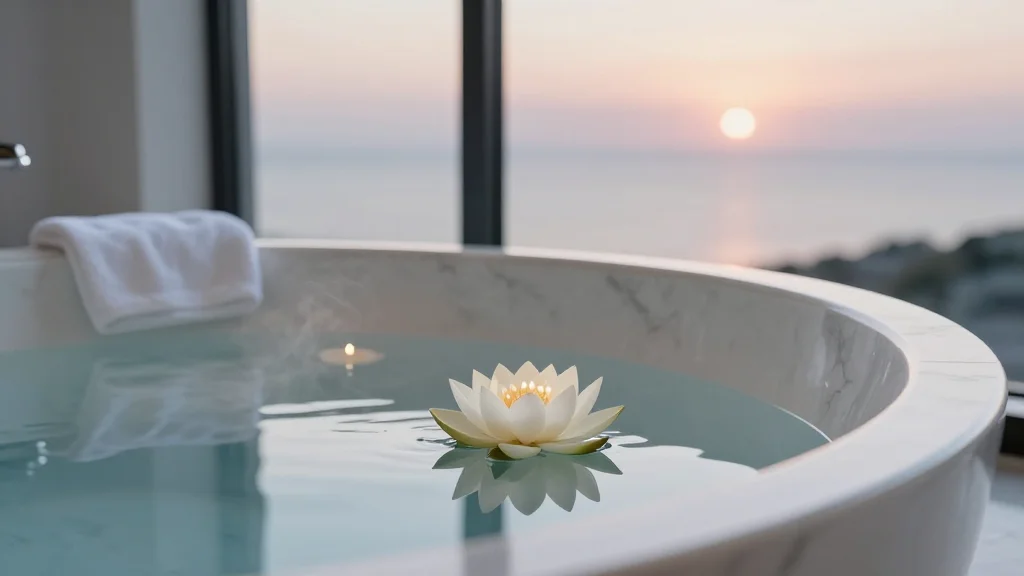
Quiet Wellness Becomes Luxury Trend, Prioritizing Mindful Stillness

Why It Matters
The quiet‑wellness trend signals a fundamental reorientation of spiritual practice from external display to internal cultivation. By valuing silence, rest and subtle recovery, consumers are redefining what constitutes spiritual luxury, moving away from material excess toward experiential depth. This shift could reshape how spiritual teachers, retreat organizers and wellness brands design offerings, emphasizing mindfulness, breathwork and restorative environments. For the broader spirituality market, the trend offers a new revenue stream: services and products that are intentionally low‑key yet high‑value. It also challenges traditional narratives that equate spiritual progress with visible achievement, encouraging a more inclusive, introspective path that resonates with a generation fatigued by constant connectivity.
Key Takeaways
- •BeautyNews.com identifies quiet wellness as the newest luxury in spiritual lifestyle.
- •Luxury hotels are adding soundproof rooms, circadian lighting and sleep‑focused packages.
- •Spas are shifting from facials to contrast therapy, infrared saunas and sensory‑deprivation rooms.
- •Daily supplements such as magnesium and gut‑health formulas are marketed as essential, minimalist self‑care.
- •Industry insiders warn the trend may coexist with, rather than replace, performative wellness routines.
Pulse Analysis
The emergence of quiet wellness reflects a broader cultural pivot toward what scholars call ‘slow spirituality.’ Historically, spiritual movements have oscillated between outward expression—pilgrimages, communal rituals—and inward contemplation—meditation, silence. The current wave aligns with the latter, driven by digital overload and a desire for authentic recovery. Luxury brands are uniquely positioned to monetize this shift because they can package invisibility as exclusivity; a soundproof suite or a private meditation pod becomes a status symbol precisely because it is unseen.
From a market perspective, the trend creates a new competitive frontier. Traditional wellness influencers who built empires on visual content must now adapt, either by integrating silent experiences into their portfolios or by targeting a different demographic. Meanwhile, hospitality and spa operators that invest early in acoustic design and circadian technology stand to capture a growing segment of affluent travelers seeking restorative stays. The rise of supplement routines as a daily luxury also hints at a convergence of beauty, health and spirituality, blurring category lines and encouraging cross‑industry collaborations.
Looking ahead, the sustainability of quiet wellness will depend on its ability to deliver measurable benefits. As consumers become more data‑savvy, they will likely demand quantifiable outcomes—sleep quality scores, cortisol reductions, heart‑rate variability improvements—before committing to high‑priced silent experiences. Brands that can pair the intangible allure of stillness with concrete health metrics will shape the next chapter of spiritual luxury, turning silence from a niche practice into a mainstream benchmark for well‑being.
Quiet Wellness Becomes Luxury Trend, Prioritizing Mindful Stillness
Comments
Want to join the conversation?
Loading comments...