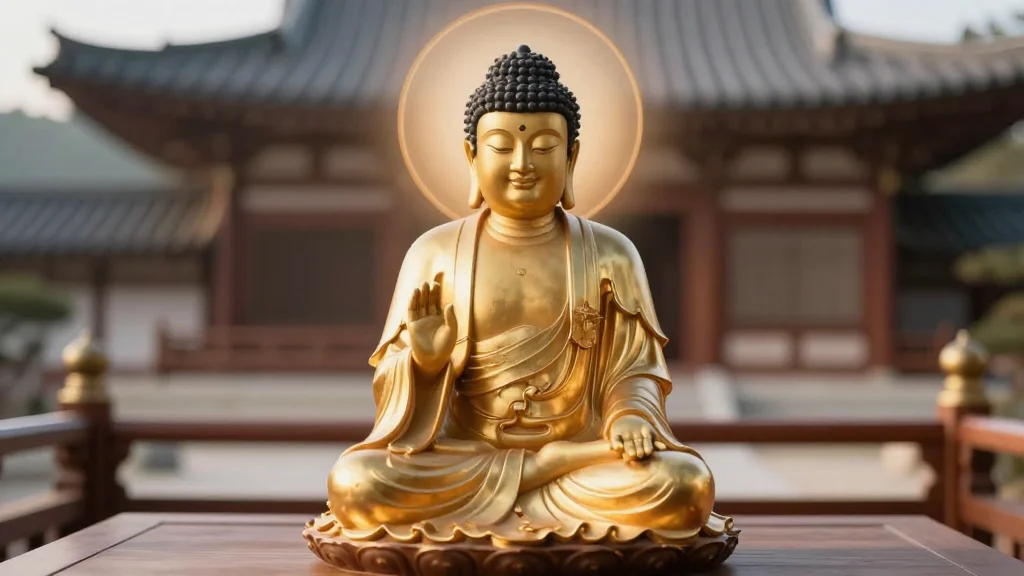
South Korean President Lee Calls Buddhist Non‑Duality Essential Wisdom for Nation

Why It Matters
Lee’s public embrace of Buddhist non‑duality signals a shift in how spiritual concepts can be leveraged in national discourse, potentially reshaping policy priorities around empathy, inclusion and mental health. By positioning a centuries‑old teaching as a solution to modern social fragmentation, the president may encourage other political figures to draw on spiritual frameworks, altering the tone of public debate. The move also tests South Korea’s secular framework. If the government integrates spiritual language into policy, it could set precedents for future leaders, prompting both support from faith‑based constituencies and scrutiny from secular watchdogs. The balance struck will influence how religion and state interact in a highly pluralistic society.
Key Takeaways
- •President Lee Jae‑myung highlighted Buddhist concepts of "hwajaeng" and "jata‑buri" as essential wisdom at a national ceremony.
- •He warned that rapid social change is eroding empathy, urging compassion over hatred.
- •Lee pledged to pray for marginalized citizens, lighting lotus lanterns as a symbolic act.
- •The remarks may influence upcoming policy initiatives, including the July national territory transformation plan.
- •Critics caution that overt spiritual references could challenge South Korea’s secular constitution.
Pulse Analysis
Lee’s invocation of Buddhist non‑duality is more than a symbolic gesture; it reflects a strategic attempt to harness cultural heritage for social cohesion. Historically, South Korean presidents have maintained a cautious distance from overt religious endorsement to preserve secular legitimacy. By aligning with Buddhist teachings that emphasize unity, Lee is tapping into a moral reservoir that resonates with a majority of the population, many of whom practice Buddhism or are familiar with its principles.
From a political standpoint, the timing is critical. The nation faces heightened polarization over economic disparity, youth unemployment and regional security concerns. Framing these issues through the lens of compassion offers a narrative that sidesteps partisan blame and instead calls for collective responsibility. If the administration follows through with concrete programs—such as empathy curricula in schools or community‑based mediation—Lee could set a precedent for policy‑driven spirituality, a model that other East Asian governments might observe.
However, the approach carries risks. South Korea’s constitutional court has previously ruled against government actions that appear to favor a particular religion. While Buddhism is culturally ingrained, the state must ensure that any policy derived from these teachings remains inclusive. The president’s next moves—particularly his engagements with leaders of other faiths—will determine whether this is a unifying outreach or a polarizing alignment. The coming months will reveal if Lee’s spiritual rhetoric translates into measurable social outcomes or remains a rhetorical flourish.
South Korean President Lee Calls Buddhist Non‑Duality Essential Wisdom for Nation
Comments
Want to join the conversation?
Loading comments...