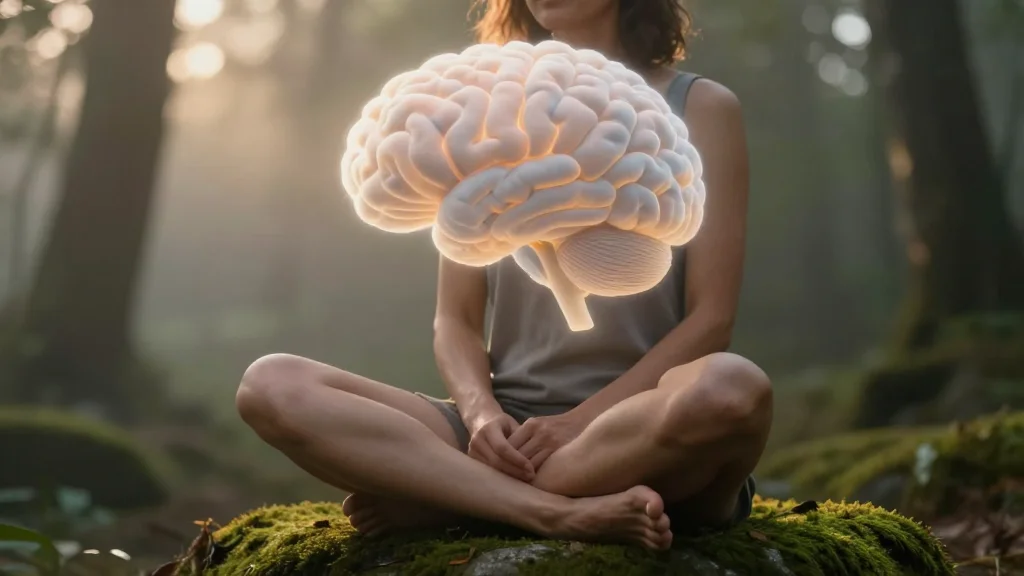
Study Links Default Mode Network to Personal Uniqueness in Consciousness

Why It Matters
By pinpointing a neural network that appears to encode the personal dimension of consciousness, the study provides a scientific foothold for discussions that have traditionally lived in the realm of philosophy and spirituality. For practitioners of meditation, yoga, and contemplative traditions, the DMN offers a tangible target for practices that aim to cultivate self‑knowledge and inner peace. Moreover, the work could influence mental‑health treatment, where dysregulated DMN activity has been linked to depression and anxiety, suggesting that spiritual techniques might have measurable therapeutic benefits. The broader cultural impact lies in demystifying the self. If the sense of individuality can be traced to specific brain dynamics, it may shift how societies frame concepts like free will, personal responsibility, and the nature of the soul, prompting renewed dialogue between scientists, theologians, and spiritual leaders.
Key Takeaways
- •16 volunteers listened to a *Taken* clip while undergoing fMRI scans both awake and under anesthesia.
- •Conscious states produced more complex and individualized DMN activity patterns.
- •Unconscious states showed simplified, more uniform DMN signatures across participants.
- •Attention and sensory networks were more synchronized when participants were awake.
- •Researchers plan larger studies to test how meditation and other stimuli affect DMN complexity.
Pulse Analysis
The study marks a pivotal moment in the ongoing effort to map subjective experience onto neural circuitry. Historically, the default mode network has been associated with mind‑wandering, self‑referential thought, and even the sense of agency. By demonstrating that the DMN’s patterning varies dramatically from one conscious individual to another, the research adds a quantitative layer to what spiritual traditions have described qualitatively for millennia: the inner narrative that defines personal identity.
From a market perspective, the findings could accelerate investment in neurotechnology aimed at monitoring or modulating the DMN. Companies developing portable EEG or fNIRS devices for meditation coaching may soon claim evidence‑based efficacy tied to DMN dynamics. Meanwhile, academic institutions are likely to seek interdisciplinary grants that bring together neuroscientists, philosophers, and religious studies scholars, fostering a new niche of “spiritual neuroscience.”
Looking ahead, the most compelling question is whether intentional practices can reliably reshape DMN activity in ways that enhance well‑being. If future trials confirm that meditation, prayer, or even narrative therapy produce lasting changes in the DMN, we could see a paradigm shift where spiritual disciplines are integrated into mainstream mental‑health protocols, blurring the line between secular neuroscience and age‑old spiritual wisdom.
Study Links Default Mode Network to Personal Uniqueness in Consciousness
Comments
Want to join the conversation?
Loading comments...