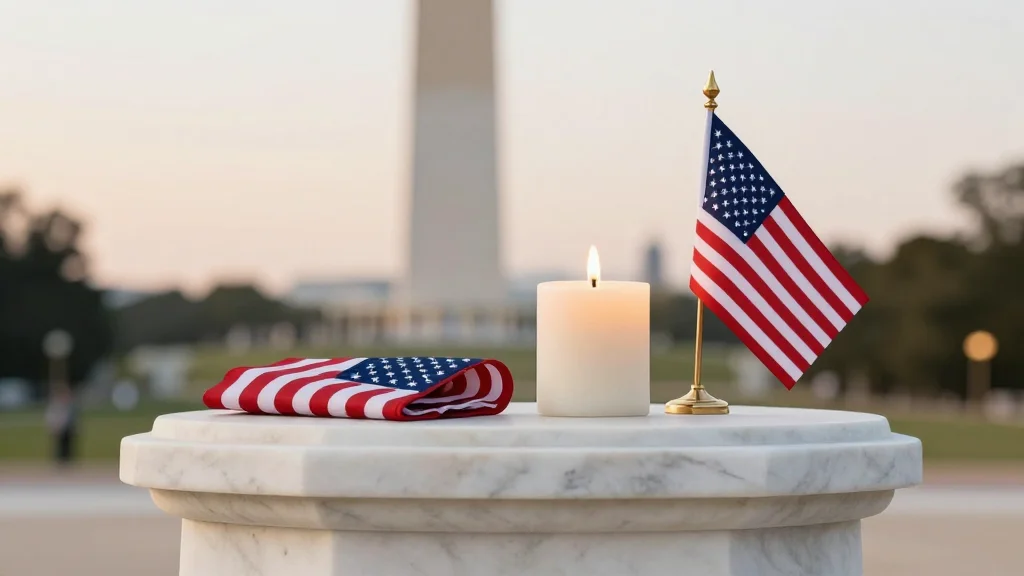
Thousands Gather on National Mall for America‑Themed Prayer Rally

Why It Matters
The National Mall rally illustrates how religious symbolism is being leveraged for political mobilization at a time when the United States is grappling with its multicultural identity. By foregrounding a Christian narrative in a federal space, the event raises questions about the balance between free exercise of religion and the Establishment Clause, a tension that could shape court cases and policy proposals. Moreover, the rally’s high‑profile Republican participation signals that faith‑based messaging will remain a core strategy for the party’s base, influencing campaign rhetoric and voter outreach in forthcoming elections. For religious communities, the rally serves as a flashpoint for dialogue about inclusion, historical memory, and the role of faith in public life. Progressive faith leaders are likely to intensify efforts to promote a broader, pluralistic vision of American spirituality, while conservative groups may double down on narratives that link national identity to Christian heritage. The outcome of this cultural contest will affect everything from school curricula to public monument design.
Key Takeaways
- •Thousands attended the Rededicate 250 prayer rally on the National Mall on May 17, 2026.
- •President Donald Trump appeared via video reading 2 Chronicles, a passage often cited by Christian nationalist advocates.
- •Vice President JD Vance, Defense Secretary Pete Hegseth, Secretary of State Marco Rubio and House Speaker Mike Johnson spoke at the event.
- •Rev. Adam Russell Taylor (Sojourners) and Rabbi Jonah Dov Pesner (Reform Judaism) publicly criticized the rally’s exclusive Christian framing.
- •Organizers plan additional faith‑focused rallies in other U.S. cities later this year.
Pulse Analysis
The Rededicate 250 rally marks a watershed moment in the convergence of faith and politics, revealing how evangelical influence continues to shape Republican strategy despite a diversifying electorate. Historically, American political campaigns have courted religious voters, but the overt use of a federal landmark for a explicitly Christian ceremony pushes the boundary of acceptable public religious expression. This move may energize the GOP’s evangelical base, yet it also risks alienating moderate voters who favor a more secular public sphere.
From a legal perspective, the rally could invite renewed scrutiny from the judiciary. Past Supreme Court decisions—such as *Town of Greece v. Galloway* (2014) and *American Legion v. American Humanist Association* (2019)—have navigated the delicate line between tradition and endorsement. If similar events proliferate, courts may be compelled to revisit the standards that govern religious displays on government property, potentially leading to new precedents that redefine the Establishment Clause in the 21st century.
Looking ahead, the rally’s impact will likely be measured in electoral terms. As the 2026 midterms approach, candidates may adopt more overtly faith‑based platforms to capture the enthusiasm demonstrated at the Mall. Conversely, opposition parties and civil‑rights groups are poised to counter with campaigns emphasizing religious liberty for all faiths, framing the issue as one of inclusion rather than exclusion. The ensuing tug‑of‑war will shape not only political messaging but also the broader cultural narrative about what it means to be an "American" in a pluralistic society.
Thousands Gather on National Mall for America‑Themed Prayer Rally
Comments
Want to join the conversation?
Loading comments...