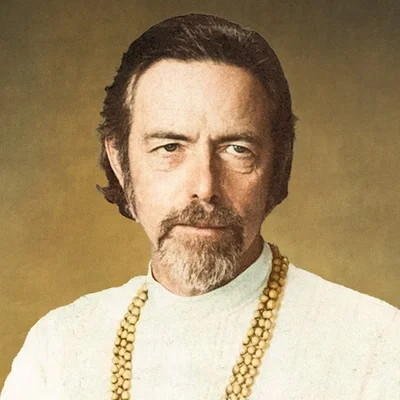
Alan Watts - Intellectual Yoga Full Talk Now on Our Channel #alanwattsquotes
Why It Matters
Cultivating daily mental stillness trims cognitive clutter, enabling clearer decision‑making and sustained focus—critical assets for today’s leaders.
Key Takeaways
- •Silence inner chatter to experience pure present moment awareness.
- •Eliminating self‑talk dissolves past‑future perception and duality entirely.
- •The knower‑known split is a fundamental conceptual illusion.
- •Unthinking once daily reveals an “eternal here and now.”
- •Freedom arises when thoughts no longer dictate required actions.
Summary
Alan Watts frames “intellectual yoga” as the practice of quieting the inner monologue to access a pure, unmediated present. He argues that self‑talk constructs the illusion of past and future, and creates the artificial split between knower and known, subject and object.
When the mental chatter stops, the conceptual scaffolding—thoughts, labels, expectations—vanishes, leaving an “eternal here and now.” Watts emphasizes that this state is not a mystical escape but a daily necessity: unthinking for even a brief moment dissolves the phantom obligations that drive habitual behavior.
He illustrates the point with vivid language: “When you stop talking to yourself… you find you’re in an eternal here and now, with nothing you’re supposed to do.” The talk underscores that the perceived need to act arises only when thinking persists; silence removes that compulsion.
For professionals, the lesson translates into sharper focus, reduced decision‑fatigue, and a clearer sense of purpose. By regularly practicing mental stillness, leaders can cut through cognitive noise, fostering creativity and more intentional action in fast‑moving business environments.
Comments
Want to join the conversation?
Loading comments...