Why It Matters
Licensing the upper 6 GHz band unlocks new mid‑band capacity for 5G and future 6G services, accelerating network densification and revenue growth for operators worldwide.
Key Takeaways
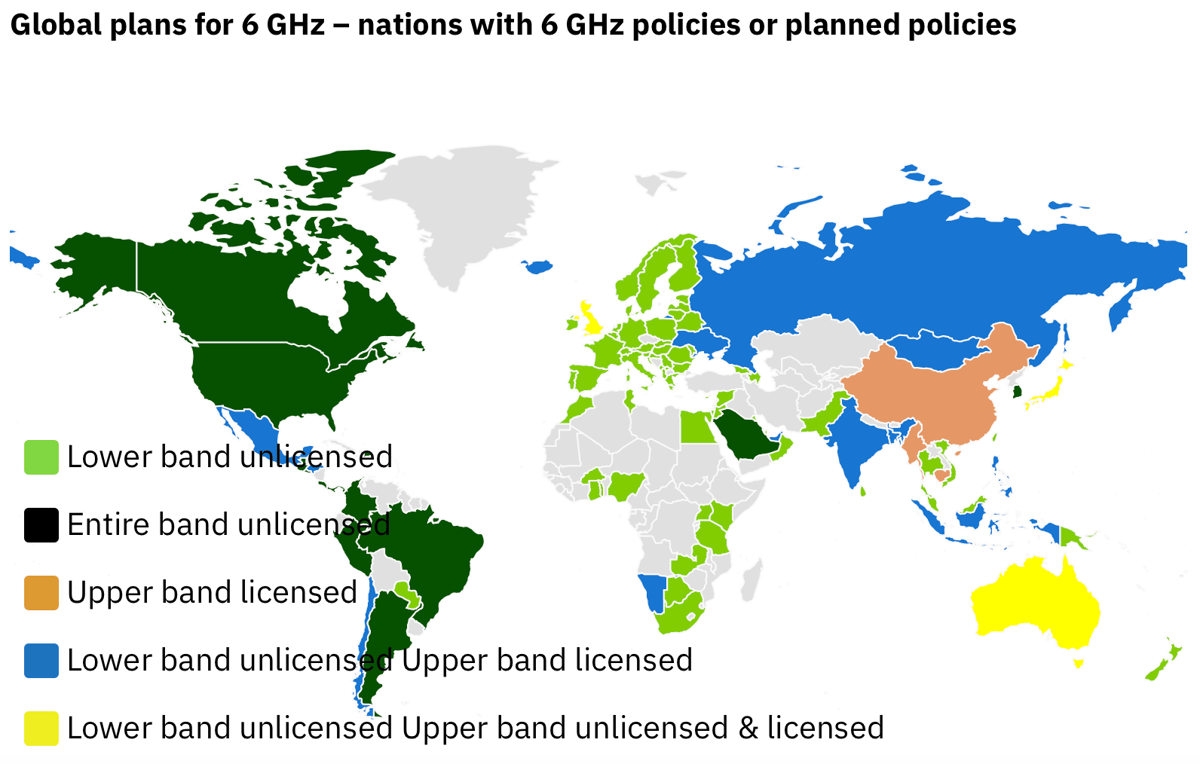
- •22 nations plan IMT use of upper 6 GHz band
- •Asia: 12 countries, including China, consulting on policies
- •Europe: 4 licensing plans, 14 considering licensed upper band
- •Africa maintains unlicensed 5925‑6425 MHz, few licensed plans
- •Middle East/Americas favor unlicensed, licensed interest growing
Pulse Analysis
The 6 GHz spectrum has become a strategic frontier as mobile traffic outpaces traditional sub‑6 GHz resources. The 2023 World Radiocommunication Conference introduced three IMT footnotes that explicitly recognize the upper 6 GHz band for mobile services, paving the way for operators to tap a relatively clean, mid‑band pool. This regulatory shift addresses the chronic spectrum crunch faced by carriers worldwide, offering a bridge between low‑band coverage and high‑frequency millimeter‑wave capacity, while also laying groundwork for future 6G deployments.
Regional momentum reflects divergent market pressures and policy cultures. In Asia, twelve nations—including the technology‑heavy market of China—are actively drafting licensing frameworks, signaling a rapid rollout of enhanced mobile broadband and private network solutions. Europe’s mixed approach, with four countries already planning licenses and fourteen evaluating them, underscores a cautious but forward‑looking stance that balances incumbent unlicensed use with commercial licensing opportunities. Meanwhile, Africa’s focus on unlicensed 5925‑6425 MHz allocations preserves low‑cost connectivity, yet a handful of pilots hint at a gradual shift toward licensed spectrum as demand for enterprise‑grade services rises. The Middle East and the Americas, traditionally unlicensed‑centric, are now witnessing growing interest from operators seeking to augment capacity in dense urban cores.
Looking ahead, harmonized licensing across the upper 6 GHz band could catalyze economies of scale for equipment manufacturers and accelerate network rollout timelines. Investors are likely to view the emerging licensed pool as a catalyst for new revenue streams, especially in private LTE/5G and industrial IoT verticals. Policy alignment will also reduce fragmentation, enabling cross‑border service offerings and smoother roaming experiences. As the benchmark becomes widely available through PolicyTracker, stakeholders can benchmark progress, anticipate regulatory shifts, and strategically position capital to capture the next wave of spectrum‑driven growth.
6 GHz benchmark updated for 2026
0
Comments
Want to join the conversation?
Loading comments...