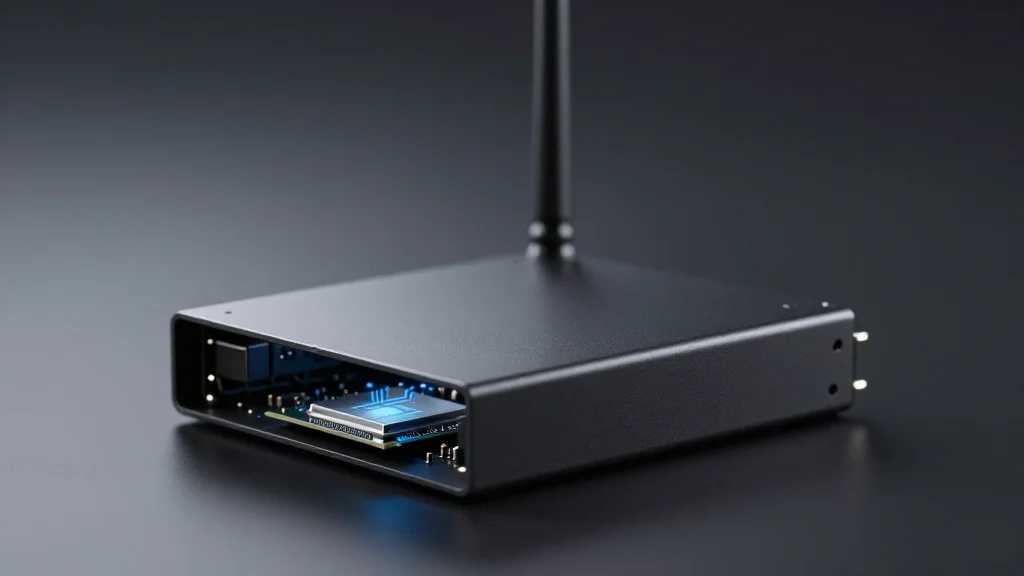
Analysis: Nvidia’s Rumored New 6G AI-RAN – Likely Features/Functions and Industry Impact
Key Takeaways
- •Nvidia targets sub‑100W AI‑RAN chip for 6G radio units
- •AI‑driven channel estimation could boost spectral efficiency
- •Potential threat to Qualcomm and Marvell's Layer‑1 silicon
- •Integration may compress Nokia's differentiation in RAN stack
- •Operators will watch power envelope and upgrade path
Pulse Analysis
Nvidia’s AI‑RAN roadmap has long focused on marrying its GPU and CUDA ecosystem with telecom infrastructure, but the latest Light Reading leak suggests a decisive step: a dedicated AI‑RAN chip embedded in the radio unit itself. By moving intelligence closer to the antenna, Nvidia hopes to unlock tighter loop‑times for tasks that traditionally rely on separate baseband processors. The timing aligns with the industry’s tentative 6G roadmap, where IMT‑2030 specifications are still years away, giving Nvidia a runway to prototype a sub‑100 W silicon solution that can be upgraded via software as standards mature.
The rumored chip would likely concentrate on AI‑enhanced PHY functions. Neural channel estimation and equalization can extract cleaner signal states from noisy RF, while real‑time beam management and dynamic spectrum agility promise higher capacity in mmWave and upper‑midband deployments. Integrated sensing‑and‑communication (ISAC) capabilities would let the radio simultaneously detect objects and transmit data, a use case Nvidia has already showcased with camera‑RF fusion. Edge inference hooks could expose raw PHY metrics to higher‑layer AI applications, enabling closed‑loop self‑optimization that continuously retunes coding, MCS and power settings without human intervention. Together, these features aim to improve spectral efficiency, reduce latency and lower OPEX for operators.
If Nvidia delivers, the competitive landscape could shift dramatically. Qualcomm and Marvell, both entrenched in Layer‑1 silicon, face a direct challenge from a GPU‑centric approach that leverages hyperscale AI expertise. Nokia, currently a partner in Nvidia’s ARC‑Pro platform, may see its differentiation erode as more of the RAN stack becomes software‑defined and GPU‑driven. Ericsson, while skeptical today, could be forced to re‑evaluate its proprietary stack strategy. Even Samsung, which touts AMD and Intel collaborations, will need to justify its own AI‑compute roadmaps. Operators will therefore monitor power‑envelope disclosures, upgrade pathways, and early trial results to gauge whether Nvidia’s radio‑chip can deliver the promised performance gains without compromising the deterministic timing essential to telecom networks.
Analysis: Nvidia’s rumored new 6G AI-RAN – likely features/functions and industry impact
Comments
Want to join the conversation?