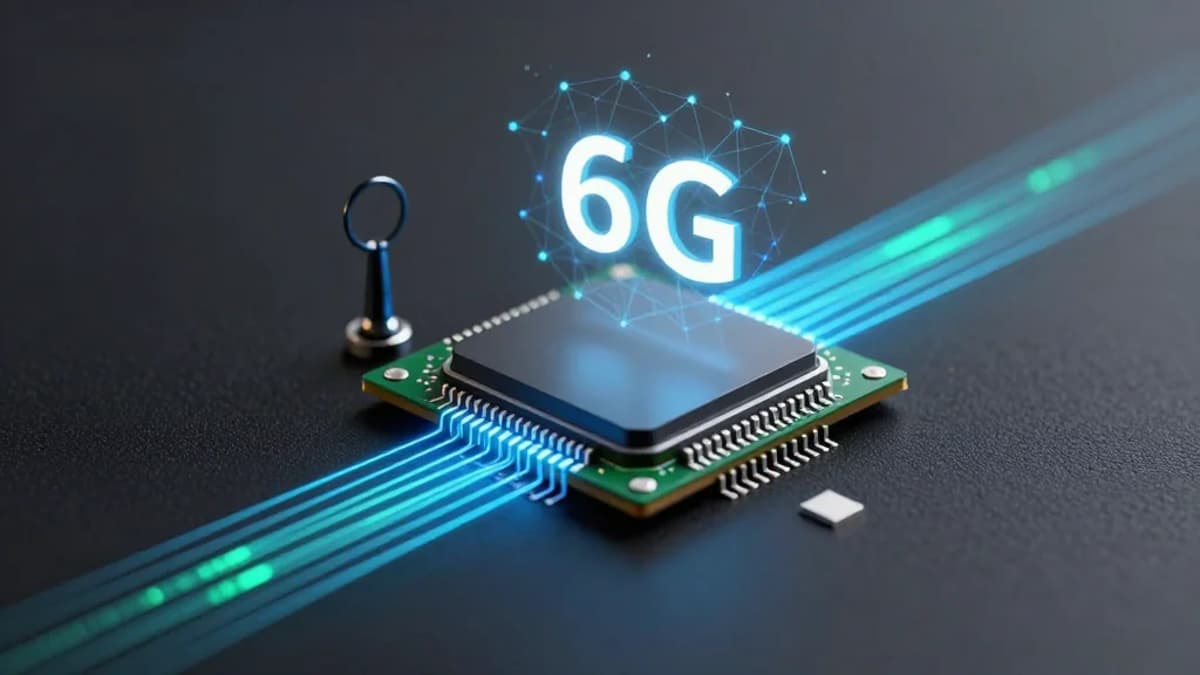
NTT Unveils Tech to Enhance AI Performance for 6G and Next-Gen Computing
•March 2, 2026
0
Why It Matters
By replacing electronic links with photonics, NTT aims to slash power use while delivering the bandwidth and latency required for AI‑driven 6G services, reshaping telecom and cloud economics.
Key Takeaways
- •IOWN replaces electronics with photonics for low‑latency networks
- •INC Edge links 5G and all‑photonics network for AI video
- •Joint university‑industry project integrates 6G, IOWN for AI agents
- •PEC devices aim to cut data‑center power consumption
- •NTT showcases edge AI, remote robot platforms at MWC Barcelona
Pulse Analysis
Photonics is emerging as the linchpin of next‑generation connectivity, and NTT’s IOWN initiative positions the company at the forefront of this shift. By moving critical signal paths from silicon to light, IOWN promises bandwidths far beyond 5G while reducing latency to microsecond levels. This architectural change not only supports the massive data streams of AI models but also addresses the escalating power demands of modern data centers, offering a sustainable path for the industry’s exponential growth.
The INC Edge demonstration underscores how integrating 5G with an all‑photonics network can transform AI inference pipelines. Instead of routing video frames to distant servers, distributed GPU resources are accessed directly within the network fabric, cutting round‑trip times and preserving inference accuracy. This approach aligns with the emerging 6G vision where communication, computation, and control converge, enabling real‑time AI for robotics, autonomous vehicles, and immersive media. By proving that geographically dispersed GPUs can collaborate seamlessly, NTT validates a core component of future low‑latency AI services.
Strategically, NTT’s showcase at MWC Barcelona signals its intent to monetize photonics across multiple revenue streams—from data‑center upgrades to edge AI platforms for enterprise clients. The emphasis on PEC devices and optical quantum computing hints at long‑term differentiation in a market dominated by conventional silicon solutions. As Fortune 100 firms seek greener, faster infrastructure, NTT’s portfolio could become a preferred partner for organizations aiming to scale AI workloads without prohibitive energy costs, accelerating the broader adoption of 6G‑enabled services.
NTT Unveils Tech to Enhance AI Performance for 6G and Next-Gen Computing
0
Comments
Want to join the conversation?
Loading comments...