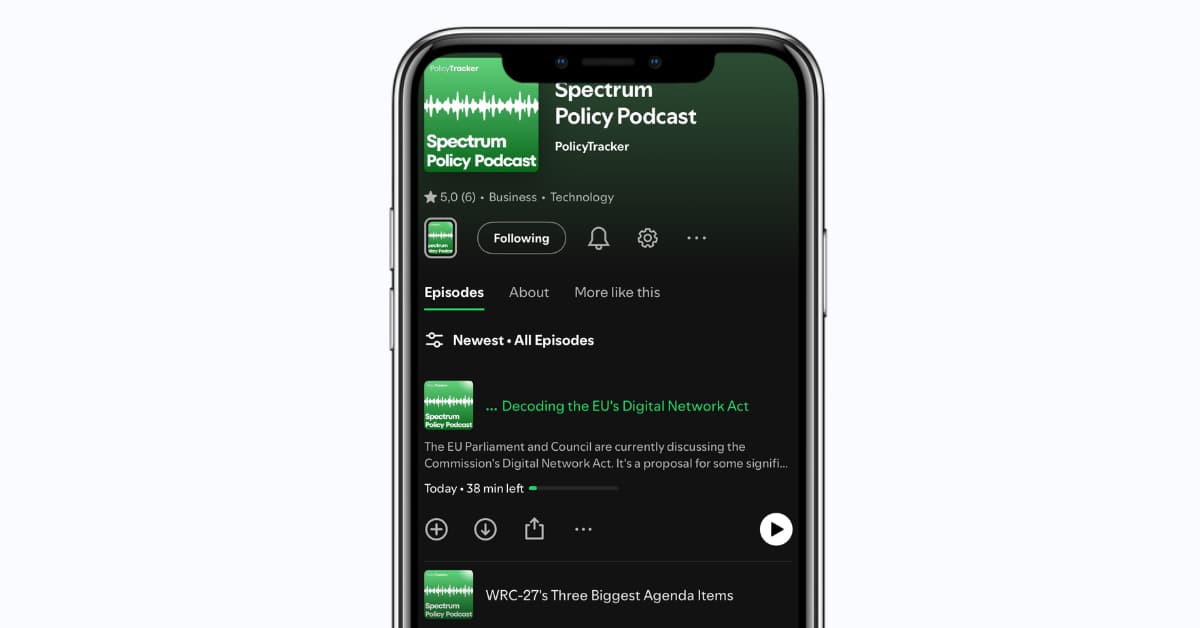
Podcast: Decoding the Commission’s Digital Networks Act
•February 16, 2026
0
Why It Matters
Perpetual spectrum licences could unlock significant capital for network upgrades, reshaping competition across Europe’s telecom sector. The act’s ability to harmonise rules will determine whether Europe can match the scale of US carriers and attract new investment.
Key Takeaways
- •Perpetual spectrum licences remove renewal uncertainty
- •EU aims to unify telecom regulations across member states
- •Larger pan‑European operators could emerge from harmonised market
- •Spectrum may be used as financing collateral
- •5G demand still lags behind expectations
Pulse Analysis
The European Commission’s Digital Networks Act marks the most ambitious overhaul of telecom policy in a decade, seeking to replace a patchwork of national rules with a single market framework. Analysts attribute the push to persistent fragmentation that leaves European operators at a competitive disadvantage compared with the consolidated United States landscape. By standardising spectrum allocation, network deployment standards, and consumer protections, the DNA aims to lower entry barriers and stimulate cross‑border mergers, paving the way for truly pan‑European carriers. The draft, released this spring, has already sparked intense debate among regulators and industry groups.
At the heart of the proposal is the introduction of perpetual spectrum licences, a radical shift from the traditional time‑limited allocations that force operators to renegotiate every decade. Proponents argue that permanent rights will eliminate regulatory uncertainty, encouraging telecoms to commit capital to 5G densification, edge computing sites, and future 6G research. Moreover, a perpetual licence can be treated as an asset, allowing operators to pledge spectrum as collateral for loans, similar to real‑estate mortgages. This financing flexibility could accelerate network upgrades, especially for smaller players lacking deep balance sheets.
Despite its promise, the DNA’s effectiveness hinges on genuine market demand, which so far falls short of early 5G forecasts. Operators warn that without sufficient traffic, even unlimited spectrum rights may not translate into profitable investments. Additionally, aligning national spectrum auctions with the new framework will require complex coordination and could encounter political resistance from member states protective of sovereign assets. If the Commission can balance regulatory certainty with realistic demand projections, the act could reshape Europe’s connectivity landscape, fostering stronger competition and attracting non‑EU capital into the telecom sector.
Podcast: Decoding the Commission’s Digital Networks Act
0
Comments
Want to join the conversation?
Loading comments...