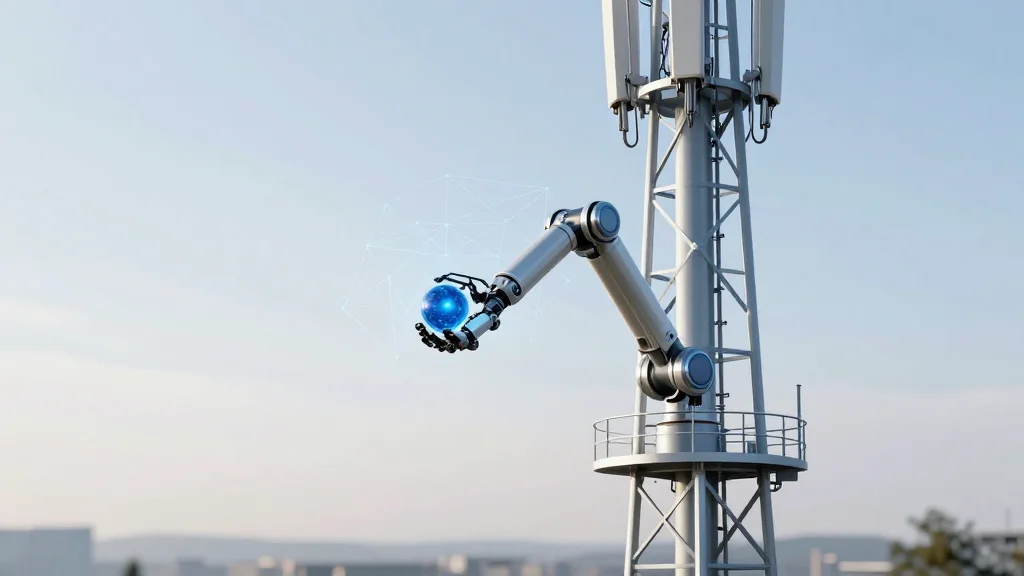
SoftBank’s Physical AI Push Gives AI-RAN a Sharper Purpose
Key Takeaways
- •AI-RAN splits perception and motion tasks between edge and robot
- •SoftBank positions itself as AI-native telecom infrastructure provider
- •Warehouse test with Yaskawa proves real‑world Physical AI viability
- •Edge MEC reduces latency versus cloud‑only robot processing
- •Success could turn operators into active AI inference platforms
Pulse Analysis
The telecom industry is undergoing a fundamental shift as operators seek revenue beyond bandwidth. SoftBank’s announcement at MWC26 underscores this trend, positioning the company as an AI‑native infrastructure provider that leverages AI‑RAN to turn radio access networks into compute platforms. By integrating vision‑language models at the edge, SoftBank moves the perception layer of robotics closer to the data source, reducing round‑trip times and enabling more sophisticated decision‑making without overhauling robot hardware. This strategy aligns with broader moves toward edge computing and 5G‑enabled services, where latency and data locality are critical.
Technical details reveal a split‑model architecture: a vision‑language model (VLM) runs on MEC nodes, ingesting camera feeds and task parameters to decide what objects to manipulate and where to place them. Meanwhile, a vision‑language‑action (VLA) module resides on the robot, handling grasping and motion generation where millisecond responsiveness is essential. This division mitigates the latency and variability of cloud‑only processing while offloading heavy perception workloads from constrained robot CPUs. The approach promises scalable upgrades—new AI models can be deployed at the edge without retrofitting each robot, accelerating innovation cycles in logistics and manufacturing.
If SoftBank’s Physical AI model scales, telecom operators could become indispensable partners in the emerging industrial automation ecosystem. They would offer low‑latency inference environments, continuous model training loops, and orchestration fabrics that bind communications with compute. However, success depends on broader industry adoption beyond SoftBank’s AITRAS ecosystem and on proving cost‑effectiveness at scale. Stakeholders should watch for standardization efforts, competitive edge‑compute offerings, and real‑world deployments that demonstrate measurable productivity gains for warehouse operators and robot manufacturers.
SoftBank’s Physical AI push gives AI-RAN a sharper purpose
Comments
Want to join the conversation?