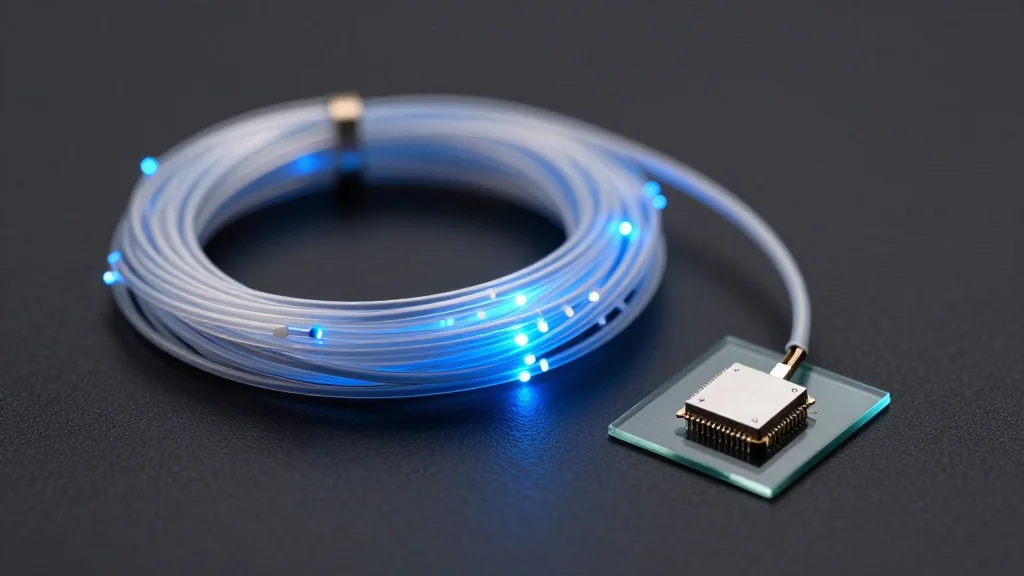
AI Surge Triggers Optical Supply Crunch and Huawei's Chip Comeback in Telecom

Companies Mentioned
Why It Matters
The telecom industry underpins the AI explosion, and any disruption in the optical supply chain directly limits the capacity of data centers to deliver high‑performance services. A shortage of lasers, fibers or substrates can delay AI model training, increase latency for edge applications, and raise costs for cloud providers, ultimately slowing innovation across sectors from healthcare to autonomous vehicles. Huawei's re‑entry into the chip market adds a geopolitical layer to an already strained ecosystem. Its ability to produce advanced networking chips could shift market share away from incumbents, prompting a re‑evaluation of supply‑chain resilience and prompting policy makers to consider strategic stockpiles or domestic production incentives for critical photonic components.
Key Takeaways
- •Nvidia's AI spend in Taiwan reaches $150 billion annually, driving a tenfold expansion of Corning's U.S. fiber capacity.
- •Indium phosphide substrate shortages are emerging as a critical bottleneck for laser production.
- •Huawei announces a comeback in high‑performance chip design, targeting AI and telecom networking markets.
- •Prices for optical transceivers and laser modules have risen double‑digit percentages year‑over‑year.
- •Emerging COUPE and CPO packaging technologies aim to integrate photonics directly with processors, reducing power use and latency.
Pulse Analysis
The current optical supply crunch is a textbook case of demand outpacing supply in a fast‑moving technology cycle. AI workloads are uniquely bandwidth‑hungry, forcing telecom operators to abandon legacy copper and adopt high‑speed optical links. This shift has exposed the fragility of the photonic component ecosystem, where a single material—indium phosphide—can become a choke point for the entire supply chain. Companies that have diversified their substrate sources or invested in in‑house laser fabrication will gain a decisive advantage.
Huawei's return to the chip arena is more than a competitive footnote; it signals a strategic pivot to capture the AI‑driven telecom market. By leveraging its massive R&D budget and vertically integrated manufacturing, Huawei can undercut Western rivals on price while offering comparable performance. This could force incumbents like Intel, Qualcomm and Nvidia to accelerate joint ventures or acquire niche photonic firms to stay ahead. The geopolitical dimension cannot be ignored: Western policymakers may respond with tighter export controls on advanced photonic equipment, further tightening supply and potentially spurring domestic production initiatives.
In the medium term, the industry is likely to see a consolidation of optical component suppliers and a surge in investment in alternative photonic materials. The push for COUPE and CPO architectures reflects a broader trend toward monolithic integration, which could eventually reduce dependence on scarce substrates. Telecom operators that secure long‑term contracts now, while also participating in the development of next‑generation packaging, will be best positioned to deliver the low‑latency, high‑throughput services that AI applications demand.
AI Surge Triggers Optical Supply Crunch and Huawei's Chip Comeback in Telecom
Comments
Want to join the conversation?
Loading comments...