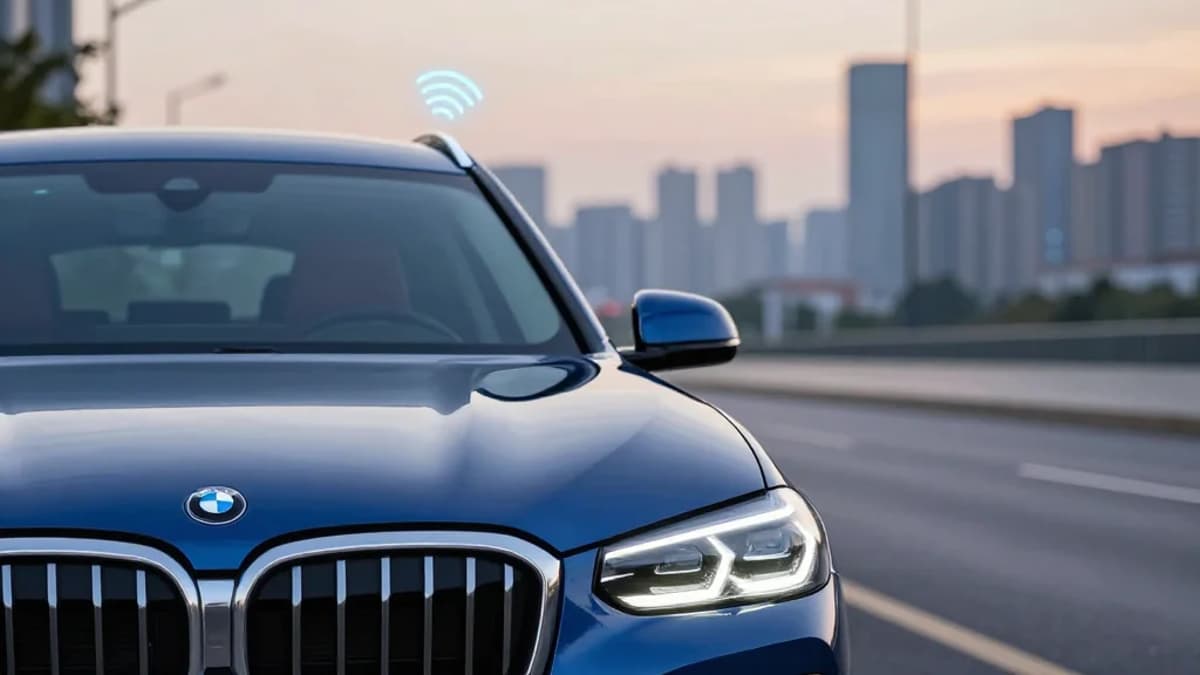
BMW Selects NTT Docomo for Smart-Car Connectivity in EVs
•March 9, 2026
0
Why It Matters
The partnership gives BMW a global, OTA‑ready connectivity backbone, sharpening its premium EV offering and illustrating telecom firms’ expanding role in automotive innovation.
Key Takeaways
- •BMW adopts NTT Docomo's embedded SIM connectivity.
- •First rollout in iX3, part of Neue Klasse.
- •System supports OTA updates and real‑time data exchange.
- •Excludes US/China; KDDI supplies those markets.
- •Enables BMW's software‑defined vehicle strategy globally.
Pulse Analysis
Telecommunications providers are increasingly becoming the nervous system of modern cars, and BMW’s choice of NTT Docomo Business underscores that shift. The embedded SIM technology offers a single, carrier‑agnostic credential that can roam across dozens of networks without driver intervention, delivering the reliability automakers need for critical functions such as traffic‑aware navigation and remote diagnostics. By securing a partner with a robust global footprint, BMW sidesteps the patchwork of regional contracts that have hampered earlier connectivity attempts.
For BMW, the integration is more than a convenience feature; it is a cornerstone of its software‑defined vehicle vision. The iX3 will be the first to receive continuous over‑the‑air updates, allowing new driver‑assist capabilities, performance tweaks, and infotainment upgrades long after the car leaves the showroom. This capability shortens the product development cycle, reduces hardware obsolescence, and creates a recurring revenue stream through subscription‑based services. Coupled with the broader Neue Klasse portfolio, the connectivity platform positions BMW to compete directly with Tesla’s OTA‑centric approach while preserving its luxury brand identity.
The exclusion of the U.S. and Chinese markets, where BMW will rely on KDDI’s solution, highlights the geopolitical complexities of automotive data flows. Nonetheless, the collaboration signals a broader industry trend: automakers are treating data as a strategic asset, and telecom operators are the preferred gatekeepers. As battery manufacturers like CATL join the conversation on trusted data exchange, the ecosystem is converging around secure, real‑time connectivity that can support everything from decarbonisation reporting to predictive maintenance, setting a new baseline for future electric vehicles.
BMW selects NTT Docomo for smart-car connectivity in EVs
0
Comments
Want to join the conversation?
Loading comments...