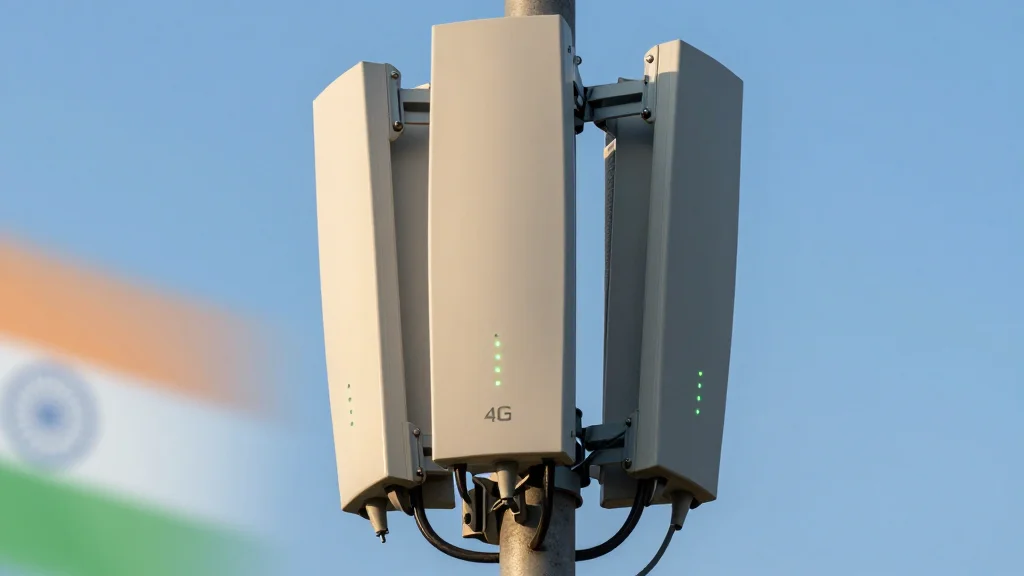
BSNL Stabilises Indigenous 4G Network, Technology Brings India to 4th Rank Worldwide: Pemmasani
Companies Mentioned
Why It Matters
The deployment validates India’s self‑reliant technology strategy and creates a domestic supply chain that can challenge incumbent global vendors, while expanding high‑speed connectivity to underserved regions.
Key Takeaways
- •BSNL's indigenous 4G network now stable across 100,000 sites
- •India ranks fourth globally in home‑grown telecom radio equipment
- •Tejas Networks secured ~₹7,492 crore ($900 M) 4G‑5G RAN order
- •BSNL achieved >95% network uptime after replacing 50,000 batteries
- •BharatNet‑3 program targets 600,000 villages with $16.7 B funding
Pulse Analysis
India’s telecom landscape is undergoing a strategic transformation as BSNL’s home‑grown 4G network reaches operational stability across 100,000 sites. The achievement marks the nation as the fourth country worldwide capable of designing and deploying its own radio access equipment, a milestone that aligns with the Atmanirbhar Bharat agenda. By securing spectrum in the 700 MHz to 3,300 MHz bands and improving infrastructure—replacing 50,000 batteries and aging cables—BSNL now reports network uptime exceeding 95%, laying a robust foundation for future 5G rollouts.
The financial scale of the rollout underscores its economic significance. Tejas Networks, a Bengaluru‑based vendor, landed a ₹7,492 crore (~$902 million) order in August 2023 and a subsequent ₹1,525 crore (~$184 million) advance purchase order in May 2025, both funneled through Tata Consultancy Services. These contracts not only inject billions of rupees into the domestic supply chain but also position Indian firms to compete with Ericsson, Nokia, Huawei and ZTE for global contracts. Partnerships with Japan’s NEC and Rakuten further signal intent to export indigenous technology, potentially reshaping the global telecom gear market.
Looking ahead, the government’s BharatNet‑3 program, backed by a ₹1.39 lakh‑crore (~$16.7 billion) budget, aims to connect over 600,000 villages, extending high‑speed internet to the rural heartland. Coupled with the ongoing expansion of BSNL’s 4G and upcoming 5G services, the initiative could accelerate digital adoption, boost e‑commerce, and enhance public service delivery. The convergence of stable indigenous infrastructure, sizable domestic orders, and ambitious connectivity goals positions India to become a pivotal player in both the regional and global telecommunications ecosystem.
BSNL stabilises indigenous 4G network, technology brings India to 4th rank worldwide: Pemmasani
Comments
Want to join the conversation?
Loading comments...