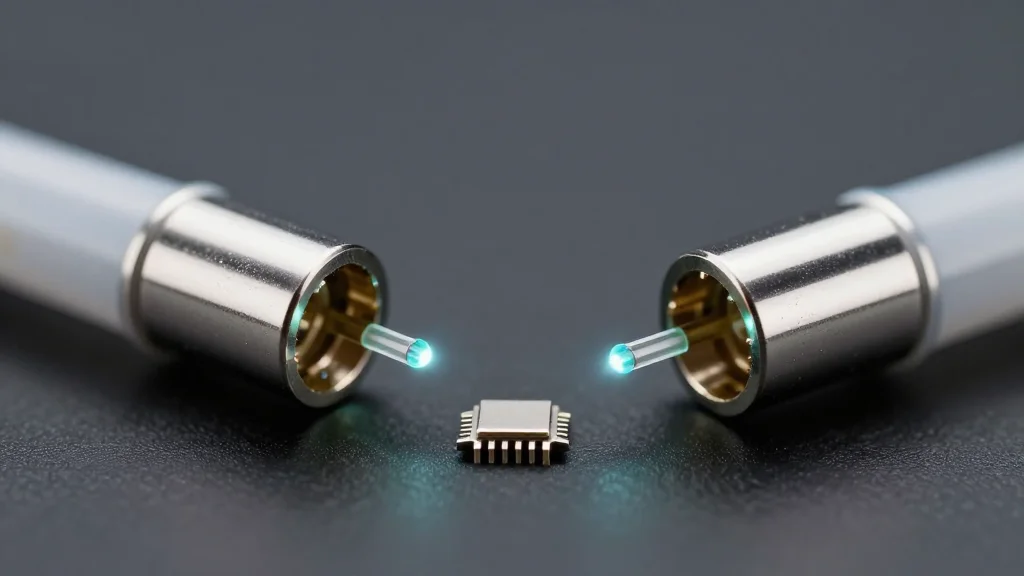
Canada Unveils $5.5 Million Quantum Networking Challenge to Accelerate Quantum Repeaters

Why It Matters
Quantum repeaters are the linchpin for a functional quantum internet, a network that could deliver provably secure communications and enable distributed quantum computing. By funding early‑stage research, Canada aims to bridge the gap between laboratory demonstrations and field‑ready hardware, accelerating the timeline for telecom operators to embed quantum‑grade security into their core services. The initiative also strengthens Canada’s position in a strategic technology arena where control over quantum communication infrastructure is increasingly viewed as a national security priority. Beyond security, a scalable quantum network would open new revenue streams for telecoms through services such as quantum‑enhanced sensing and time‑distribution. The challenge’s focus on multi‑node scalability and real‑world operating conditions ensures that any breakthroughs are directly translatable to commercial deployments, reducing the risk of technology lock‑in and fostering a domestic supply chain for quantum hardware.
Key Takeaways
- •Canada’s ISED launched a CAD$5.5 million (≈US$4 million) Quantum Networking Challenge on May 21
- •Challenge runs until July 2, with two streams: feasibility studies and prototype development
- •Funding caps at CAD$1 million for early studies and CAD$3.5 million for advanced prototypes
- •Goal: demonstrate quantum repeaters that exceed direct‑transmission limits and operate stably for multiple hours
- •Success could give Canadian telecoms a competitive edge in quantum‑secure communications and distributed sensing
Pulse Analysis
The Canadian Quantum Networking Challenge is a calculated gamble that leverages a modest fiscal outlay to punch above its weight in a field dominated by super‑power budgets. By concentrating on repeaters—a component that has eluded commercialization for over a decade—Canada is targeting the most consequential bottleneck in quantum networking. The two‑track structure mirrors successful models in other high‑tech domains, where early feasibility work de‑risked the technology before larger capital commitments flow downstream.
Historically, quantum communication pilots have been confined to point‑to‑point QKD links, often limited to a few hundred kilometres. The inability to amplify quantum states without destroying them has forced operators to rely on trusted nodes, a security compromise that quantum repeaters would eliminate. If a Canadian team can deliver a prototype that demonstrates multi‑hour entanglement distribution across a realistic fiber link, it would not only validate the underlying physics but also provide a blueprint for telecom operators to retrofit existing fiber networks.
From a market perspective, the challenge could catalyze a nascent supply chain of Canadian quantum hardware manufacturers, from photonic chip makers to cryogenic memory providers. This domestic ecosystem would reduce reliance on foreign vendors, a strategic advantage as governments worldwide tighten export controls on quantum technologies. Moreover, early adopters among Canadian telecoms could differentiate their service portfolios with quantum‑grade security, attracting enterprise clients that are increasingly mandated to adopt post‑quantum cryptography. In the longer view, the challenge may serve as a stepping stone toward a broader North American quantum network, aligning with U.S. and EU efforts and positioning Canada as a collaborative hub rather than a peripheral player.
Canada Unveils $5.5 Million Quantum Networking Challenge to Accelerate Quantum Repeaters
Comments
Want to join the conversation?
Loading comments...