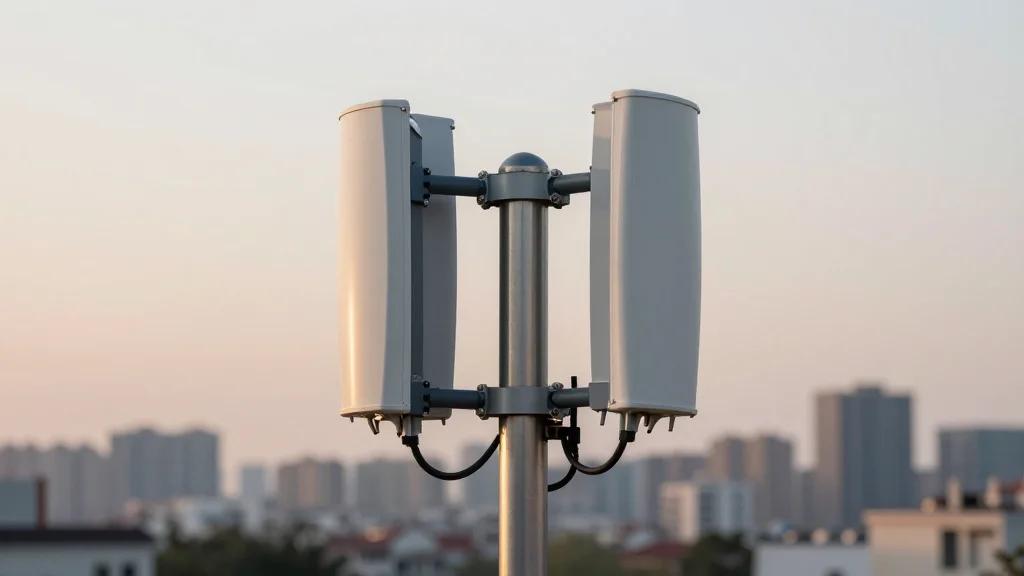
Ceragon Books $86 Million in Indian Orders for IP‑50EXA Millimeter‑wave Platform

Why It Matters
The $86 million order book underscores a broader shift in India’s telecom strategy toward wireless backhaul solutions that can be deployed faster and at lower cost than traditional fiber. As 5G services and fixed wireless access become central to expanding broadband coverage, operators need high‑capacity links that can keep pace with traffic growth, and Ceragon’s millimeter‑wave technology directly addresses that need. For the global telecom equipment market, the deal highlights the growing relevance of millimeter‑wave platforms in emerging economies. Success in India could encourage other vendors to prioritize similar high‑frequency solutions, potentially reshaping the competitive dynamics between traditional fiber‑optic providers and wireless backhaul specialists.
Key Takeaways
- •Ceragon booked roughly $86 million in orders from Indian operators in H1 2026
- •Orders focus on the IP‑50EXA millimeter‑wave platform for FWA and 5G backhaul
- •$24 million recognized as revenue in Q1 2026; remainder expected by year‑end
- •Two leading Indian carriers are the primary buyers, signaling strong carrier confidence
- •The deal reinforces Ceragon’s position as a key supplier for high‑capacity wireless transport in a fast‑growing market
Pulse Analysis
Ceragon’s $86 million order intake marks a pivotal moment for the company’s growth trajectory in Asia. Historically, the firm has relied on a diversified portfolio of mid‑band microwave solutions; the shift toward its flagship IP‑50EXA platform reflects both product maturation and a market that is increasingly comfortable with millimeter‑wave technology. By securing large‑scale contracts from two of India’s biggest operators, Ceragon not only validates its technology roadmap but also builds a foothold that could translate into follow‑on orders as the operators scale their 5G and FWA deployments.
From a competitive standpoint, the deal pits Ceragon against traditional fiber‑optic vendors and other wireless backhaul players such as Nokia, Ericsson, and Huawei. While fiber remains the gold standard for capacity, its deployment timeline and cost constraints in India create a niche where high‑frequency wireless can thrive. Ceragon’s emphasis on lower total cost of ownership—through reduced spectrum usage, power consumption, and labor—offers a compelling value proposition that could erode market share from incumbents reliant on legacy solutions.
Looking forward, the company’s ability to deliver on the promised revenue timeline will be a litmus test for its operational scalability. If Ceragon can successfully roll out the IP‑50EXA links on schedule, it will likely attract additional operators seeking to meet aggressive broadband targets set by the Indian government. Conversely, any delays could expose the firm to heightened competition and pressure on margins. In the broader telecom ecosystem, the order surge signals that high‑frequency wireless backhaul is moving from a niche technology to a mainstream component of 5G network architectures, especially in markets where rapid, cost‑effective expansion is a priority.
Ceragon books $86 million in Indian orders for IP‑50EXA millimeter‑wave platform
Comments
Want to join the conversation?
Loading comments...