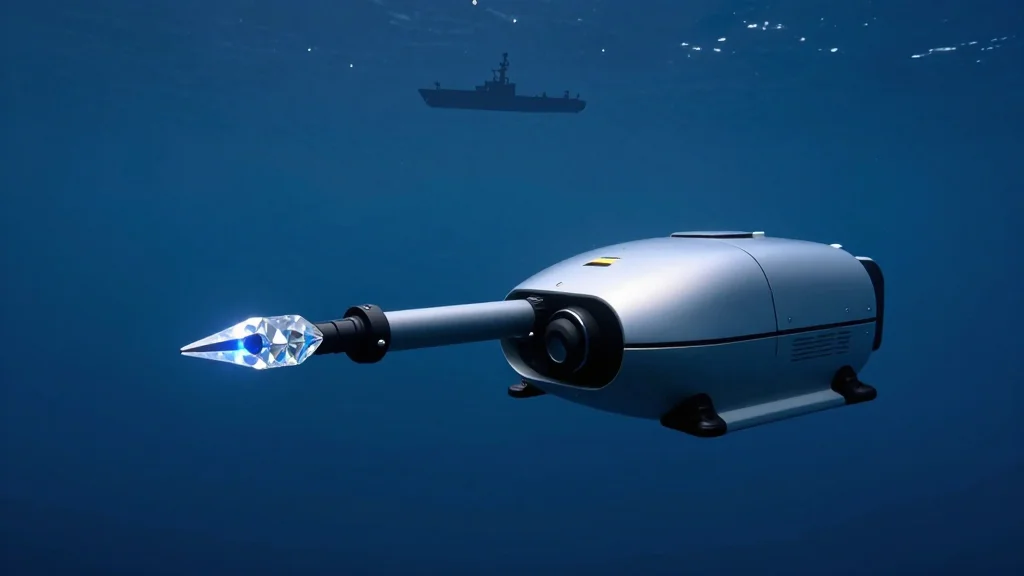
China Tests 11,400‑ft Deep‑Sea Cable‑Cutting ROV, Raising Stakes for Global Telecom Infrastructure

Why It Matters
The successful test of a 11,400‑ft cable‑cutting ROV reshapes the power dynamics of the undersea fiber‑optic network that underpins global communications, finance and cloud services. By extending operational depth, China reduces a key technical barrier that has limited its ability to intervene in or protect critical data routes, potentially altering the balance of influence in international telecom standards and routing agreements. Beyond the immediate telecom implications, the ROV exemplifies how high‑precision robotics, originally developed for aerospace, are being repurposed for maritime infrastructure. This convergence accelerates the militarization of civilian sea lanes and could prompt regulatory bodies to revisit security protocols for submarine cable protection, influencing investment decisions for carriers and governments worldwide.
Key Takeaways
- •China’s Haiyang Dizhi 2 vessel tested a cable‑cutting ROV at 11,483 ft (3,500 m) depth on April 11.
- •The ROV uses aerospace‑grade electro‑hydrostatic actuators and a 6‑inch diamond‑coated wheel rotating at 1,600 rpm.
- •It surpasses the depth capability of Japan’s MARCAS‑V‑ROV and UAE’s Olympian T2, the only other ROVs listed by a 2024 UN‑ITU report.
- •Analyst April Herlevi warned the technology could deepen the risk of a bifurcated global network.
- •Neptune Robotics’ US$12 million Singapore plant highlights a broader surge in autonomous underwater robotics.
Pulse Analysis
China’s deep‑sea ROV test is more than a technical milestone; it is a strategic lever in a domain that has traditionally been dominated by a handful of Western and Japanese firms. By achieving a depth advantage, Beijing can now claim parity—or even superiority—in the ability to intervene in the physical layer of the internet. Historically, control over submarine cables has been a silent but potent form of geopolitical influence, dating back to the Cold War when the U.S. and USSR vied for routing rights. The new ROV reduces the logistical friction that previously constrained China’s operational reach, potentially allowing it to offer repair services on routes where it has limited commercial presence, or, conversely, to threaten those routes in a coercive bargaining scenario.
The ripple effects will likely be felt in three arenas. First, telecom carriers may reassess risk models that have assumed a de‑facto monopoly of Western cable‑laying firms, prompting diversification of repair contracts and greater investment in redundancy. Second, governments could tighten security standards for cable access, mirroring recent U.S. export controls that target Chinese telecom equipment, but now extending to undersea service providers. Third, the convergence of aerospace‑grade actuation technology with maritime robotics—exemplified by both China’s ROV and Neptune’s hull‑cleaning bots—suggests a rapid acceleration of dual‑use capabilities. Investors and policymakers should watch for a surge in patents and cross‑border collaborations that blur the line between commercial efficiency and strategic advantage, as the ocean floor becomes an increasingly contested battlefield for data sovereignty.
China Tests 11,400‑ft Deep‑Sea Cable‑Cutting ROV, Raising Stakes for Global Telecom Infrastructure
Comments
Want to join the conversation?
Loading comments...