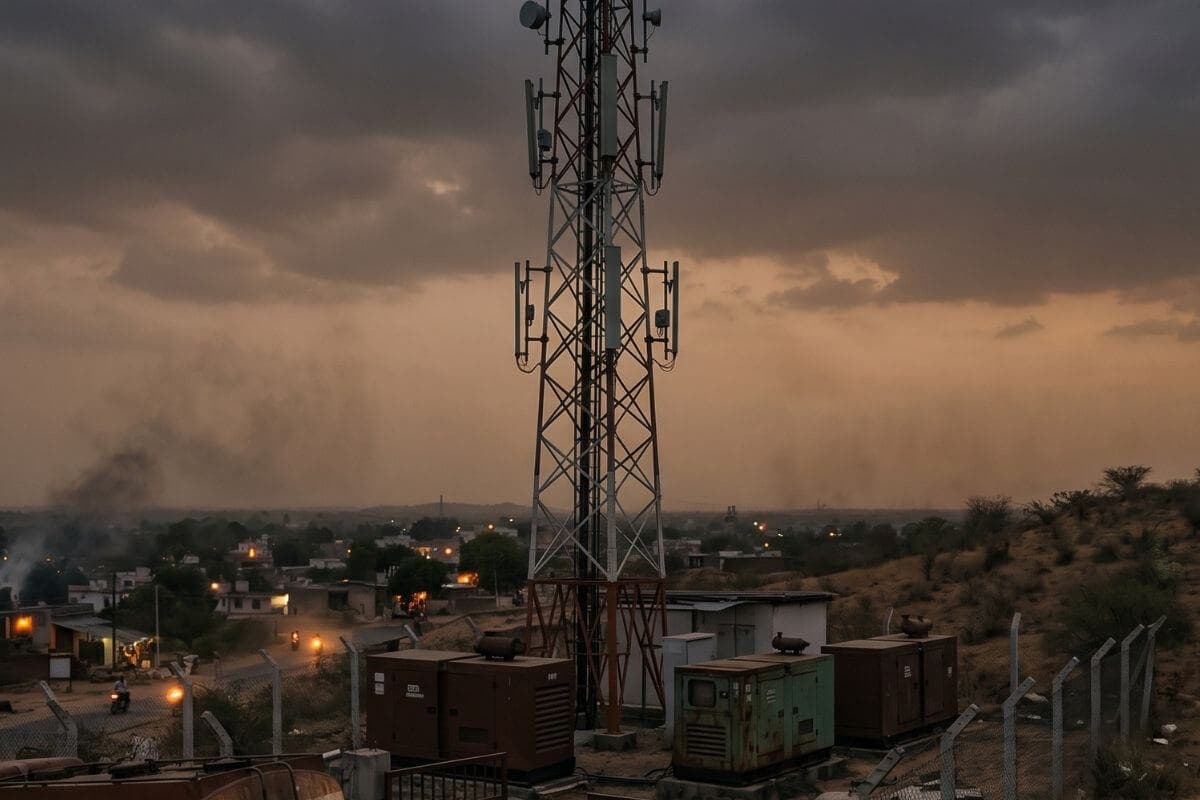
Diesel Shortages, Power Outages Raise Telecom Disruption Concerns Across States: Report
Companies Mentioned
Why It Matters
The fuel crunch threatens network reliability and profitability, prompting urgent regulatory action and a faster shift toward clean‑energy solutions in a cost‑sensitive market.
Key Takeaways
- •Diesel restrictions in five Indian states hamper tower fuel supply
- •Diesel price in Delhi hit ₹95.20/L (~$1.15), raising operator costs
- •Energy expenses represent 10‑12% of telecom revenue, adding $36 M per ₹3/L rise
- •Operators add 2,500 solar sites, total 42,400, cutting diesel use 7% YoY
- •DoT urges state coordination committees to secure uninterrupted fuel for telecom
Pulse Analysis
India’s power grid continues to falter under peak summer demand, leaving telecom operators with limited options beyond diesel generators. The recent imposition of diesel quotas in key states has tightened fuel availability for mobile towers, data centres and other critical infrastructure. Coupled with a surge in diesel prices to roughly $1.15 per litre, operators face mounting cost pressures that erode margins, especially as energy expenses already account for up to 12% of mobile‑service revenue. Analysts estimate that each ₹3 (≈$0.04) increase per litre could inflate operating costs by about $36 million annually, a figure that could be passed on to consumers or force network roll‑outs to slow down.
Beyond immediate fuel concerns, the telecom sector is grappling with broader supply‑chain disruptions. Shortages of semiconductors, fibre‑optic components, petro‑plastics and helium are inflating equipment costs and delaying network expansion projects. These constraints amplify the financial strain caused by higher diesel usage, prompting operators to reassess capital allocation. Industry bodies have urged the Department of Telecommunications to coordinate state‑level disaster committees, ensuring a steady fuel flow and more reliable grid power. Such regulatory engagement is crucial to prevent service outages that could affect millions of mobile and broadband users across the country.
In response, operators are accelerating the transition to greener power sources. Indus Towers reported adding 2,500 solar‑enabled sites, bringing its total to roughly 42,400 and achieving a 7% year‑on‑year reduction in diesel consumption. Vodafone Idea and Bharti Airtel are similarly investing in high‑capacity batteries and renewable‑energy contracts to lower dependence on diesel generators. This shift not only mitigates cost volatility but also aligns with India’s broader clean‑energy goals. As the sector leans more on solar and storage, the long‑term outlook points to reduced operational expenditures, improved network resilience, and a competitive edge for firms that can navigate the current fuel crunch while advancing sustainability initiatives.
Diesel Shortages, Power Outages Raise Telecom Disruption Concerns Across States: Report
Comments
Want to join the conversation?
Loading comments...