Emirates Installs Starlink Wi‑Fi on A380, Delivering 2 Gbps In‑Flight Broadband

Companies Mentioned
Why It Matters
The deployment of Starlink on Emirates’ A380 signals a shift in how airlines view satellite broadband, moving from a niche amenity to a core passenger service. By offering gigabit‑class speeds for free, Emirates raises the bar for in‑flight connectivity, compelling competitors to reassess their technology stacks and pricing models. The rollout also validates the technical feasibility of high‑throughput satellite links on large, double‑deck aircraft, opening a new vertical for satellite operators and potentially reshaping the telecom revenue mix in aviation. For the broader telecom ecosystem, the move underscores the growing convergence of satellite and terrestrial networks. As satellite constellations mature, they can supplement or replace costly ground‑based ATG infrastructure, especially on routes over oceans or remote regions where terrestrial coverage is sparse. This could accelerate the adoption of satellite‑centric architectures across other transport sectors, such as maritime and rail, further expanding the market for high‑capacity, low‑latency satellite services.
Key Takeaways
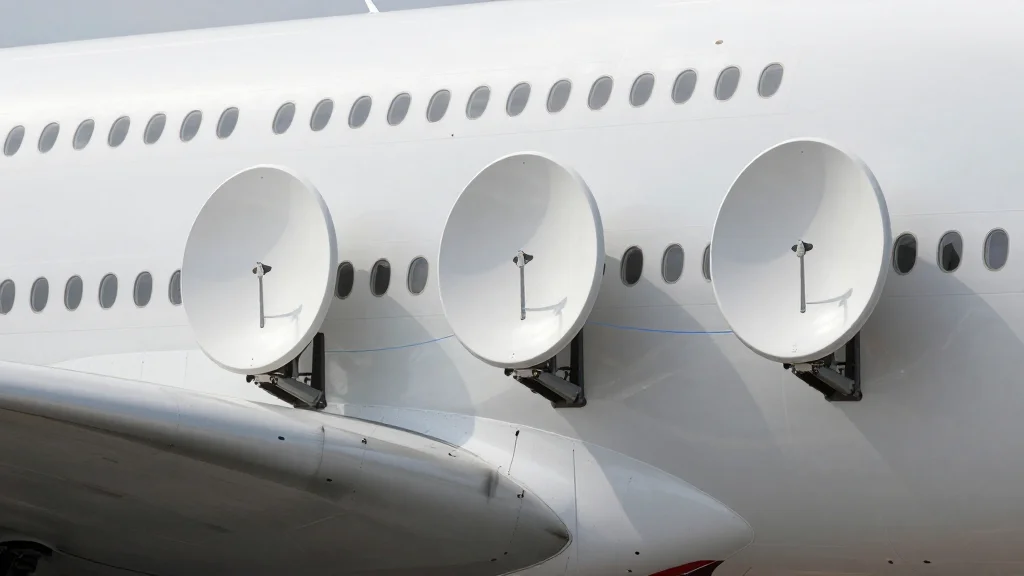
- •Emirates installed three Starlink antennas on its A380, delivering >2 Gbps total bandwidth
- •Bandwidth increase is roughly 1,000 times the legacy sub‑1 Mbps system
- •Installation certified in Newquay, UK; rollout to continue across fleet in 2026
- •Service will be free for all cabin classes, with future live TV streaming planned
- •Emirates already has 25 Boeing 777‑300ERs equipped with Starlink and 650,000+ customers served
Pulse Analysis
Emirates’ decision to retrofit its A380 fleet with Starlink is more than a passenger‑experience upgrade; it is a strategic play that could redefine the economics of in‑flight connectivity. Historically, airlines have relied on ATG networks that require extensive ground infrastructure and offer limited bandwidth, especially on long‑haul routes. By shifting to a satellite‑centric model, Emirates sidesteps the need for costly ground stations and gains a scalable, globally consistent service.
The free‑service model also serves a dual purpose: it differentiates Emirates in a crowded premium market while generating valuable data on usage patterns that can be monetized indirectly through ancillary services, advertising, or future premium connectivity tiers. Competitors will face a dilemma: invest heavily in upgrading ATG capabilities or partner with satellite providers to match the gigabit experience. Early adopters like Emirates could lock in favorable terms with SpaceX, securing bandwidth allocations before the market becomes saturated.
Looking ahead, the success of the A380 retrofit could catalyze a broader industry shift toward satellite broadband across all aircraft sizes. As SpaceX expands its constellation and launches higher‑throughput satellites, the cost per megabit is likely to fall, making satellite solutions economically viable even for narrow‑body fleets. This trajectory aligns with the telecom sector’s push toward ubiquitous, high‑speed connectivity, blurring the lines between traditional mobile networks and space‑based services. Emirates’ move thus positions both the airline and SpaceX at the forefront of a new era where the sky is no longer a bandwidth bottleneck.
Emirates Installs Starlink Wi‑Fi on A380, Delivering 2 Gbps In‑Flight Broadband
Comments
Want to join the conversation?
Loading comments...