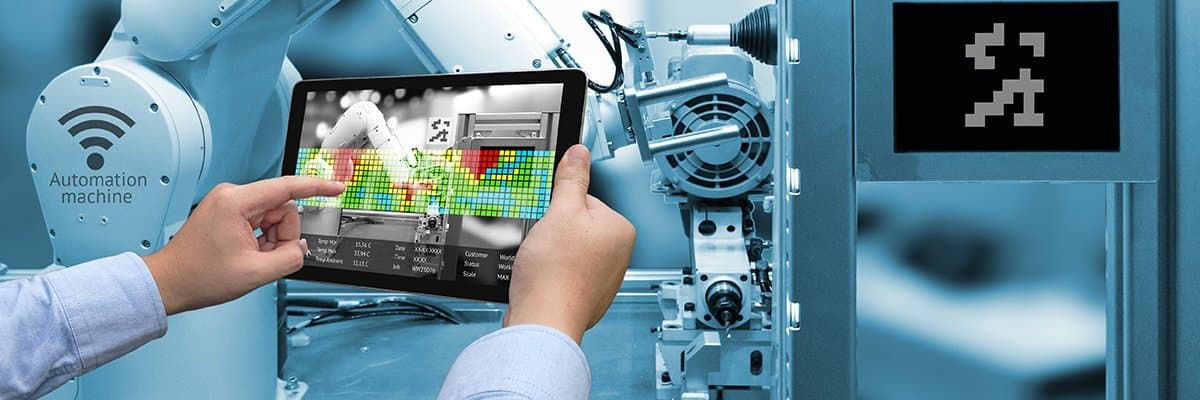
Ericsson, Future Technologies Scale Wireless Infrastructure for Industrial AI
•March 10, 2026
0
Why It Matters
The alliance bridges the growing gap between AI compute capacity and legacy networks, enabling faster, reliable AI adoption in critical infrastructure and giving both firms a competitive edge in the expanding private‑5G market.
Key Takeaways
- •Ericsson and Future Technologies expand AI‑focused partnership
- •Targeting private 5G deployment across North American industries
- •Enterprise wireless becomes foundational layer for AI operations
- •Joint projects exceed $150 million in cumulative value
- •Living Lab and Lab‑on‑Wheels accelerate pilot deployments
Pulse Analysis
Artificial intelligence is moving from data‑center experiments to the factory floor, the power grid and logistics hubs, demanding connectivity that can deliver millisecond‑level latency, high reliability and deterministic performance. Traditional enterprise LAN/WAN architectures, designed for office traffic, struggle to meet these requirements, prompting a shift toward cellular solutions such as private 5G and enterprise‑grade wireless WAN. These technologies provide the spectrum flexibility, security isolation, and edge‑centric architecture needed to support real‑time sensor streams, AI inference at the edge, and seamless cloud integration.
In this context, Ericsson’s partnership with Future Technologies Venture represents a strategic convergence of hardware expertise and systems‑integration know‑how. Ericsson supplies the radio access network, core, and management software, while Future Technologies delivers end‑to‑end design, deployment, and lifecycle services, including hands‑on validation through its Living Lab and Lab‑on‑Wheels platforms. The collaboration builds on more than a decade of joint projects that have already generated over $150 million in value across manufacturing plants, energy facilities, and large venues, positioning the duo as a go‑to provider for enterprises seeking to modernise their connectivity stack.
The broader market implication is clear: as AI‑driven operational technologies become mainstream, private 5G and enterprise wireless will evolve into a utility layer akin to power or water. Companies that adopt these networks early can unlock new revenue streams, improve operational efficiency, and reduce downtime, while investors watch a rapidly expanding segment of the telecom services market. The Ericsson‑Future Technologies alliance not only accelerates deployment timelines but also sets a benchmark for how telecom vendors and system integrators can jointly enable the next wave of industrial AI innovation.
Ericsson, Future Technologies scale wireless infrastructure for industrial AI
0
Comments
Want to join the conversation?
Loading comments...