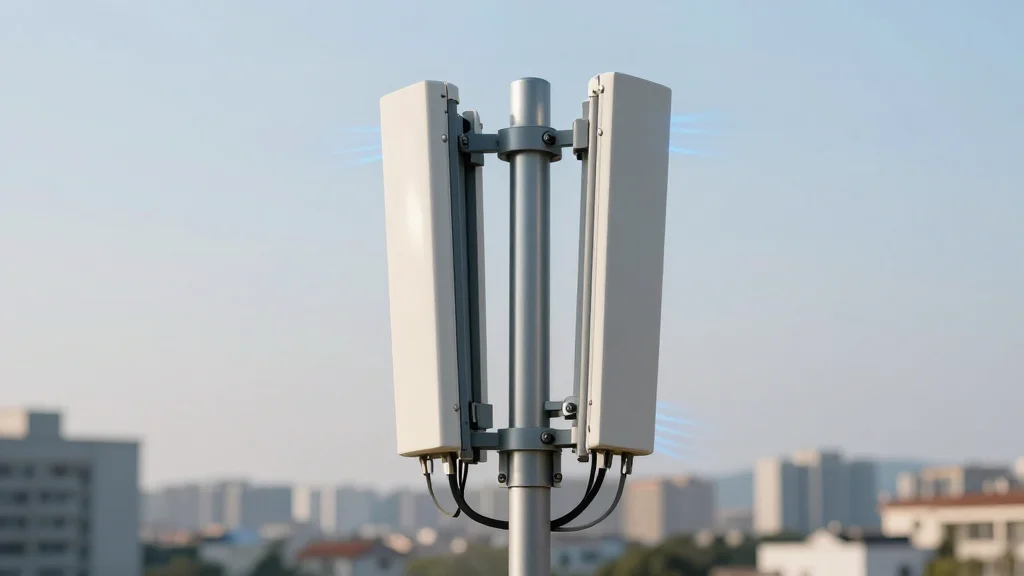
Ericsson’s June 2026 Mobility Report Highlights + AI Impact on Network Traffic
Key Takeaways
- •5G subscriptions exceed 3 billion, adding 162 million Q1 2026
- •5G carries half of global mobile data traffic, up from 48% end‑2025
- •Uplink traffic growth outpaces downlink; AI workloads triple UL demand by 2031
- •5G SA slicing offerings grew to 84, up 29% in six months
- •Around 70% of FWA providers now deliver service over 5G
Pulse Analysis
The latest Ericsson Mobility Report underscores how 5G has moved from a growth phase to a critical backbone for emerging AI services. With global 5G subscriptions topping 3 billion and half of all mobile data now traversing 5G networks, operators are witnessing a 22% YoY traffic increase. This surge is not merely a volume boost; it reflects a fundamental change in traffic composition as AI‑enabled smartphones, AR glasses, and autonomous vehicles generate continuous uplink streams that strain traditionally downlink‑centric designs.
Operators are already seeing uplink growth outpacing downlink, with field data showing 43 of 55 surveyed carriers experiencing faster UL rates, and 17 reporting UL expansion 1.5 × higher than DL. Ericsson’s scenario modeling warns that AI‑driven traffic could push uplink demand threefold by 2031. To counteract this inversion, CSPs must prioritize near‑term 5G SA migrations, AI‑optimized Massive MIMO, and granular network slicing that guarantees low‑latency uplink channels. In the longer term, the industry’s roadmap points toward 6G architectures built around asymmetric air‑interface designs and integrated sensing‑communication (ISAC) capabilities.
The financial stakes are significant. While global RAN spend slipped from $45 billion in 2022 to $35 billion last year, the urgency of addressing uplink bottlenecks could reignite capex cycles, benefitting vendors like Ericsson, whose sales fell from $28.8 billion to $25.1 billion over the same period. Accelerated investment in 5G software upgrades and hardware refreshes, followed by early 6G standardization slated for 2028‑2029, will shape the next decade of mobile connectivity and define competitive advantage in an AI‑centric world.
Ericsson’s June 2026 Mobility Report Highlights + AI impact on network traffic
Comments
Want to join the conversation?