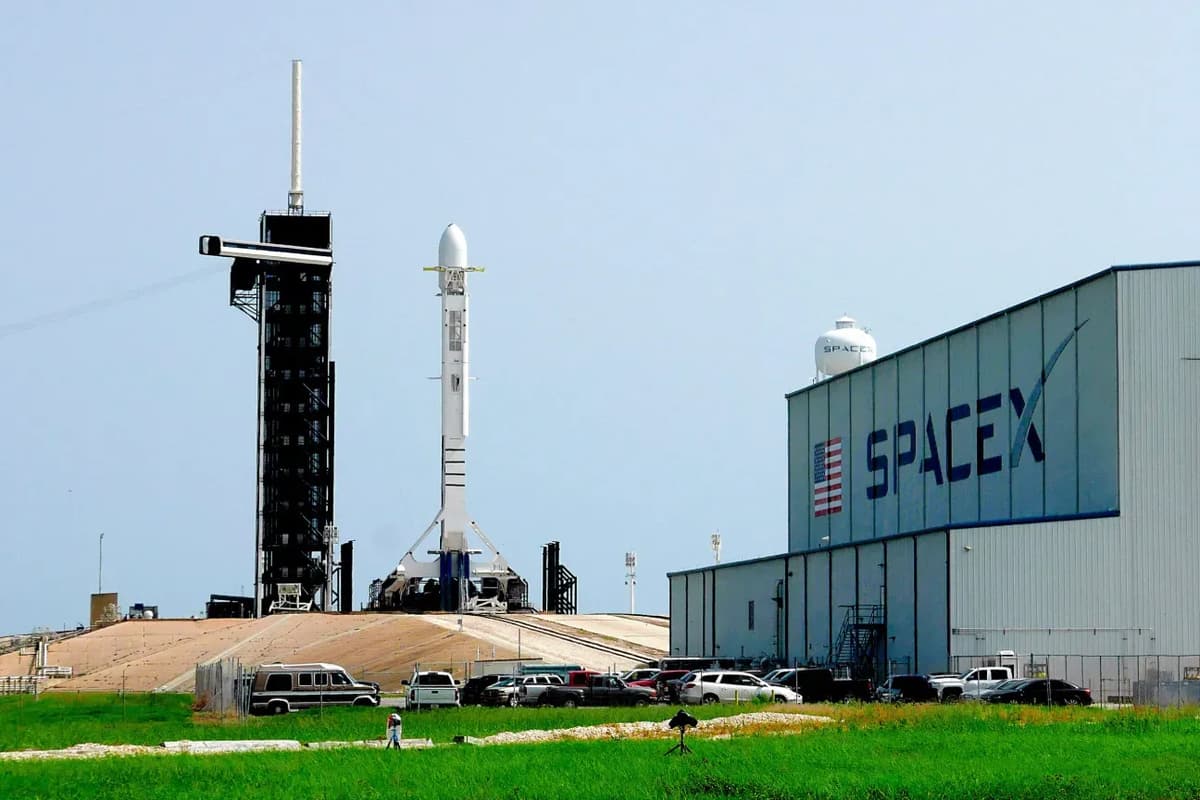
SpaceX Announces $50B-$75B IPO, Set to Trade on Nasdaq June 12
Participants
Why It Matters
Redirecting universal service funds toward satellite could reshape rural connectivity and accelerate SpaceX’s revenue growth, while potentially limiting new terrestrial infrastructure investments.
Key Takeaways
- •FCC proposes treating Starlink as substitute for terrestrial broadband
- •High‑Cost fund totals about $4.5 billion annually
- •Only 44.7% of Starlink users met 100 Mbps in Q4 2025
- •SpaceX plans third‑gen satellites boosting capacity tenfold
- •Upcoming IPO could raise $50‑75 billion, largest ever
Pulse Analysis
The Federal Communications Commission’s latest proposal signals a fundamental shift in how the United States subsidizes broadband in remote regions. By asking whether low‑Earth‑orbit constellations can replace costly fiber or fixed‑wireless builds, the FCC is aligning its $4.5 billion High‑Cost program with the realities of a rapidly maturing satellite market. This policy pivot follows the 2022 BEAD rule changes that already allowed SpaceX to secure more than 464,000 locations and $636 million in federal funding, underscoring the growing legitimacy of satellite as a public‑utility asset.
Performance data, however, remains a sticking point. Ookla’s fourth‑quarter 2025 tests show just under half of Starlink customers achieving the 100 Mbps/20 Mbps benchmark, a marked improvement from early 2025 but still short of the symmetrical gigabit speeds and sub‑10‑millisecond latency typical of fiber. Variability in upload speeds, occasional handoff interruptions, and higher latency in extreme locales raise questions about satellite’s suitability for latency‑sensitive applications such as telemedicine or real‑time gaming. Regulators will need to balance these technical gaps against the cost savings of avoiding expensive terrestrial overbuilds, especially as the universal service fund faces pressure to deliver affordable, reliable service.
Looking ahead, SpaceX’s rollout of third‑generation Starlink satellites promises a tenfold increase in downlink capacity and a 24‑fold boost in uplink throughput, potentially narrowing the performance gap. Coupled with recent FCC spectrum‑sharing reforms, the constellation could deliver more robust service to the nation’s most isolated communities. The timing coincides with SpaceX’s anticipated IPO, projected to raise $50‑75 billion—the largest public offering ever—fueling further investment in satellite infrastructure. If the FCC’s rulemaking passes, federal subsidies could flow increasingly toward Starlink, reshaping the competitive landscape and accelerating the transition to a satellite‑centric broadband model.
Deal Summary
SpaceX filed a 250‑page S‑1 prospectus and announced an initial public offering expected to raise between $50 billion and $75 billion, with trading slated for June 12, 2026 on the Nasdaq. The IPO would be the largest ever, reflecting the company’s growing role in federal broadband subsidies and satellite broadband services. The announcement comes as the FCC considers expanding satellite broadband in its High‑Cost programs.
Comments
Want to join the conversation?
Loading comments...