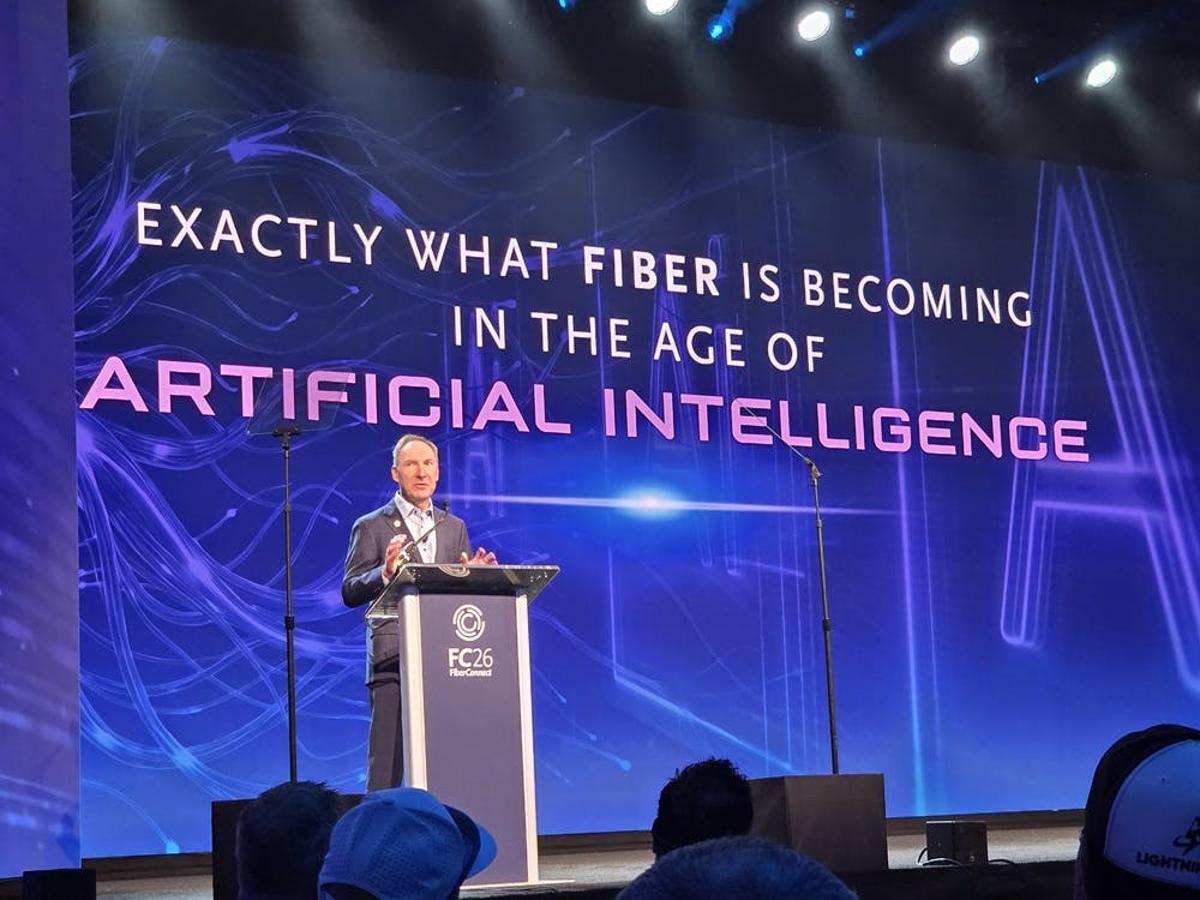
Fiber Connect 2026: AI Infrastructure Meets the Quantum Networking Era
Why It Matters
The shift positions fiber as a strategic asset for AI performance and quantum readiness, reshaping capital allocation and competitive dynamics across telecom, data‑center, and cloud sectors.
Key Takeaways
- •Hyperscale AI spend reaches $370 B annually, driving fiber demand
- •AI infrastructure will need three times more fiber routes by 2026
- •Quantum networking relies on precise timing over existing fiber links
- •EPB launches nation’s first commercial quantum network with IonQ
- •Fiber providers now represent 40% of U.S. deployment activity
Pulse Analysis
Fiber’s evolution from a pure connectivity medium to a core component of AI infrastructure reflects the scale of today’s computational workloads. Hyperscale cloud providers are pouring $370 billion a year into AI, and the latency‑sensitive nature of large language models forces a three‑fold expansion of fiber routes and overall deployment. This surge is not merely about raw bandwidth; it’s about synchronizing inference across geographically dispersed data centers, turning the optical layer into a real‑time nervous system that underpins distributed intelligence.
The convergence of telecom and AI is also reshaping market structures. Private capital now fuels over 90% of new fiber projects, while regional utilities, co‑ops, and municipal operators contribute roughly 40% of deployment activity. As hyperscale campuses push into secondary and rural markets for power and land, fiber densification follows, aligning broadband economics with AI‑driven demand. This integrated ecosystem blurs traditional industry boundaries, creating a unified infrastructure stack that supports both consumer broadband and high‑performance AI workloads.
Quantum computing adds another dimension, turning timing and photonic transport into critical networking challenges. IonQ’s roadmap toward 80,000 logical qubits by 2029 and EPB’s rollout of the nation’s first commercial quantum network illustrate how quantum accelerators will soon sit alongside GPUs in data centers. The impending "Q Day" threat to encryption further accelerates investment in quantum‑secure fiber solutions. Together, these trends signal that the network is becoming part of the computer, and operators who master synchronization, photonic interconnects, and quantum‑ready infrastructure will gain a decisive competitive edge.
Fiber Connect 2026: AI Infrastructure Meets the Quantum Networking Era
Comments
Want to join the conversation?
Loading comments...