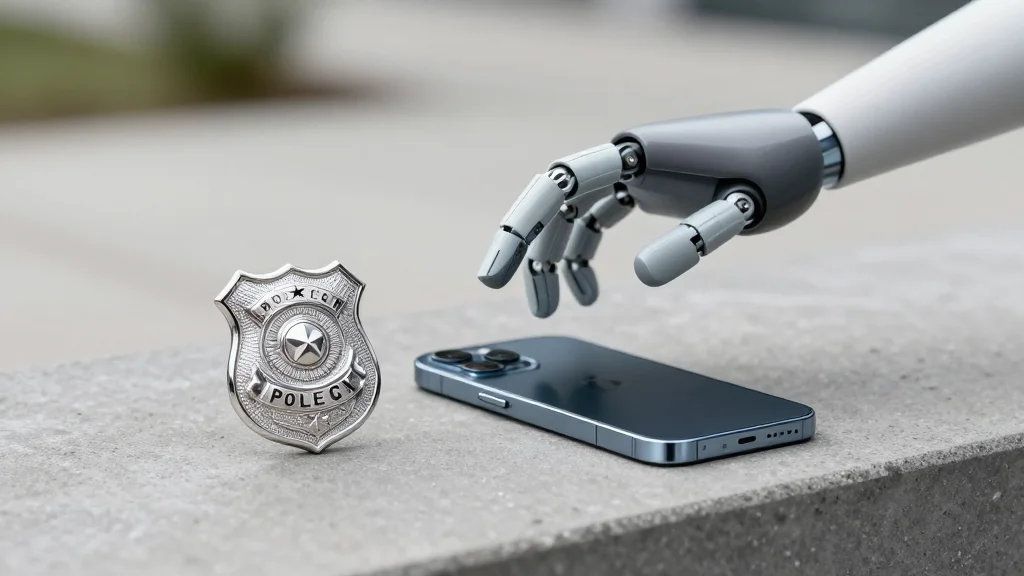
Florida Deputy Issues $116 Handheld‑Phone Ticket to Driver Without Right Hand, Sparking Legal Debate

Why It Matters
The controversy highlights a clash between public‑safety goals and the rights of drivers with disabilities. As telecom devices become ever more integrated into daily life, laws governing their use while driving must balance safety with inclusivity. A legal precedent that narrows the scope of handheld‑phone citations could limit revenue from traffic fines and force law‑makers to craft more nuanced language, influencing nationwide policy on distracted‑driving enforcement. Beyond the immediate legal ramifications, the case raises broader questions about how law‑enforcement agencies train officers to interpret statutes that intersect with technology. Misapplication of telecom‑related laws can erode public trust, especially among communities already skeptical of policing practices. Clearer guidelines could improve compliance, reduce wrongful citations, and ensure that safety measures do not inadvertently discriminate against individuals with disabilities.
Key Takeaways
- •Palm Beach County deputy cited Katie Thomas with a $116 fine for alleged right‑hand phone use, despite her congenital missing right hand.
- •Body‑cam footage shows the deputy ignoring Thomas’s physical limitation and demanding a “hand to God” oath.
- •Citation was dismissed after the sheriff’s office cited unclear labeling in citation software.
- •A similar incident earlier in the week involved an amputee driver receiving the same $116 citation.
- •Lawmakers propose clarifying language to ensure the handheld‑phone law applies only when a driver can physically hold a device.
Pulse Analysis
The Thomas incident is a flashpoint in the evolving intersection of telecom regulation and disability rights. While Florida’s handheld‑phone law was designed to curb distracted driving—a legitimate public‑safety objective—the lack of precise language has exposed a loophole that can be weaponized against drivers who cannot physically meet the statute’s literal requirements. Historically, traffic‑law enforcement has struggled with technology‑related statutes; the advent of smartphones amplified this challenge, prompting many states to adopt blanket bans on handheld use. However, as the Thomas case demonstrates, a one‑size‑fits‑all approach can backfire, leading to wrongful citations that damage public confidence.
From a market perspective, the controversy may influence telecom manufacturers and app developers to explore hands‑free solutions that comply with state laws while accommodating users with disabilities. Companies that can demonstrate robust voice‑activation or vehicle‑integrated interfaces could gain a competitive edge as states refine enforcement criteria. Moreover, the legal scrutiny could spur a wave of litigation that tests the limits of the Americans with Disabilities Act in the context of telecom‑related traffic violations, potentially setting precedent for other jurisdictions.
Looking ahead, the key question is whether Florida will amend its citation software and officer training to reflect a more nuanced understanding of “handheld” use. If legislators act swiftly, the state could become a model for balanced, technology‑aware traffic regulation. If not, the backlash may fuel broader calls for federal guidance, prompting the National Highway Traffic Safety Administration to issue clarifying rules that reconcile safety objectives with the rights of drivers who, like Thomas, navigate the road with unique physical circumstances.
Florida Deputy Issues $116 Handheld‑Phone Ticket to Driver Without Right Hand, Sparking Legal Debate
Comments
Want to join the conversation?
Loading comments...