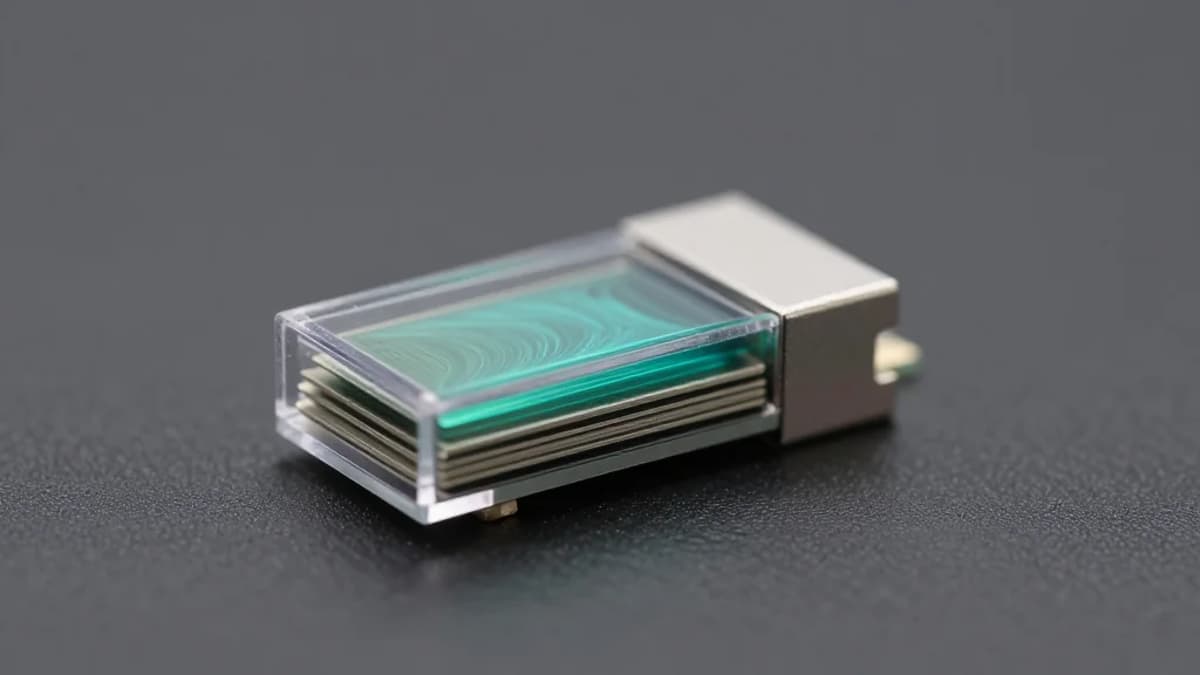
Forefront RF to Unveil Industry’s First Commercial Low-Band Tunable Duplexer at Mobile World Congress 2026
•March 3, 2026
0

Why It Matters
Consolidating several band‑specific duplexers into one tunable module cuts bill‑of‑materials, board space and design complexity, speeding multi‑band device deployment.
Key Takeaways
- •First commercial low‑band tunable duplexer
- •Adaptive passive cancellation replaces multiple fixed filters
- •Supports 5G NR, LTE, RedCap in single antenna
- •6 × 4.5 mm LGA, MIPI RFFE interface
- •Enables smaller, cheaper multi‑band smartphones and wearables
Pulse Analysis
The rapid expansion of cellular spectrum has left device makers juggling an ever‑growing inventory of fixed duplexers, filters and switches. Each new band adds components, consumes precious PCB real‑estate, and forces divergent designs for different regions. This fragmentation drives higher costs and longer time‑to‑market, especially for compact products like smartwatches where every millimeter counts. Forefront RF’s FFM51010 directly addresses this pain point by offering a single, tunable solution that can span the low‑band spectrum used worldwide, eliminating the need for multiple discrete parts.
At the heart of the FFM51010 is Foretune’s adaptive passive cancellation, a technique that mirrors the concept of noise‑cancelling headphones. By generating an inverted replica of transmitter leakage and injecting it at the receiver input, the module suppresses self‑interference in real time. This approach maintains high linearity while supporting a wide range of channel bandwidths (1.4‑20 MHz) and duplex spacings (‑46 to +55 MHz). Integrated power and low‑noise amplifiers, along with a bi‑directional coupler, further reduce component count, and the single MIPI RFFE v3.0 link streamlines firmware integration.
For the broader ecosystem, the FFM51010 signals a shift toward more software‑defined RF front‑ends. Manufacturers can now design a single antenna architecture that adapts across 5G NR, LTE and RedCap bands, lowering BOM costs and simplifying certification. As Forefront plans mid‑ and high‑band extensions, the tunable duplexer concept could become a standard building block for future multi‑band devices, accelerating the rollout of next‑generation connectivity while preserving the slim form factors consumers demand.
Forefront RF to Unveil Industry’s First Commercial Low-band Tunable duplexer at Mobile World Congress 2026
0
Comments
Want to join the conversation?
Loading comments...