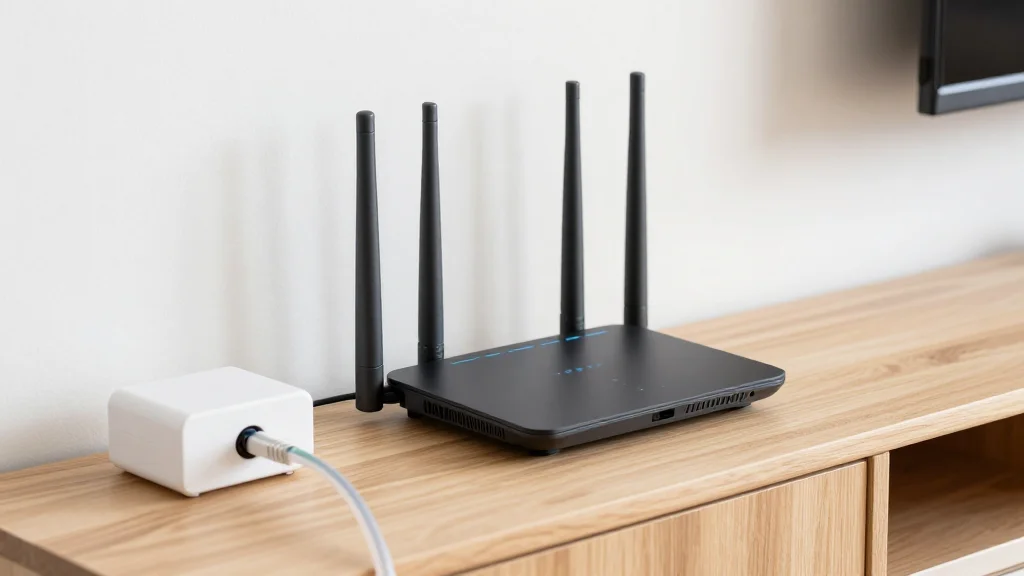
Gulf Telecom Operators Boost Wi-Fi 7, Mesh Networks and FTTR as Poor Router Placement Cuts Home Broadband Speeds by Up to 50 Percent
Companies Mentioned
Why It Matters
The findings force Gulf telcos to upgrade in‑home networking or risk eroding the value of their high‑speed fiber offerings, directly impacting ARPU and churn. Enhanced indoor connectivity becomes a competitive differentiator in a market hungry for streaming, gaming and AI‑driven services.
Key Takeaways
- •Poor router placement cuts indoor Wi‑Fi speeds up to 50%.
- •Gulf operators accelerate Wi‑Fi 7, mesh and FTTR deployments.
- •Wi‑Fi 7 maintains >500 Mbps at –60 dBm in Qatar.
- •UAE dense high‑rise buildings cause earlier Wi‑Fi degradation.
- •Mesh and FTTR aim to monetize multi‑gigabit fiber plans.
Pulse Analysis
Ookla’s latest Speedtest analysis highlights a shift in broadband performance dynamics for the Gulf region. While fiber rollout has reached maturity—Qatar, Saudi Arabia and the UAE rank among global leaders—the study shows that signal attenuation inside homes can halve download speeds when routers sit in sub‑optimal locations. The data, collected over a five‑month window, underscores that the weakest link is no longer the backbone but the customer premises equipment, especially as households adopt more high‑bandwidth devices and smart‑home applications.
In response, operators are fast‑tracking Wi‑Fi 7 deployments, leveraging technologies such as Multi‑Link Operation, OFDMA and 4096‑QAM to sustain gigabit‑plus speeds even at –60 dBm signal strength. Mesh networking is being bundled with fiber subscriptions to blanket large villas and high‑rise apartments, while FTTR projects push fiber deeper into living spaces, eliminating the wireless bottleneck altogether. In Qatar, Wi‑Fi 7 kept median speeds above 500 Mbps at –60 dBm, whereas Wi‑Fi 6 fell to roughly 75 Mbps in Saudi Arabia at –80 dBm, illustrating the performance gap.
For the business side, these upgrades are critical to protect and grow broadband ARPU. By delivering consistent indoor speeds, operators can justify premium gigabit plans, reduce churn driven by customer complaints, and differentiate themselves in a crowded market. The integration of remote diagnostics, AI‑driven channel optimization and dynamic band steering further enhances service reliability. As urban density rises and 6 GHz spectrum usage expands, mesh and FTTR will likely become standard components of Gulf telcos’ value propositions, shaping the next wave of digital consumption.
Gulf Telecom Operators Boost Wi-Fi 7, Mesh Networks and FTTR as Poor Router Placement Cuts Home Broadband Speeds by Up to 50 Percent
Comments
Want to join the conversation?
Loading comments...